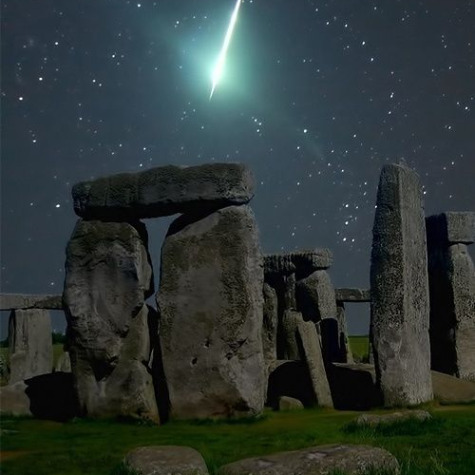
The Lyrids 2026 campaign has ended.
We now move on to the Arietids and zeta Perseids, the strongest daylight meteor showers of the year. First discovered at Jodrell Bank Observatory in England in 1947, these showers occur when Earth passes through dense streams of meteoroids in space. Their peaks often overlap, and the parent bodies of both showers are still unknown.
Thank you for your support!
Education
Videos & Tutorials
Hervé Lamy and Stijn Calders published a series of videos in which we tell you more about:
- ☄️ Meteors (meteorites and meteoroids)
- 📡 How we detect meteors with the BRAMS network (Belgian RAdio Meteor Stations) : https://brams.aeronomie.be/
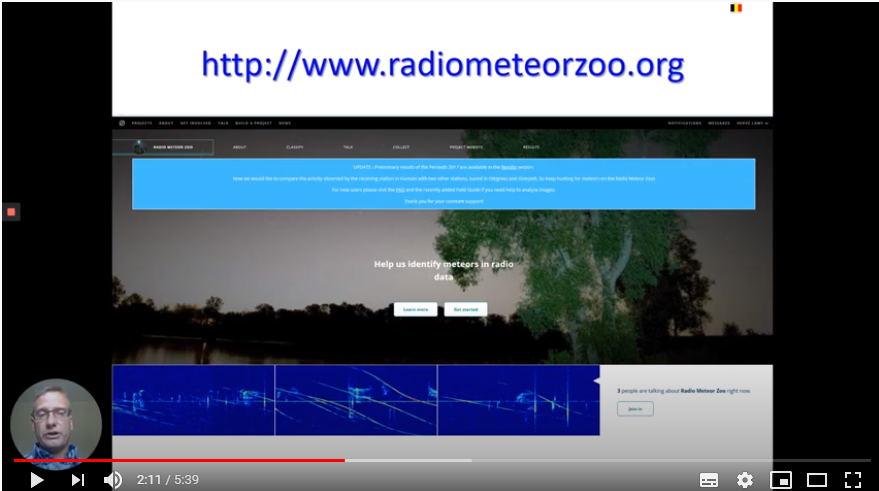
- 🌠 The processing of the data with the “Radio Meteor Zoo” citizen science project : https://www.radiometeorzoo.org
Our goal is to increase our interactions with you. These videos are also posted in the forum where you can ask questions that we will answer.
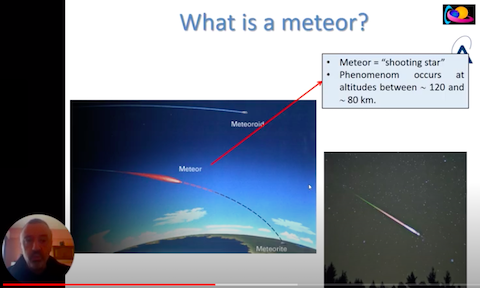
Meteors, meteoroids and meteorites
The first video is an introduction to the world of meteors, meteoroids and meteorites.
Meteors, meteoroids and meteorites
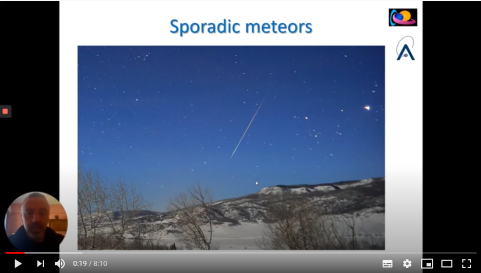
Sporadic & shower meteors
In the second video, Hervé explains the difference between sporadic and shower meteors.
Concept of radio meteor observations
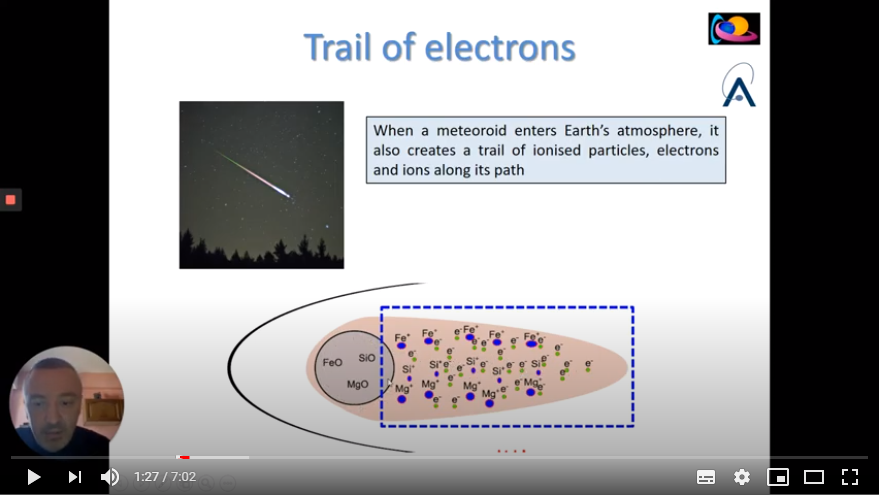
In this episode, Hervé introduces you to the concept of radio observations of meteors. How can radio waves help us locate and characterize these foreign objects from outer space?
He will also explain the important advantages of radio observations, compared to optical observations with camera’s, and will introduce you to the specific “forward scatter” technique that we use at BIRA-IASB with the BRAMS-network.
Concept of radio meteor observations
Specular reflections
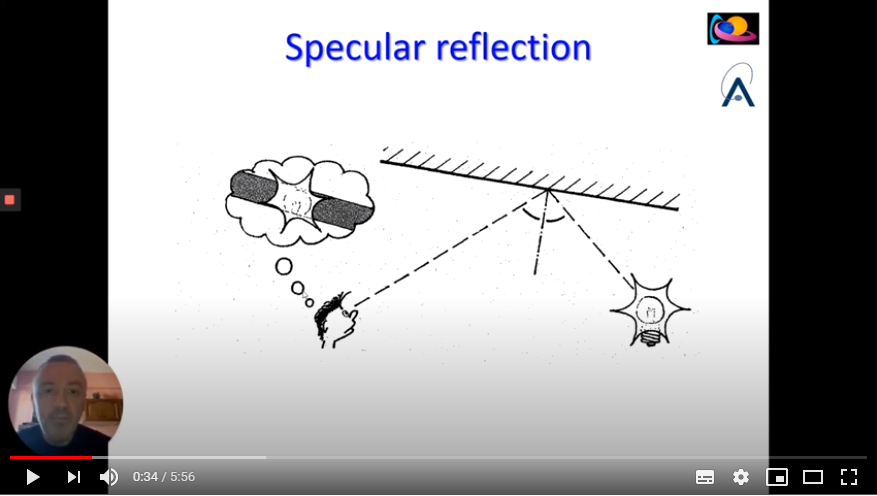
This time, Hervé will clarify why it is necessary to have a network of radio receivers in order to detect meteors. He does this by explaining the concept of specular reflection, in the context of radio waves being reflected by the ionisation trails created in the wake of meteors.
The BRAMS network
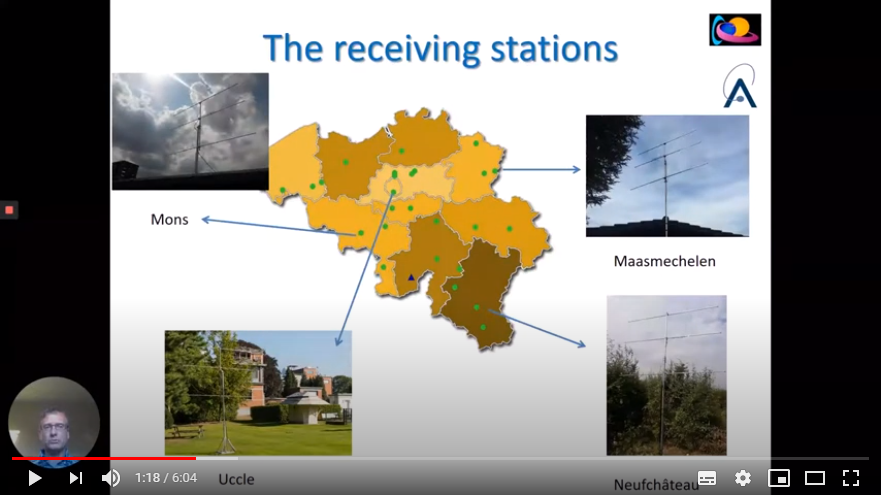
In this episode, Stijn explains how the concepts that Hervé mentioned in the previous video are implemented in the Belgian Radio Meteor Stations (BRAMS) network.
In the video, we refer to the BRAMS station manual. More information about the BRAMS network can also be found in this paper written by Hervé.
Radio Meteor Zoo
This time, Stijn talks about the Radio Meteor Zoo and how you can contribute to meteor research.