


Finished! Looks like this project is out of data at the moment!
Thank you for your efforts! We've completed the classification stage for this project! To browse other active projects that still need your classifications, check out zooniverse.org/projects.
Education
South African Outreach and Telescope Trip
As part of our second data release we've been running a school workshop in Carnarvon, South Africa. Carnarvon is the town closest to the MeerKAT site and is very rural, where the school children often have very limited access to science, let alone access to the world-class telescopes on their doorstep. So we invited Carnarvon High School's 16/17 year olds to take part in a three day workshop based in Cape Town for them to learn all about radio astronomy. They got a first look at our data release and classified over 2000 subjects!
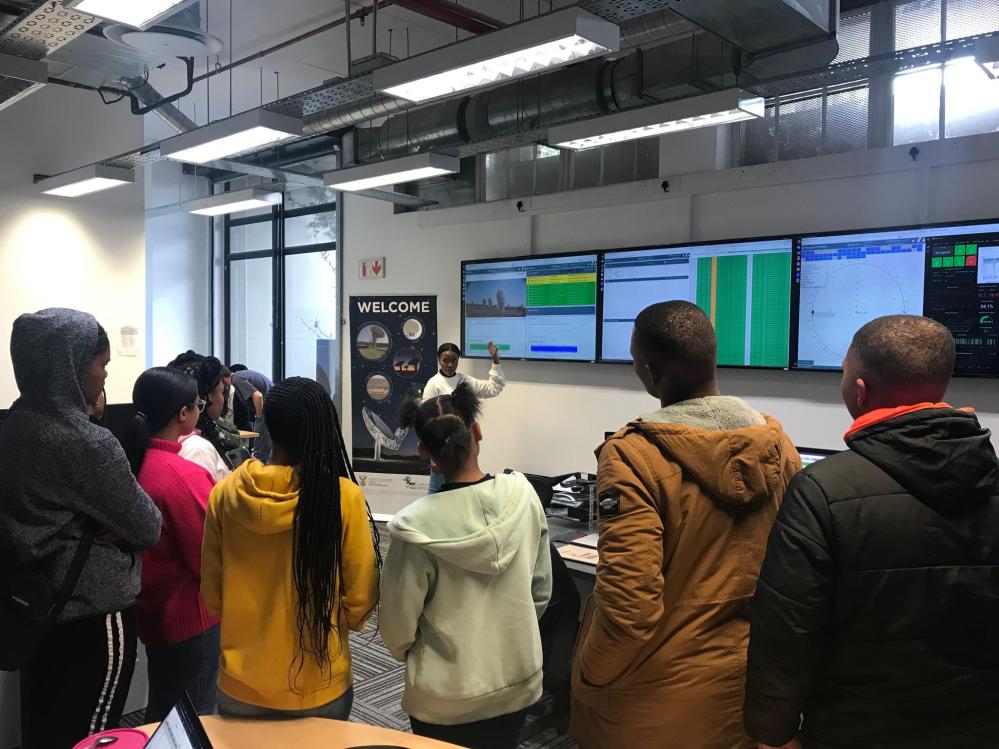
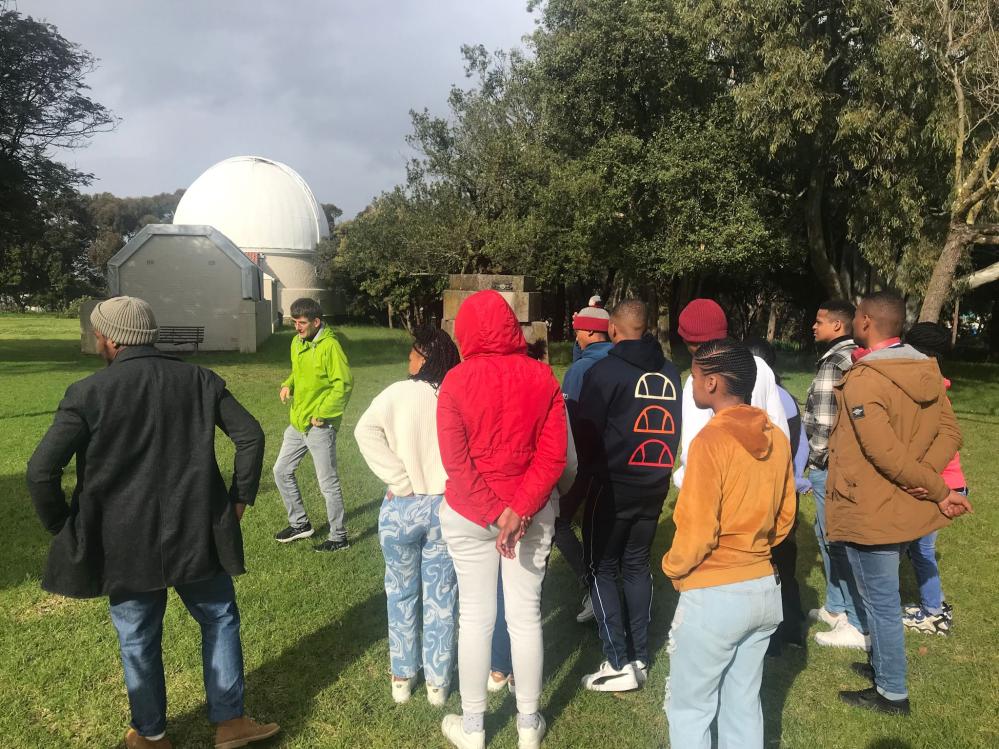
Here are some pictures of the students, many of whom had never left Carnarvon before, visiting the technical HQ for MeerKAT operations, as well as the historic optical telescope domes at the SA Astronomical Observatory just down the road.
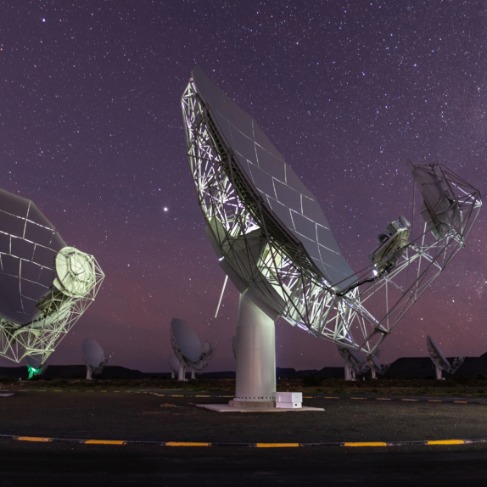
As part of this trip I also got the chance to visit the Karoo region to see the high school and also visit MeerKAT! This was a real dream come true, especially as access is very restricted for fear of radio interference. Here are a couple of shots of the area!
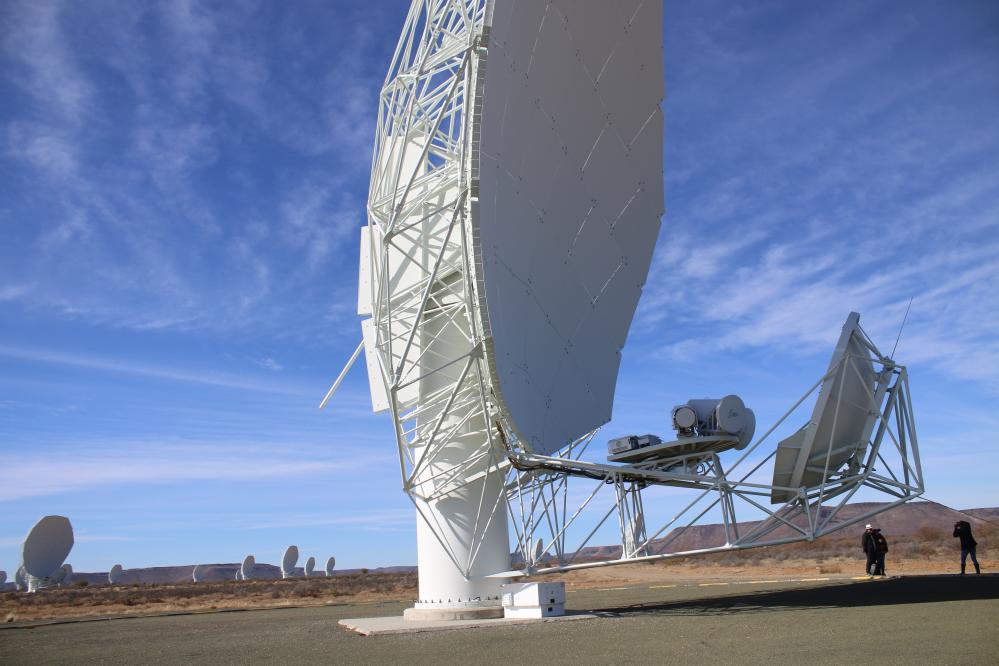
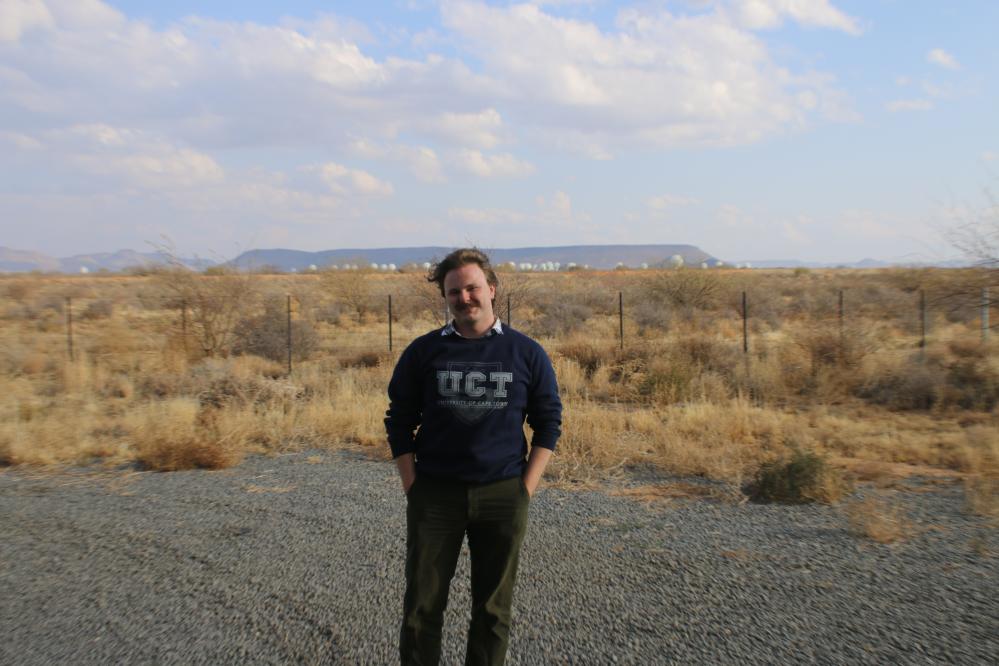
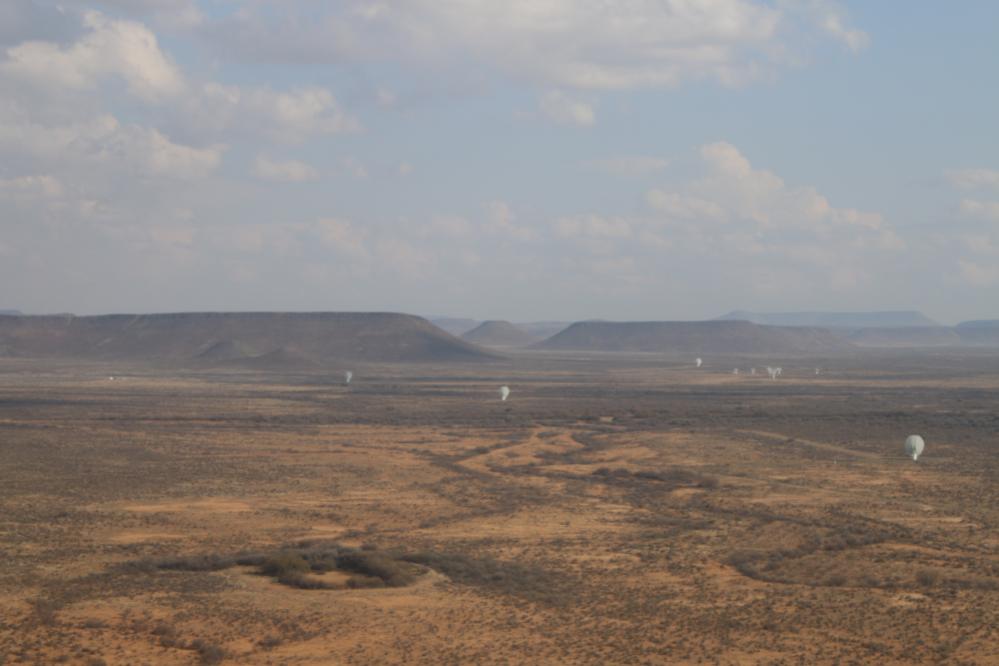
Hopefully that gives a good sense of how rural and arid the region is, but it was breathtaking to be so close to the amazing facilities out in the Karoo. We'll likely develop more things with SARAO (the telescope team) over time, so stay tuned for more developments like this! For now, feel free to get stuck in to our second data release!
More on radio transients
Black holes, neutron stars and white dwarfs
A lot of the known variable and transient radio sources in our sky are caused by small black holes, neutron stars and white dwarfs - the three 'compact objects' that are the end points of a star's life. When a compact object is formed in a binary - with a partner star in the same stellar system - the gravitational pull from the heavier object can suck matter from its companion. This can result in long jets of particles being thrown away from the compact object, releasing radiation in the radio bands that we can see here on Earth. These radio jets are very closely linked to how the disks of infalling matter shine in the X-rays and the study of both is key to understanding the complex goings on in such extreme environments.

Artist's illustration of Cygnus X-1, a binary system consisting of a black hole and stellar companion. Credits - NASA/CXC/M.Weiss
Cosmic explosions and bursts
During the last days of a star's life, before it becomes one of the already-mentioned compact objects, things get pretty heated. As a star dies it can give off radiation right across the electromagnetic spectrum - right the way from high energy gamma-rays all the way down to low energy radio waves. These explosions, known as supernovae (SNe) and long gamma-ray bursts (GRBs) are rare and distant but crucial to many areas of our understanding, including how elements are formed and how the Universe is expanding.
Stellar flares
You might have heard about solar flares from our Sun. We think these are related to the magnetic activity on its surface and the way hot plasma interacts in that environment. But it's not just our Sun that undergoes this kind of activity - flaring behaviour has been seen in many nearby stars. By understanding stellar flaring behaviour we get a better picture of how many stars would be suitable for habitability, as well as how hot plasma works in stellar conditions.

An artist’s impression of a flare from Proxima Centauri, modeled after the loops of glowing hot gas seen in the largest solar flares. Credits - Roberto Molar Candanosa, Carnegie Institution for Science / NASA / SDO / JPL.
For more on radio transient astrophysics, Laura Driessen's written a lovely review which you can find here.