


Finished! Looks like this project is out of data at the moment!
Thank you for your efforts! We've completed the classification stage for this project and will post updates as we have them. To browse other active projects that still need your classifications, please check out zooniverse.org/projects.
Research
The Admiralty Chronometer Ledgers
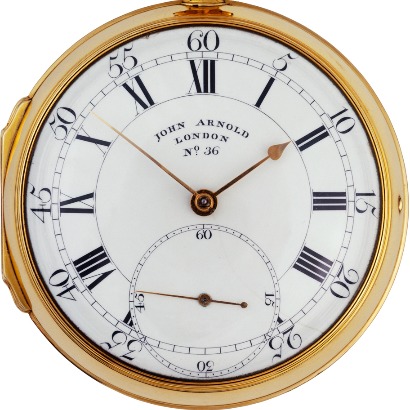
These 28 volumes detail the working lives of chronometers used by the Royal Navy between 1821 and 1936. They document individual instruments, recording the maker, serial number, date of purchase and each occasion on which they were issued by or returned to the Royal Observatory in Greenwich. The records tell us the ships and dockyards they travelled to and from, and how often they were sent for repair. For some instruments, we can trace over a century of use. Other exceptional stories include a chronometer that sailed on board the survey voyages of HMS Chanticleer and HMS Beagle, before being lost at sea in Captain John Franklin’s disastrous Arctic expedition.
By transcribing information from these ledgers, we can expand our understanding of the use of these instruments and relationships between instrument makers, suppliers and users. It will help us begin to answer questions such as how many chronometers were kept at different dockyards, how often they required repair, how reliable they were, how many were lost at sea, how the outbreak of war impacted purchase and use, how the products of different makers compare, and how the Royal Observatory functioned as a centre for the oversight and circulation of these precision instruments.
Further Information on Chronometers at Greenwich and Beyond
Chronometers are highly accurate mechanical timekeepers, first developed in the later 18th century, that were used at sea to keep track of longitude (east-west position). See this introduction or more information about chronometers in the Royal Museums Greenwich collections, and their history. A history of chronometer trialling and testing at the Royal Observatory, Greenwich, is available here along with some other interesting links here. These links (and Google) will help you identify the names of chronometer makers and businesses that supplied the Royal Navy, and who appear in the ledgers as suppliers and repairers (chronometers were also named after their makers, plus a serial number). A useful source for the names of naval vessels and dockyards, to which the instruments were often transferred to for use or storage, is The Index of 19th Century Naval Vessels and, for vessels and their commanders, is The Victorian Royal Navy.
Tools of Knowledge
Tools of Knowledge: Modelling the Creative Communities of the Scientific Instrument Trade, 1550-1914, funded by the Arts & Humanities Research Council, is based at the University of Cambridge, University of Sussex and National Museums Scotland. It is assembling a large volume of diverse data to which it will apply cutting-edge methods of digital analysis. The research is grounded in the existing Scientific Instrument Makers, Observations and Notes (SIMON) dataset, comprising more than 10,000 records on individual instrument makers and firms from Great Britain and Ireland. To this is being added data from existing legacy databases, collections catalogues and new metallurgical research, as well as material newly extracted from historical texts or generated using advanced digital methods. The aggregated data will be remodelled using semantic knowledge representation, to encode expert understanding of the meaning of this data in a machine-readable form and enable linking across datasets.
Scientific instruments embodied current knowledge and practice, both enabling and constraining our understanding of the world. ‘Tools of Knowledge’ aims to recover and share the stories of these artefacts, and of the men and women involved in the trade that produced them, during three and a half centuries. For the first time, information about the related people, places, practices, institutions, materials and objects will be accessible for study in combination and at scale. Textual and graphical interfaces, designed to allow the construction of complex and nuanced queries, will allow researchers to dynamically form and test new hypotheses about the relationship between different factors in the lives of the instruments themselves, and the development of the trade.
Licencing
The Admiralty chronometer ledgers are Public Records (Crown copyright), held by the National Maritime Museum as an official place of deposit under the terms of the Public Records Acts.
The data are transcriptions of Public records, which are also covered by (Crown copyright). The data is made available under the terms of the Open Government Licence (OGL), the equivalent of Creative Commons Attribution licence 4.0. Users can copy, publish, distribute, transmit and adapt the data for both commercial and non-commercial use. Any use should credit the National Maritime Museum as the source.
The images are made available under the terms of the CC-BY-NC-ND licence. Users can re-use the images for non-commercial research, education, or private study only. Any use should credit the National Maritime Museum (used by permission) as the source.