


Finished! Looks like this project is out of data at the moment!
Thank you for your efforts! We've completed the classification stage for this project and will post updates as we have them. To browse other active projects that still need your classifications, please check out zooniverse.org/projects.
FAQ
What are chronometers?
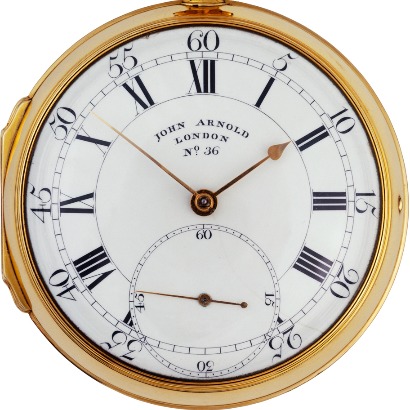
Chronometers are highly accurate mechanical timekeepers, first developed in the later 18th century, that were used at sea to keep track of longitude (east-west position). For more information about chronometers in the Royal Museums Greenwich collections, and their history, see https://www.rmg.co.uk/collections/our-collections-unique-history-timekeeping.
What are the Admiralty Chronometer Ledgers?
The ledgers record the issue and return of Royal Navy chronometers. They were issued to and from the Royal Observatory, Greenwich, to ships, depots at ports, officers, institutions and, chronometer makers (often the same individual or firm who originally supplied an instrument) for repair or adjustment. For more information about the Observatory’s role in testing and repairing chronometers, see http://www.royalobservatorygreenwich.org/articles.php?article=1248.
What are the tasks in this project?
There are three tasks, or workflows: 1) identify which chronometer a page refers to, 2) transcribe each occasion on which a chronometer was issued (to where, or whom, and the date), and 3) transcribe each occasion on which it was returned (from where, or whom, and the date). See the Tutorials and Field Guide for more detailed descriptions of what you need to do for each task.
How are chronometers named?
Each chronometer is named after its maker (an individual’s surname or a company name) and given a unique identifying number. Sometimes the number appears as two numbers separated by a line – please transcribe both numbers, with a forward slash between (e.g. 578/4109). To help you identify the names of chronometer makers, you may find the Royal Museums Greenwich object catalogue helpful: https://www.rmg.co.uk/collections/objects or, if you can access a copy, Tony Mercer's Chronometer Makers of the World.
Should I transcribe numbers or letters in brackets after the chronometer name and number, or further details about the instrument, such as date and cost of acquisition?
If there is additional or altered information of this sort, you are welcome to include it in the ‘further details’ box. Most of this information has previously been transcribed by volunteers at Greenwich, but it may be useful to have it checked. Common letters after the number are D.W., H.W. and C.W. (Deck Watch, Hack Watch and Chronometer Watch).
Should I transcribe or expand abbreviations and acronyms?
Please transcribe exactly what you see on the page, i.e. do not expand abbreviations or acronyms and reproduce punctuation as it is given.
How should I transcribe the costs associated with Transfers?
Costs are given in pounds (£), shillings (s) and pence (d). Please provide these in the format £-s-d (e.g. £2 3s 6d should be transcribed as 2-3-6). If there is no value given for one of these columns, then please add a zero (e.g. £5 10s should be transcribed as 5-10-0).
Should I transcribe text that has been crossed out?
Yes, please do. This may be information that was superseded, for example when a chronometer was retired from service, but is still of interest to researchers. The exception is where the format of entries is changed partway down the page (see the Non-Standard Ledger Pages entry in the Field Guide for more information) and the same information has been re-entered in the new format.
What should I do if I can't read the text?
Each page will be entered by several volunteers, so we can compare the different readings. If you are unsure of your reading, click the ‘Unclear’ button beneath the text box, which adds two sets of square brackets: [unclear][/unclear]. Insert your best guess between them – [unclear]your reading[/unclear] – or add nothing if you are unable to make a guess. It can often help to look at the whole page for clues: for dates, remember that entries are in chronological order; for names or words, you may be able to compare with other entries, in the same or different hands, elsewhere on the page. To check chronometer maker names, you may find the Royal Museums Greenwich object catalogue helpful: https://www.rmg.co.uk/collections/objects or, if you can access a copy, Tony Mercer's Chronometer Makers of the World. Useful sources for the names of naval vessels, dockyards and commanders are The Index of 19th Century Naval Vessels https://sites.rootsweb.com/~pbtyc/18-1900/Index.html and The Victorian Royal Navy https://www.pdavis.nl/index.htm.
What should I do if there's other text on the page?
At the bottom of the page there may be details of the chronometer’s record being continued on another page, or of its fate (e.g. lost at sea, recorded as ‘useless’ or passed on for use elsewhere). You can include this as an entry within the Chronometer Transfers: To workflow, leaving the boxes blank until the last (“Enter any further notes or remarks about this transfer”), in which you can record this additional text. Feel free to click 'Talk' at the end of the process and leave a message about any additional information or your query on our talk boards.
Can I come back to a page I am part-way through, or submit a partially completed page?
Unfortunately, it is not possible to save and come back to your work on an individual page, or to indicate that a page is only partially transcribed. Although it is technically possible to submit a partially completed page, we ask you to please only start transcribing a page if you are confident that you will be able to transcribe all relevant entries in the time you have available.
Why do I have to transcribe Transfers To and Transfers From in two separate workflows?
To allow researchers to tabulate and process the data correctly, it has been necessary to create separate Workflows to transcribe these events separately. Once processed, we will be able to track each instrument's comings and goings to tell it's 'life' story. Having two workflows also allows us to limit the number of transcriptions required for each page: it is important that you complete all the entries within the relevant column on each page, otherwise we risk losing part of that story.
Why do I have to transcribe Transfers To and Transfers From in two separate workflows?
To allow researchers to tabulate and process the data correctly, it has been necessary to create separate Workflows to transcribe these events separately. Once processed, we will be able to track each instrument's comings and goings to tell its 'life' story. Having two workflows also allows us to limit the number of transcriptions required for each page: it is important that you complete all the entries within the relevant column on each page, otherwise we risk losing part of that story.
Am I allowed to use the page images for any other purpose?
The images are made available under the terms of the CC-BY-NC-ND licence. Users can re-use the images for non-commercial research, education, or private study only. Any use should credit the National Maritime Museum (used by permission) as the source.