


Finished! Looks like this project is out of data at the moment!
We've reached our classification goal! Thank you SO MUCH for your help!
Check out our first paper using these data, and read our blog post here.
Research
Project goal
We are investigating how water sources in the African savanna may act as disease hotspots by aggregating animals and promoting parasite transmission. We start by looking at the ways in which the presence of water changes soil and vegetation, both of which may in turn affect both animal movement and parasite survival. Using camera trapping, we measure how the presence of water changes animal density and animal contacts.
Research Sites
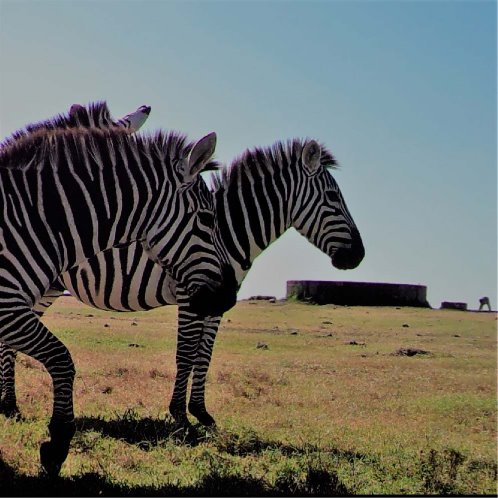
We're working at Ol Pejeta Conservancy -- one of Kenya's top centers for conservation and a popular destination for visitors across the world. Through our partnership with the Ecological Monitoring Unit, we've successfully run a large-scale water manipulation experiment to study its effect on animal movement and disease. We've recorded animal activity at these water sources for over two years, and we could really use your help to identify and count all the animals!
Background and motivation
Humans are changing the planet in a multitude of ways (habitat modification, wildlife loss, and climate change are a few examples). These changes will likely affect how many important parasites are spread, whether this is by altering the density and behavior of hosts, or affecting the survival and infectivity of their parasites.
For many parasites that can be contracted from the environment, hotspots can play an important role in affecting transmission. Watering holes are a perfect example of potential disease hotspots, and they are particularly relevant in arid climates, where the impacts of climate change and human development are likely to be pronounced.
Both climate change and seasonality can affect multiple aspects of disease transmission at watering holes by:
- Driving a greater number of infected hosts to drink (and likely increasing the density of infectious material at watering holes),
- Physically concentrating infectious material in the landscape through lower water levels and decreased surface area from which to drink, and
- Increasing the number of susceptible hosts that drink from the watering hole. At the same time, these conditions may also accelerate parasite development at the cost of decreased survival in the environment.
In this project, we consider several ways in which watering holes can influence communities -- from shifts in soil and vegetation to changing large mammal behavior -- and how these effects, in turn, can affect parasite transmission.
But what about the parasites?
While the Zooniverse component of this project doesn't directly feature the real stars of the show (all the parasites!), the data collected here will be critical for understanding host contacts and risk of exposure to parasites in water. We think about watering holes as hubs of activity (blue dots below), that can connect hosts (red dots) of different species across landscapes. Watering holes could help parasites to survive and transmit across wider geographic distances and across many more species.

Many different parasites and pathogens can be found in water bodies, such as protozoans (things like Giardia and Cryptosporidium), helminths (like strongyle nematodes), viruses (like the virus that causes foot-and-mouth disease and enteric viruses), and a diversity of bacterial pathogens (from deadly anthrax to stomach-turning E-coli).
In other components of this project, we go to the very water tanks that you see in the photographs and test water using a range of methods. We also quantify other features of the sites, such as vegetation (so we know what sites are also appealing for food resources), soil chemicals (important for understanding degradation), weather (which can directly influence animal behavior and parasite survival), and dung cover (that's right -- we go out there and count animal dung at all these sites!).