


Join us on Explore.org to watch live beluga footage from the Churchill River Estuary, streaming Monday through Friday for four hours each day
Results
2026
May 2026 Update
We’ve officially passed 40,000 volunteers on our project! We want to extend a sincere thank you to everyone who has contributed to the project and helped us better understand beluga whales. Behind the scenes, our team is celebrating this incredible milestone.
A brand-new workflow called 'Pod Squad' was introduced. This workflow will help us to identify certain social behaviors in the photos of beluga whales. By having volunteers flag behaviors such as exploring camera, open mouth, touching, and bent necks, we can check the original videos to see what was happening and hopefully better understand how belugas socialize in the wild.
March 2026 Update
The 2025 photos have been processed through the General Classification workflow. Next, we'll crop the photos to individual whales and ask volunteers to tell us the photo quality and orientation of the whale in Beluga Bodies.
We're also pulling more photos from previous years when the water quality was excellent (such as in 2019) so we have more data to work with.
2025
December 2025 Update
What a year for Beluga Bits! We passed 35,000 volunteers and are grateful to each of you for contributing to our project! 'Spots, Specks, and Streaks' and 'Notch or Not' wrapped up in record time, but there are still plenty of photos in 'Ages and Stages' and 'Beluga Backs'. Behind the scenes, our team is busy getting the 2025 photos processed so we can start the 'General Classification' workflow, which will be the first time those photos are seen. The water quality was stunning this year, so stay tuned for some amazing shots!
August 2025 Update
We've launched an all-new workflow called Spots, Specks, and Streaks! This project includes only our highest quality photos, and asks community scientists to help us identify skin conditions in beluga whales so we can look at their health over time. With Beluga Backs, Notch or Not, and Ages and Stages already running, this may a new record for the number of workflows live at once. We know our Beluga Bits community is up the challenge!
Check out the livestream of the beluga footage as it's collected by Captain Tera on a brand new boat, The Sea Canary, on Explore.org, brought to you by Explore and Polar Bears International.
July 2025 Update
The field season has been going swimmingly so far! The Beluga Bits team has seen excellent water quality here in Churchill and has been busy collecting 360-degree video. Check out our Instagram page @Beluga_Bits to see some of our most exciting 2025 beluga whale videos.
May 2025 Update
Another record-breaker with the 2024 Beluga Bodies workflow completion. We launched the Ages and Stages workflow which includes photos from our 2022-2024 field seasons. With this workflow, we're aiming to identify each whale to a specific age class so we can look at how whales of different ages group together.
March 2025 Update
General Classification 2024 wrapped up in less than two months, a new record for our project! Next we'll be asking our community scientists to look further into the 2024 photos with the Beluga Bodies workflow.
January 2025 Update
Beluga Bodies 2023 is underway and General Classification 2024 has just been launched! Stay tuned for interesting finds that will be reported in the talk section and here.
2024
October 2024 Update
The jelly(fish) and Beluga Bodies 2022 workflows wrapped up in record time, thanks to our amazing community scientists! Beluga Bodies 2023 and General Classification 2024 will be coming soon. The General Classification photos have never been seen before so keep an eye out for exciting finds!
September 2024 Update
The field season wrapped up on August 30th, and the Beluga Bits team is working on processing the videos to get them into our Zooniverse pipeline. The quality of the videos looked a lot better this year so stay tuned for some good-looking whales!
July 2024 Update
The Beluga Bits team is in the field in Churchill collecting photos and videos of the whales. The water clarity is looking great this year, it should make for some amazing quality photos for our community scientists to look through later this year! Join us on Explore.org to collect snapshots and watch live!
June 2024 Update
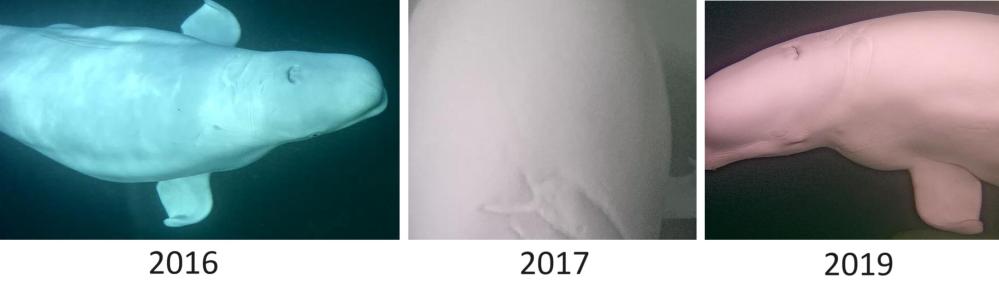
The Beluga Backs Workflow has been completed in record time! Later this year we'll be unveiling some exciting finds from all of your hard work, including a recapture made by one of our community scientists below! As the 2023 General Classification workflow nears an end, we're also preparing more workflows like Beluga Bodies and Jellyfish. Stay tuned!
February 2024 Update
Beluga Backs is well underway! As you all work on classifying those photos for us, behind the scenes we're preparing the 2023 photos for the General Classification workflow.
January 2024 Update
We have reached over 26,000 registered participants (and counting)!
Thank you for all the time and effort you've dedicated to this project.
Looking forward to seeing all of your discoveries in 2024 and discussing them in the Beluga Bits Talk section!
2023
Check out our new website! Beluga Bits StoryMap
Be sure to tag your location on our interactive map so we can see how global the Beluga Bits team is!
Workflow Update
Our amazing volunteers got through the Notch or Not workflow in record time! We're working behind the scenes to add more photos and new workflows soon. We'll let you know when those are ready. Thank you all!
2022
New Beluga Bits Paper!
Along with project partners and collaborators, we recently published an article in Frontiers in Marine Science all about the Beluga Bits program! Accomplishments like this would be impossible without the contributions of citizen scientists! We are so grateful for everyone's help on the project and we are excited to share this achievement with you all.
The paper, titled "Citizen science and machine learning: Interdisciplinary approach to non-invasively monitoring a northern marine ecosystem" discusses the value of combining disciplines and the great results we have had because of it! If you would like to read the paper you can do so by scanning the QR code below, or clicking here!
Thank you again for all your hard work!

Workflow Update
Thanks to your dedicated efforts, we have completed the 2021 General Workflow! We are so excited to see what new insights we gain into beluga biology from these photos.
If you still can't get enough of these awesome animals, the Beluga Bodies workflow is still active with images left to classify. Thanks everyone!
January 2022 Update
We have officially surpassed 20,000 registered participants!
We wanted to say a GIANT thank you to everyone out there that’s contributed over the years!
Together, you have:
- Completed over 4,000,000 classifications
- Created a list of jellyfish species in the estuary (1 of which is possibly the first time it’s been photo documented in the area!)
- Confirmed resightings of two whales
These goals would not have been accomplished without the incredible efforts of citizen scientists, and we can’t wait to see what discoveries we make next!
2021
November 2021 Update
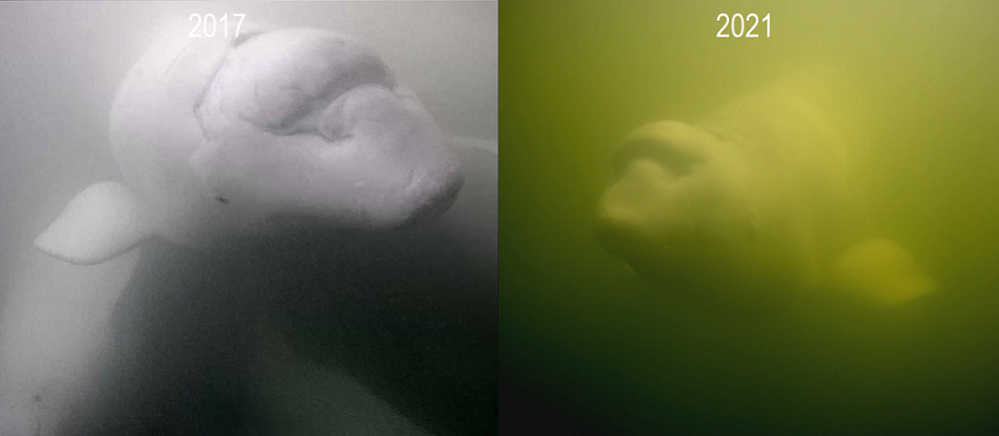
We have exciting news to share! Thanks to the dedicated efforts of @Nomad_Purple and @TheTonks for documenting distinct markings on beluga and making connections between photos, we have a new recapture! This beluga has a deep, distinct scar across the front of their head, just a little above where the melon meets their beak. The first photo of this whale were captured during the 2017 field season, and they were resighted in our 2021 field photos.
Resightings like these are a great way to non-invasively monitor beluga health and activity over time - for example, we can see how wounds heal, how body condition changes, and whether they return to the same areas year after year.
November 2021
Thank to everyone who tuned into the Explore Underwater Beluga Cam this year and helped us collect 11,390 snapshots! That's an incredible achievement, and there are some pretty great shots this year, so a huge thank you from the Beluga Bits team for all of your hard work and enthusiasm for these whales! These snapshots and additional frame samples have now been uploaded to the General Photo Classification workflow.
As many of you may have seen, sometimes in our photos we capture glimpses of interesting markings or other features on beluga, but are left wishing we could follow that beluga to get a better look. This year, we were testing out a special camera encased in a protective bubble that could allow us to do just that, and you may see it making a cameo in some of our snapshots!
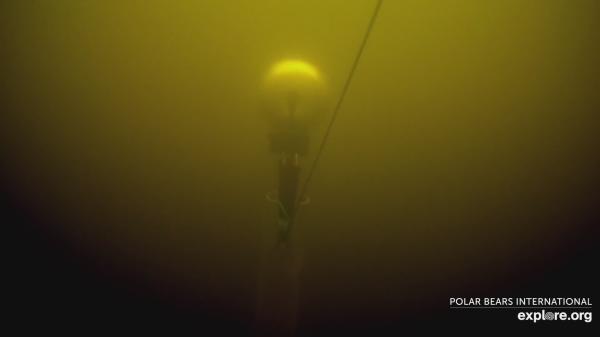
This camera can record 360° video, allowing us to record beluga as they approach, move around, and move away from the bubble regardless of where they are in relation to the camera.
July 2021
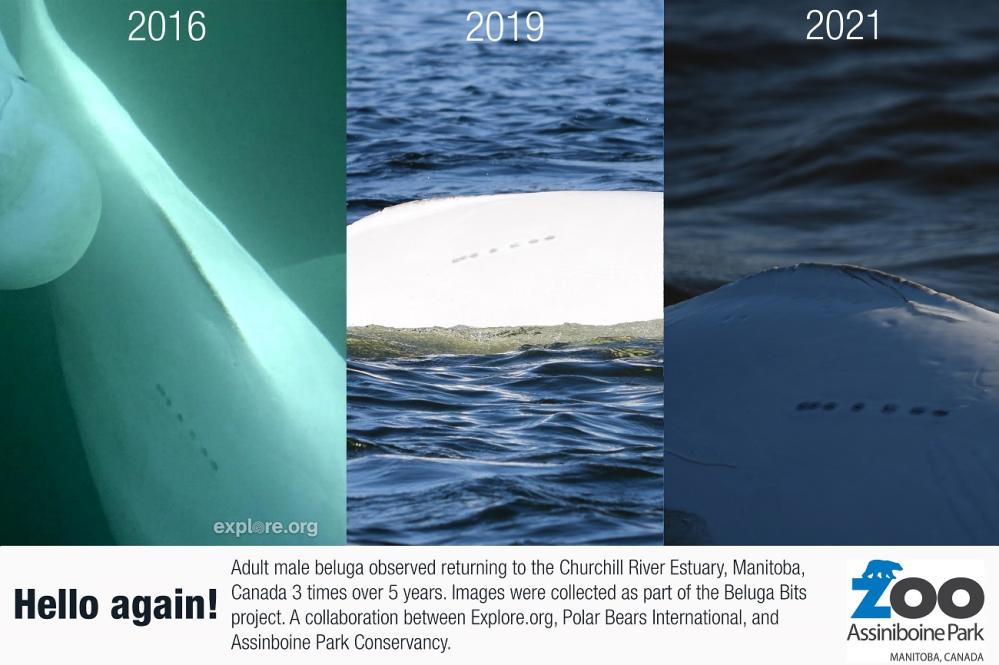
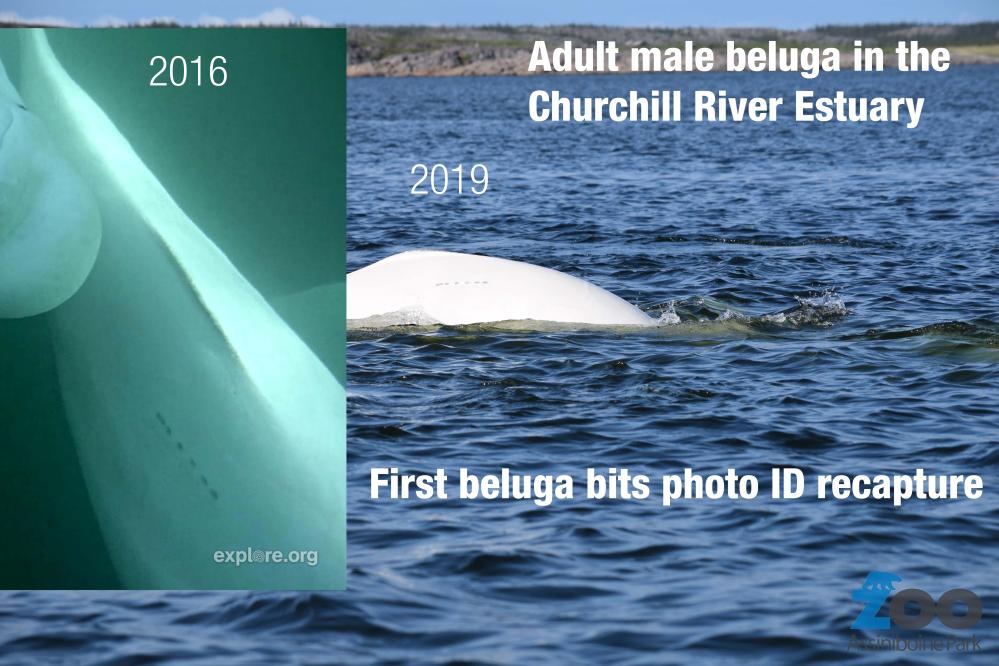
Very exciting update from the 2021 field season! On 21 July 2021 we spotted a familiar set of dots belonging to a beluga first captured on Beluga Bits in 2016 and last sighted in 2019. This distinctive pattern of black dots are likely the result of a poxvirus-like infection, and the marking is still distinctive years after that first sighting. Re-sighting the same individual is a non-invasive way to understand the secret life of beluga whales, including how often they return to the estuary and how markings persist over time.
January 2021
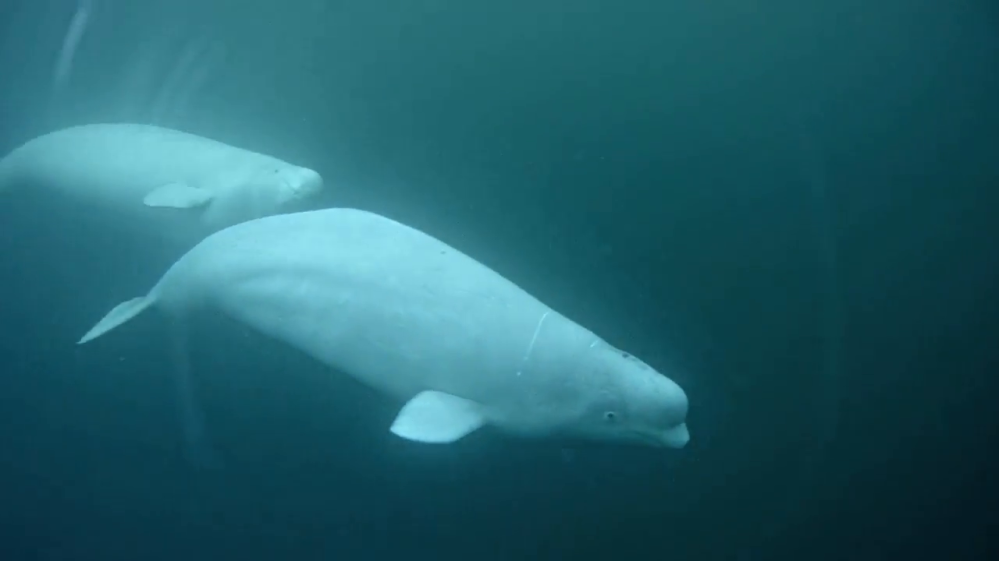
Thanks to the amazing efforts of sharp-eyed volunteers, two more species of jellyfish have been added to our list of known species in the estuary!
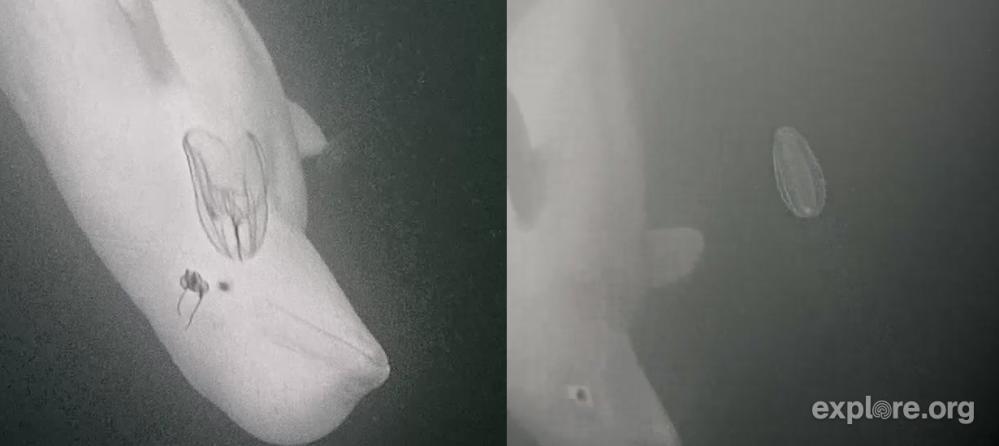
As part of the Is that a jellyfish? workflow, common northern comb jellyfish (photo on the left) and melon comb jellyfish (photo on the right) were spotted in some of our photos. Thank you everyone!
2020
December 2020
We are completely blown away by our volunteers! Thank you so much for all of the time and energy you have put into this project. The Counting and Ageing and Bits workflows are now finished!
We are working behind the scenes on getting some new workflows up and running and will make an announcement when that happens shortly!
Update on 2020 field season footage
Due to some technical difficulties and high water levels and current this summer (amongst the pandemic issues), the footage we were able to gather is not great quality. This means it's taking us longer to get those images uploaded and into the General Classification workflow. We are currently unsure if we will be able to use this footage and are looking at our options to ensure we provide you with both a good experience on our project as well as are able to gather useable data from the images.
July 2020
Thank you to everyone for helping us reach this new milestone! Over 5,500 people have powered through 216,799 classifications for our 2016 to 2018 data. There were also some really great conversations on the ‘Talk’ pages that highlighted the dedication of this group of citizen scientists. In 2019, we had almost 15,000 snapshots captured by explore.org viewers. Additionally, this year we were able to extract photos from the entire video stream (a frame every 3 seconds). This has led to a lot more photos than we have had access to in the past which we will be uploading for your assistance with. By increasing the photo database, we will be able to capture more beluga at different angles which will better assist us in getting the information about the whales that we want like sex, age, and markings. We may also be able to capture other creatures like jellyfish!
If you are a returning citizen scientist you may notice the look of the images changes between photos. Some of this variation is due to water clarity, light levels, and location in the estuary where the camera is taking photos. There are also changes due to camera settings as we try to figure out how it was set in 2016. Here is a visual summary of those camera changes.
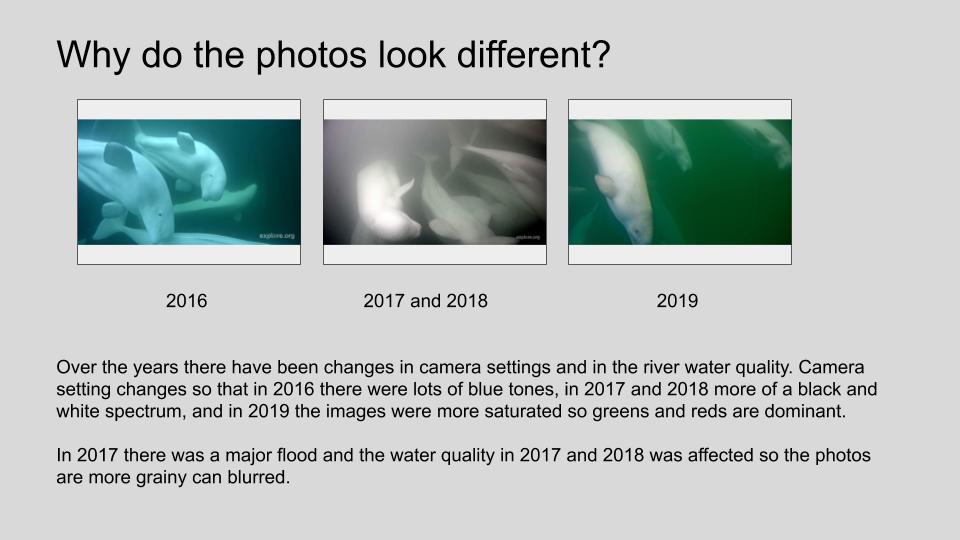
2019
Just a quick update - we have our first recapture - a whale that was captured on the underwater camera and identified as an adult male in 2016 was sighted 19 July 2019. This beluga has a distinctive pattern of black dots that are likely the result of a poxvirus-like infection. It is interesting to see that the marking is still strong after 3 years. In 2016 and 2019 water visibility is much better and we hope to really increase our number of recaptures.
2018
Wow, another year is over for the beluga boat. This year things started off a bit slower as we got some last-minute permits in place but after that, we were off to the races. Volunteers collected over 5000 photos this year while the boat was out. The track-lines for all the tips can be seen below.
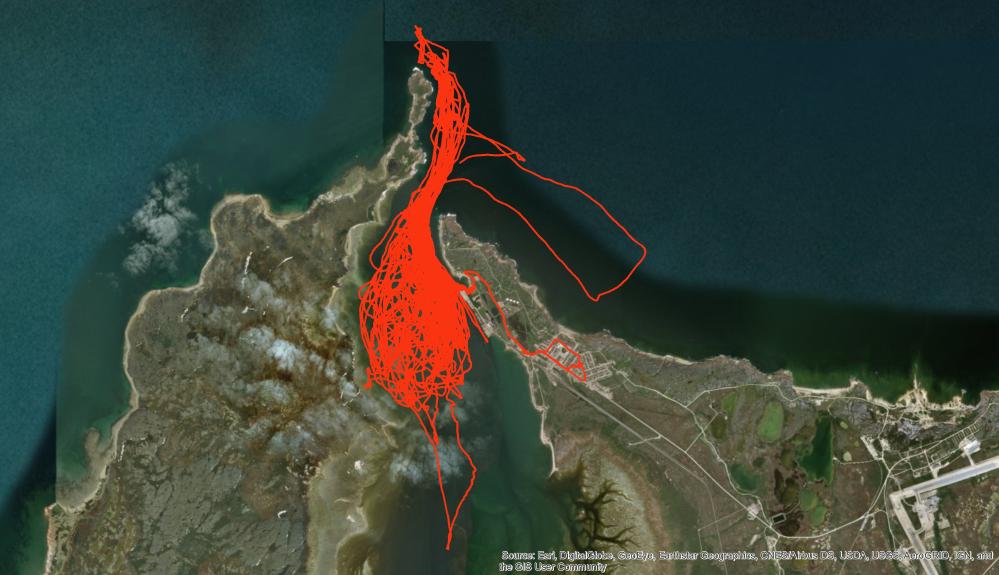
We have started analyzing the data that people have generated so far and will be presenting some results at a conference and here in December. By looking at the data we will also be tweaking the workflow and tutorials to update the project with new information that we are learning.
Thanks to everyone who has helped out!
2017
The 2017 beluga season is over and citizen scientists on Explore.org collected 9645 photos for the project. However, here is a map of where the beluga boat traveled this summer. Each red line is from a single trip but you can see that the boat covered the same area multiple times over the summer season.
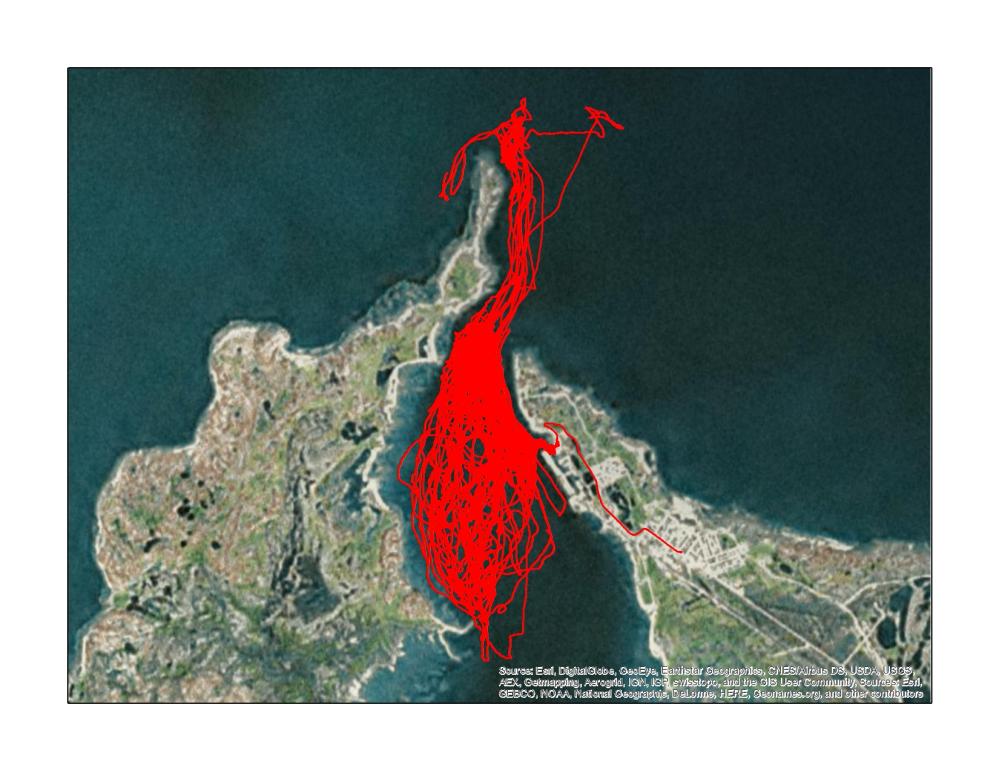
Thanks to Captain Kieran for collecting those GPS track lines to help us understand the habitat used by different age and sex classes of beluga.
2016
In 2016, we asked viewers of the beluga underwater cam (watch the highlight reel here) to take snapshots when they saw the underbelly of a beluga or if they saw beluga with marks that could be used for future identification. This resulted in over 7372 photographs that now need to be classified to determine the age class, if the animal is male or female, and if they saw distinct markings.
The Zooniverse project "Beluga Bits" is asking you to help collect data about all those photos. The Beluga Cam will also be running in July and August this year (2017) which will result in another batch of photos to classify.