



Join us on Explore.org to watch live beluga footage from the Churchill River Estuary, streaming Monday through Friday for four hours each day
Education
Education
Beluga whales are a highly social species of whale specially adapted for waters in the Arctic and sub-Arctic. They spend the winter in more northern, ice-covered areas and in the spring when the sea ice melts they migrate to more southern estuaries. The number of beluga making this migration can be substantial, Hudson Bay alone is home to more than 50,000 beluga during the summer! These large annual gatherings are great opportunities to observe beluga, yet many aspects of their life history are still largely unknown, including why they congregate in these areas.
Monitoring beluga underwater will allow us to track ocean and beluga health and identify emerging threats to this population. Northern species and ecosystems are facing a variety of threats and challenges, including the uncertainty of a changing climate and related impacts to sea ice extent, increased shipping opportunities, ocean acidification, and prey abundance and distribution. By investigating questions surrounding beluga health, such as whether certain injuries are becoming more common or if their body condition is changing over time, we can better understand threats to the population and work with managers to best protect the Churchill River Estuary beluga population.
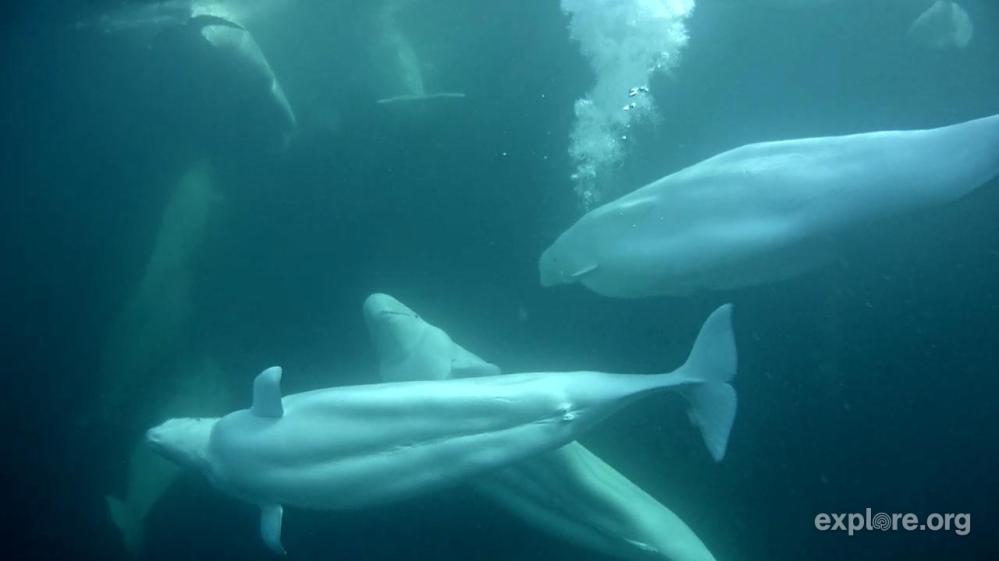
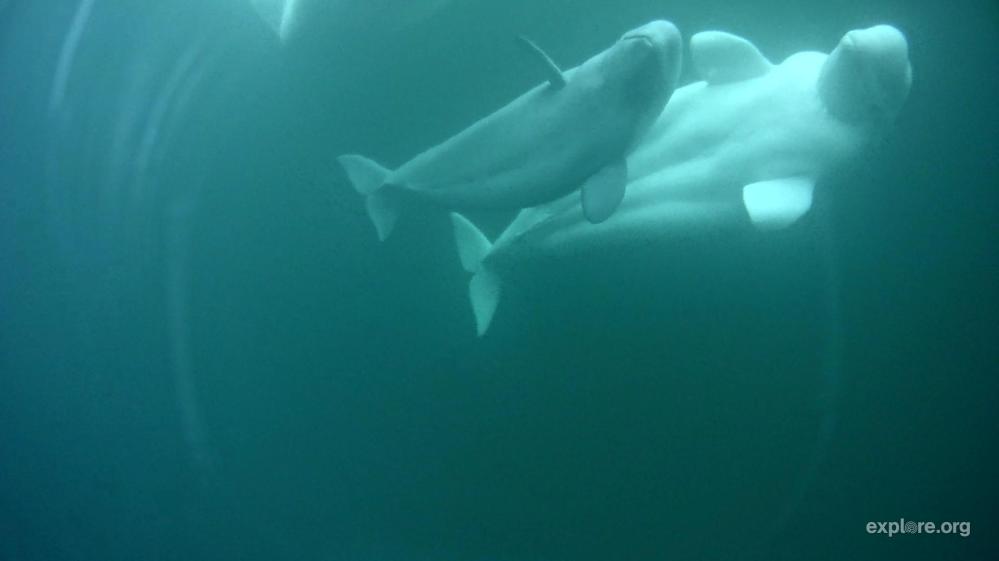
One unique aspect of the Churchill River Estuary beluga whales is that they are pretty accessible to people. This means we are able to take a peek into their underwater world, providing an opportunity to look more closely at beluga social structure, their interactions with boats, and understand their natural history better. During the summer months, Explore.org runs a live underwater video feed from the ‘Beluga Boat’ run by Polar Bears International, showing the belugas to online users worldwide. Viewers can take snapshots of their favourite moments, which are then compiled into a database. We also extract frames (photos) from the video for additional data to help capture the whales at many angles.
Range and Conservation Status
Beluga have a circumpolar range throughout the Arctic and sub-Arctic and are widely distributed in Canada. There are eight recognized populations of belugas in Canada:
• St. Lawrence Estuary - Endangered (Schedule 1 SARA-listed as of 2005)
• Ungava Bay - Endangered
• James Bay - Not at Risk
• Eastern Hudson Bay - Threatened
• Western Hudson Bay - Not at Risk
• Eastern High Arctic/Baffin Bay - Special Concern
• Cumberland Sound - Endangered (Schedule 1 SARA-listed as of 2017)
• Eastern Beaufort Sea - Not at Risk
Local Abundance
The most recent aerial survey, flown in 2015, estimated that the Western Hudson Bay population was around 54,000 individuals.
- Beluga are gregarious, often seen in groups as small as a few individuals and up to large groups of several hundred animals.
Habitat
Beluga habitat can migrate thousands of kilometres between summer and wintering areas, returning to the same areas each year. They are an ice-adapted species, and their habitat choices reflect the seasonal fluctuations in sea ice extent.
- As the sea ice melts in the spring beluga begin to migrate to more southern coastal bays and estuaries, which they will use throughout the summer. Estuaries are thought to provide protection from predators and ideal conditions to moult and calve.
- In the winter, beluga tend to use deep offshore areas with loose to moderate pack-ice cover. At this time they dive deep to catch fish, squid, and shrimp.
- Adaptations
- Beluga are adapted to the ice-covered waters of the Arctic and sub-Arctic.
- Beluga, like other ice-adapted whales, lack a dorsal fin presumably as an adaptation for life in ice-filled waters.
- They have a thick layer of blubber that keeps them insulated and also stores energy for lean times and for growth and reproduction.
Appearance and Reproduction
Belugas are medium-sized, toothed whales which range in colour from a uniform dark grey as calves to brilliant white as adults.
- When they are born, calves about 150 cm in length. By the time they are yearlings they are 60-65% of their mother’s length. Adults are about 2.6-4.5 metres, weighing up to 1900 kg (adult males usually 20% larger than females).
- Over their lifespan beluga change colour. They are born slate grey, then get paler as they age, and are pure white upon sexual maturity. Some females will turn white shortly after sexual maturity.
- Mating is thought to occur in offshore areas during late winter to early spring, calves are born between June and September.
- Gestation lasts 13-14.5 months and lactation for ~20-32 months.
Behaviour and Diet
Beluga are gregarious, often seen in groups ranging from a few to several hundred individuals. Beluga are sometimes called the “canaries of the sea,” which hints at their vocal tendencies. They use a wide variety of sounds, including whistles, squeals, chirps, and clicks.
- Beluga use vocalizations to communicate and for echolocation, a useful tool for navigating in their environment and hunting.
- Beluga have a varied, carnivorous diet of prey found swimming in the open water and buried in the substrate. Cod and capelin are likely a prominent feature of the beluga’s diet where available, however, beluga are opportunistic and their diet may consist of a large variety of fishes, octopus, squid, crabs, shrimp, clams, and snails.
- They have short peg-like teeth, using suction and swallowing food whole as they hunt and forage.
- Beluga often have their lowest body fat content when they first arrive in their summer estuaries. If prey is available, beluga will feed intensively during the summer to build up fat reserves.
Threats
It's important to keep in mind that beluga inhabit a large, complex ecosystem. The types and severity of threats and challenges populations face will vary between areas, which contributes to why some populations are thought to be doing better than others. The beluga that Beluga Bits focuses on are part of the Western Hudson Bay population, which is thought to be doing well and is relatively stable. Unfortunately, other beluga populations are facing increased pressures and are potentially declining. Below is a summary of some of the natural and human-caused threats that different beluga populations face, but keep in mind that not every beluga population is necessarily experiencing the same types/severity of stressors.
Natural
Natural causes of mortality and injury can be difficult to document in wild populations of beluga, but are not usually a concerning source of mortality within a population. Here are a few of the natural threats beluga face within their ecosystem:
- Predators - beluga do have a few natural predators, including polar bears and killer whales. Polar bears have been observed hunting beluga along the edges of ice floes during the winter and killer whales have been observed hunting beluga throughout most of their range.
- Injury - beluga have also been documented with injuries likely obtained from aggressive behaviour from non-predator species, such as narwhal and walrus, or failed predation attempts that can eventually result in mortality.
- Disease and infection - a variety of pathogens can be obtained naturally within the beluga’s environment, some of which can occasionally be fatal. These include viruses, infections, and bacterial pathogens among others.
- Complications with aging - As with all organisms, beluga whales face challenges and complications with aging. As they age they may become less successful hunters, leading to declining body condition, or their immune system may weaken, leaving them more susceptible to pathogens.
Anthropogenic
Northern ecosystems face a variety of threats, including ocean acidification and a changing climate with related impacts on sea ice extent, extreme weather events, and prey distribution and abundance. In addition to these wider reaching threats, beluga populations may also be exposed to more localized stressors such as pollution, shipping, underwater noise, and other types of human disturbance. These kinds of threats are strong limiting factors for beluga populations and vary in importance depending on the population.
- Climate change - climate change is an overarching threat for northern ecosystems and can manifest in a variety of ways. Changes in sea ice conditions, prey populations, predator populations, increased pathogen transmission, and competition with other species are just a few of the ways climate change can affect beluga populations and their environment.
- Shipping - increased shipping and other boat traffic can increase ocean noise, pollution, and the frequency of boats striking beluga.
- Resource extraction and exploration - often human activities surrounding resource extraction and exploration projects bring with them a variety of environmental threats, including increased shipping, ocean noise, and pollution.
- Habitat loss and degradation - this could include physical changes, such as shoreline development or dredging, or changes in habitat quality, such as contaminant releases.
- Pollution and contaminants - these can enter the environment from a variety of sources and affect beluga and their prey. Often contaminants will move up a food chain and accumulate in the bodies of predator species, like beluga. Accumulation of contaminants within the beluga’s blubber stores over the course of their lifespan can affect their immune and reproductive systems.
- Ocean noise - beluga depend on underwater vocalizations and hearing to communicate with each other and for echolocation. Increases in ocean noise from shipping traffic, resource development, and other human activities can limit the ability for beluga, and other marine animals, to hear and communicate.
- Prey abundance and distribution - beluga are carnivorous and hunt a variety of prey for food. There are natural fluctuations in prey populations, however dramatic changes in prey abundance and distribution due to fishing practices, habitat changes, and climate change can make it challenging for beluga to find enough food to survive and reproduce.
Keep in mind that often threats can produce a variety of environmental stressors, and the source of each stressor isn't necessarily a single threat. For example, increased shipping may increase ocean noise and contaminants in a given area, however that area may be dealing with contaminant releases from a variety of sources in addition to shipping.
These are just a few examples of threats currently affecting beluga whale populations, but it’s important to remember that beluga inhabit a large, complex ecosystem. Scientists are working to monitor known threats and identify emerging ones, and there is still much to learn.