



Welcome to Beluga Bits in the Classroom! This is a classroom-friendly version of the Beluga Bits project where you can learn about beluga whales and begin your journey as a citizen scientist. If you would like to join citizen scientists from around the world participating on the main Beluga Bits project, click here! Please note: researchers will respond to Beluga Bits in the Classroom Talk forums when they can, but cannot guarantee how frequently this will occur. If you need assistance, please check the main Beluga Bits project or reach out to a researcher directly. Thank you for your patience!
Results
Results
Here you can find exciting developments for Beluga Bits in the Classroom and updates about the main Beluga Bits research project!
2021
November 2021 Update
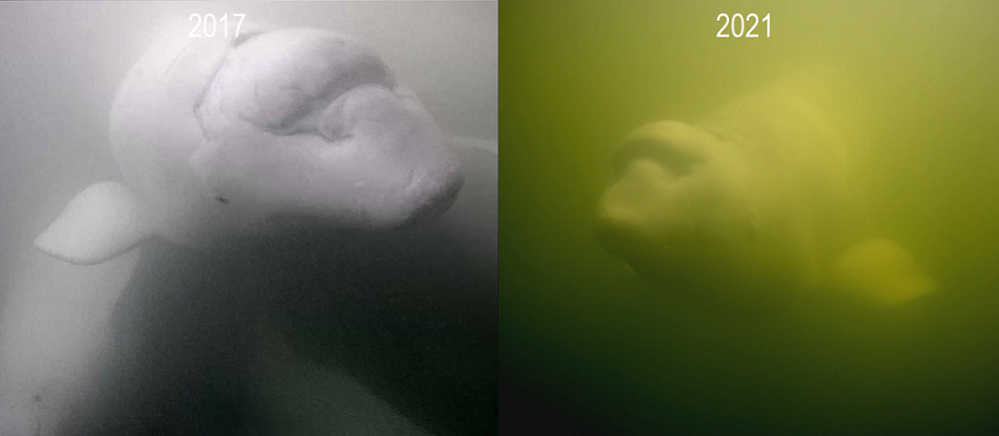
We have exciting news to share! Thanks to the dedicated efforts of @Nomad_Purple and @TheTonks for documenting distinct markings on beluga and making connections between photos, we have a new recapture! This beluga has a deep, distinct scar across the front of their head, just a little above where the melon meets their beak. The first photo of this whale were captured during the 2017 field season, and they were resighted in our 2021 field photos.
Resightings like these are a great way to non-invasively monitor beluga health and activity over time - for example, we can see how wounds heal, how body condition changes, and whether they return to the same areas year after year.
November 2021
Thank to everyone who tuned into the Explore Underwater Beluga Cam this year and helped us collect 11,390 snapshots! That's an incredible achievement, and there are some pretty great shots this year, so a huge thank you from the Beluga Bits team for all of your hard work and enthusiasm for these whales! These snapshots and additional frame samples have now been uploaded to the General Photo Classification workflow.
As many of you may have seen, sometimes in our photos we capture glimpses of interesting markings or other features on beluga, but are left wishing we could follow that beluga to get a better look. This year, we were testing out a special camera encased in a protective bubble that could allow us to do just that, and you may see it making a cameo in some of our snapshots!
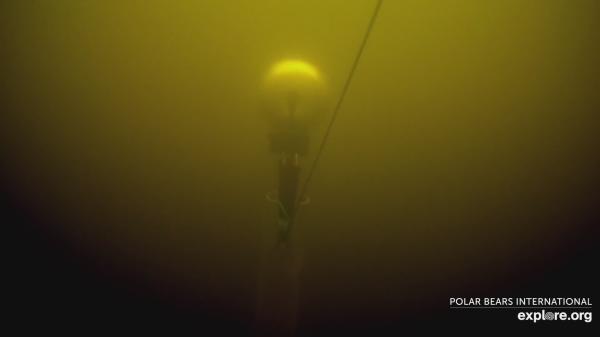
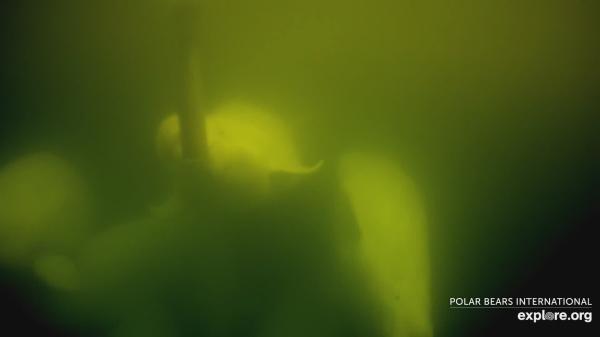
This camera can record 360° video, allowing us to record beluga as they approach, move around, and move away from the bubble regardless of where they are in relation to the camera.
July 2021
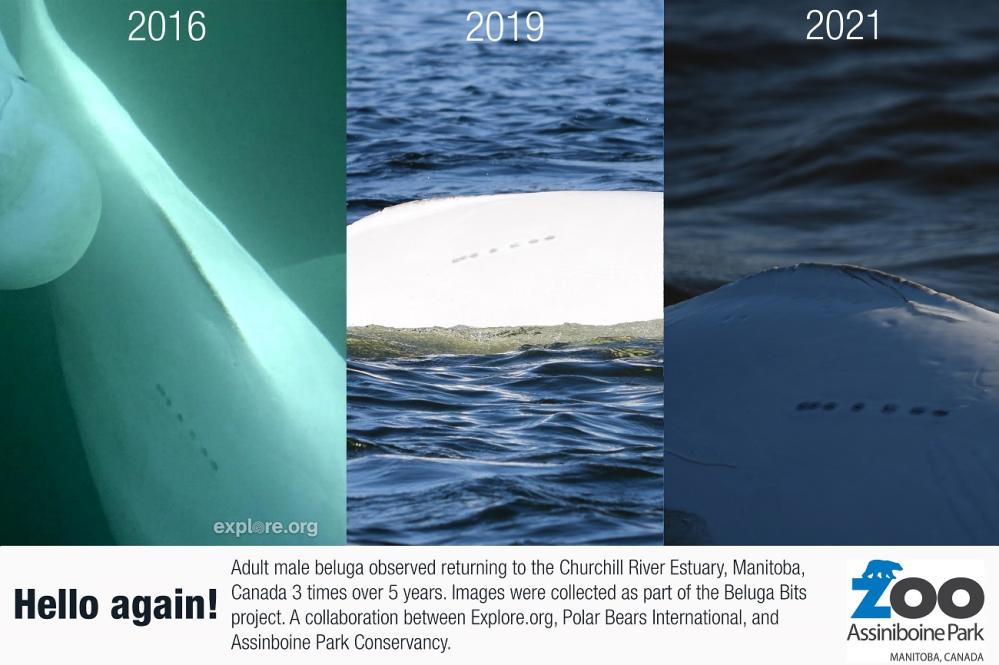
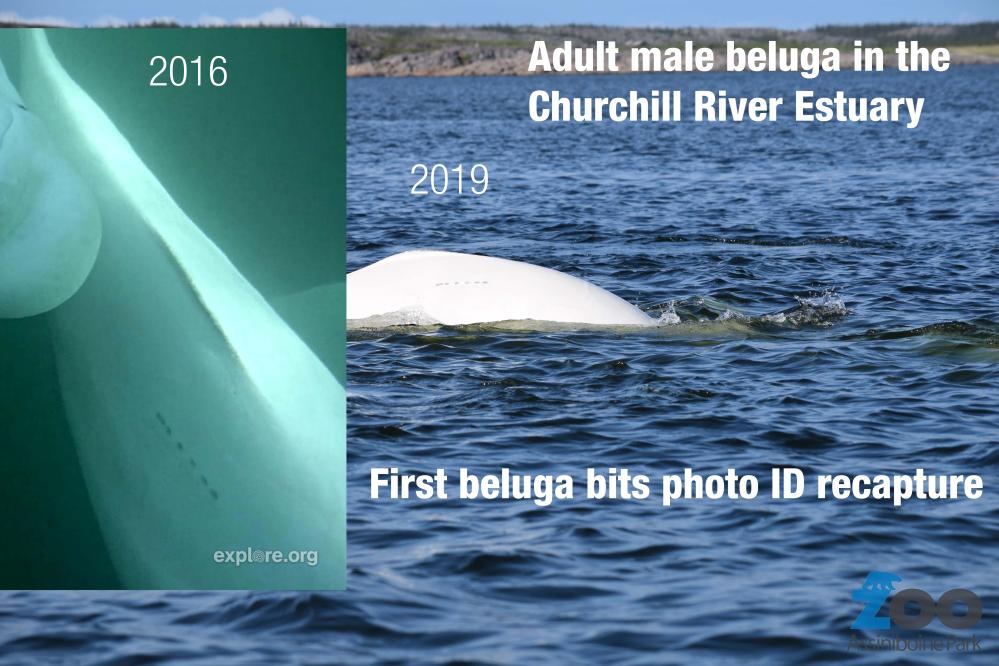
Very exciting update from the 2021 field season! On 21 July 2021 we spotted a familiar set of dots belonging to a beluga first captured on Beluga Bits in 2016 and last sighted in 2019. This distinctive pattern of black dots are likely the result of a poxvirus-like infection, and the marking is still distinctive years after that first sighting. Re-sighting the same individual is a non-invasive way to understand the secret life of beluga whales, including how often they return to the estuary and how markings persist over time.
January 2021
Thanks to the amazing efforts of sharp-eyed volunteers, two more species of jellyfish have been added to our list of known species in the estuary!
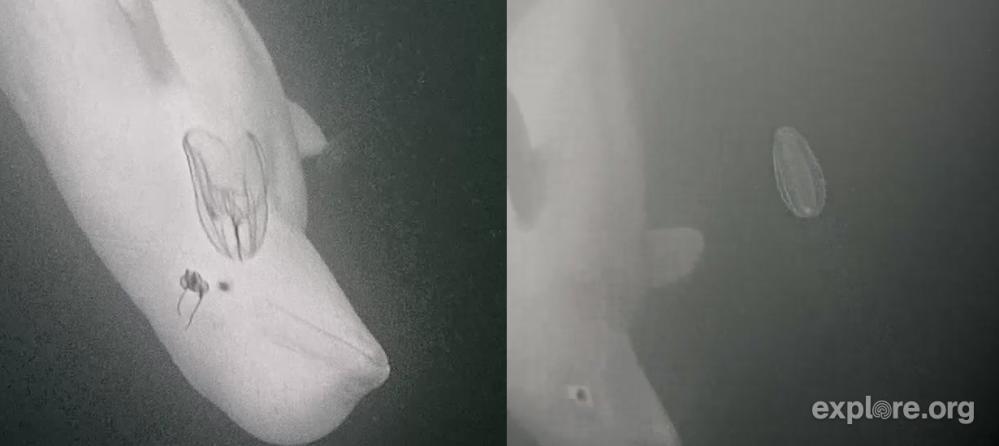
As part of the Is that a jellyfish? workflow, common northern comb jellyfish (photo on the left) and melon comb jellyfish (photo on the right) were spotted in some of our photos. Thank you everyone!
2020
December 2020
We are completely blown away by our volunteers! Thank you so much for all of the time and energy you have put into this project. The Counting and Ageing and Bits workflows are now finished!
We are working behind the scenes on getting some new workflows up and running and will make an announcement when that happens shortly!
Update on 2020 field season footage
Due to some technical difficulties and high water levels and current this summer (amongst the pandemic issues), the footage we were able to gather is not great quality. This means it's taking us longer to get those images uploaded and into the General Classification workflow. We are currently unsure if we will be able to use this footage and are looking at our options to ensure we provide you with both a good experience on our project as well as are able to gather useable data from the images.
July 2020
Thank you to everyone for helping us reach this new milestone! Over 5,500 people have powered through 216,799 classifications for our 2016 to 2018 data. There were also some really great conversations on the ‘Talk’ pages that highlighted the dedication of this group of citizen scientists. In 2019, we had almost 15,000 snapshots captured by explore.org viewers. Additionally, this year we were able to extract photos from the entire video stream (a frame every 3 seconds). This has led to a lot more photos than we have had access to in the past which we will be uploading for your assistance with. By increasing the photo database, we will be able to capture more beluga at different angles which will better assist us in getting the information about the whales that we want like sex, age, and markings. We may also be able to capture other creatures like jellyfish!
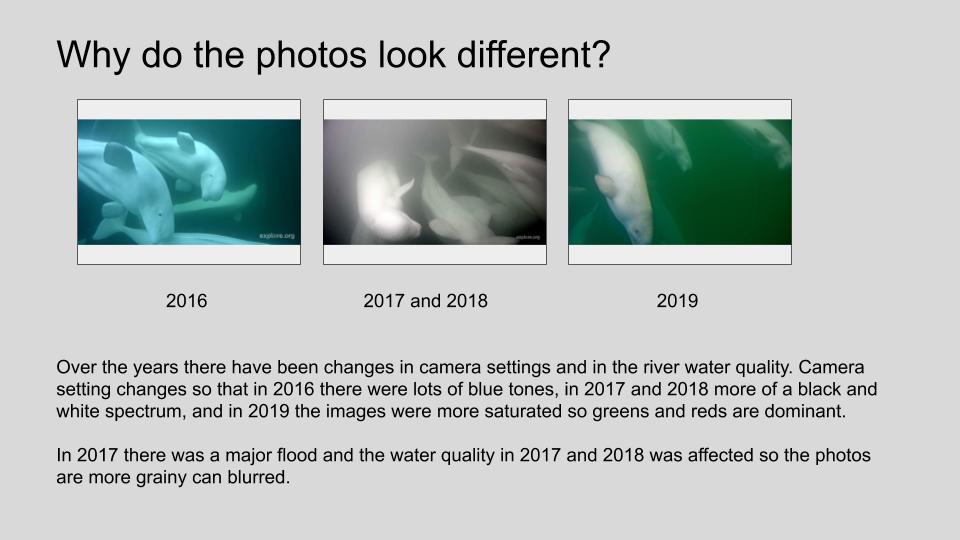
If you are a returning citizen scientist you may notice the look of the images changes between photos. Some of this variation is due to water clarity, light levels, and location in the estuary where the camera is taking photos. There are also changes due to camera settings as we try to figure out how it was set in 2016. Here is a visual summary of those camera changes.
2019
Just a quick update - we have our first recapture - a whale that was captured on the underwater camera and identified as an adult male in 2016 was sighted 19 July 2019. This beluga has a distinctive pattern of black dots that are likely the result of a poxvirus-like infection. It is interesting to see that the marking is still strong after 3 years. In 2016 and 2019 water visibility is much better and we hope to really increase our number of recaptures.
2018
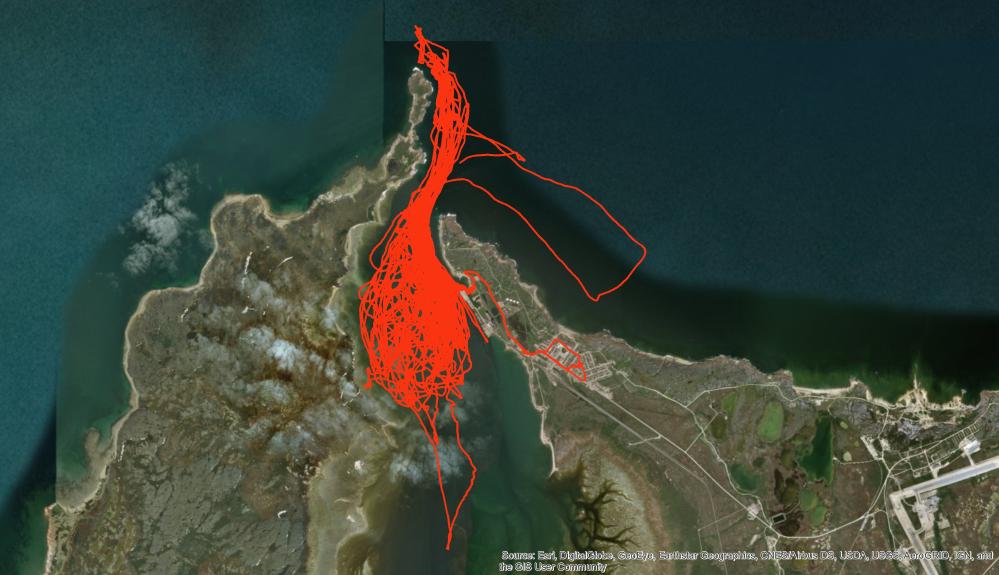
Wow, another year is over for the beluga boat. This year things started off a bit slower as we got some last-minute permits in place but after that, we were off to the races. Volunteers collected over 5000 photos this year while the boat was out. The track-lines for all the tips can be seen below.
We have started analyzing the data that people have generated so far and will be presenting some results at a conference and here in December. By looking at the data we will also be tweaking the workflow and tutorials to update the project with new information that we are learning.
Thanks to everyone who has helped out!
2017
The 2017 beluga season is over and citizen scientists on Explore.org collected 9645 photos for the project. However, here is a map of where the beluga boat traveled this summer. Each red line is from a single trip but you can see that the boat covered the same area multiple times over the summer season.
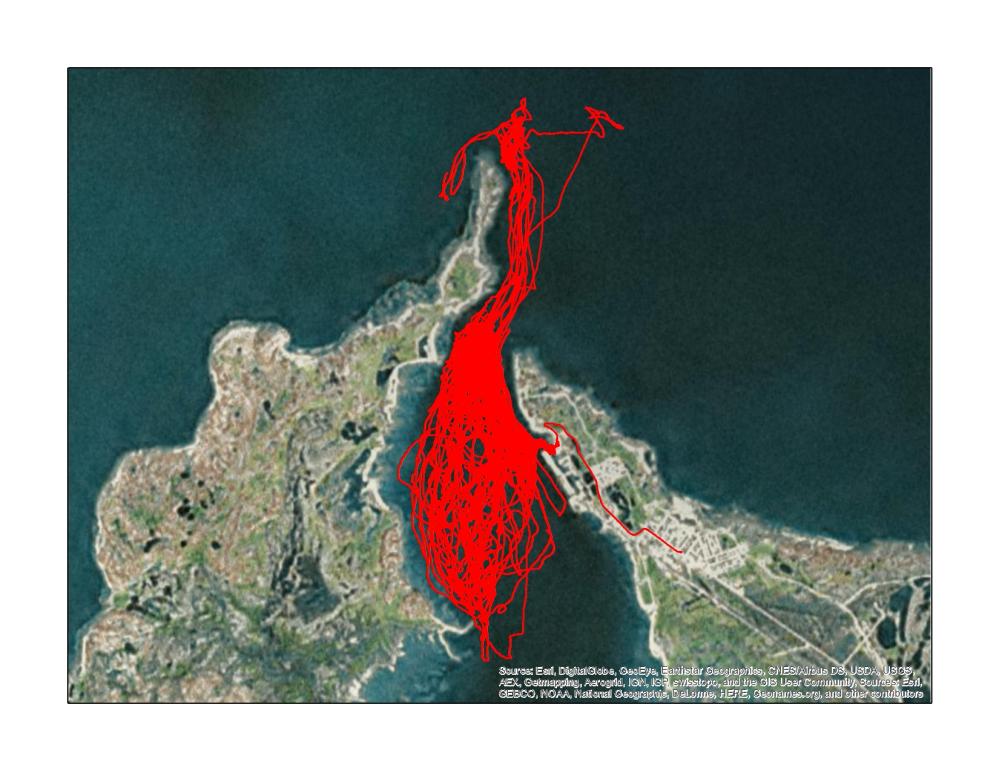
Thanks to Captain Kieran for collecting those GPS track lines to help us understand the habitat used by different age and sex classes of beluga.
2016
In 2016, we asked viewers of the beluga underwater cam (watch the highlight reel here) to take snapshots when they saw the underbelly of a beluga or if they saw beluga with marks that could be used for future identification. This resulted in over 7372 photographs that now need to be classified to determine the age class, if the animal is male or female, and if they saw distinct markings.
the Zooniverse project "Beluga Bits" asking you to help collect data about all those photos. the Beluga Cam will also be running in July and August this year (2017) which will result in another batch of photos to classify.