Welcome to Beluga Bits in the Classroom! This is a classroom-friendly version of the Beluga Bits project where you can learn about beluga whales and begin your journey as a citizen scientist. If you would like to join citizen scientists from around the world participating on the main Beluga Bits project, click here! Please note: researchers will respond to Beluga Bits in the Classroom Talk forums when they can, but cannot guarantee how frequently this will occur. If you need assistance, please check the main Beluga Bits project or reach out to a researcher directly. Thank you for your patience!
FAQ
Welcome to Beluga Bits in the Classroom
Introduction
Welcome to Beluga Bits in the Classroom! This is a classroom-friendly version of the Beluga Bits project, a citizen science project focused on researching the social structure, natural history, and health of the beluga that visit the Churchill River estuary in Northern Manitoba, Canada. Here on Beluga Bits in the Classroom, you will learn about how to identify the sex and approximate age of beluga and help classify underwater photos of beluga whales and other wildlife living within the Churchill River estuary.
Once you have learned a little about the beluga living within the Churchill River estuary, we encourage you to check out the main Beluga Bits project and join citizen scientists from around the world in helping us better understand these amazing whales!
How do I get started?
Here on Beluga Bits in the Classroom, we currently have three workflows available to help you learn more beluga whales and start your journey becoming a citizen scientist:
Counting and Ageing
In this workflow we give you two tasks:
- Place a mark on every beluga in the picture - even if they are blurry or you can only see a tail! Having a sense of how many beluga are in our photos can help answer questions about the social structure of beluga and group sizes.
- For each beluga indicate which age class they are (young, adult, or unsure) - please refer to the Tutorial or Field Guide for help answering this question. This question will help us answer questions about beluga life history, habitat use, and social structure. The Talk section is another great resource for learning about determining beluga age (#calf, #young, #subadult, #adult).
Bits
In this workflow we are asking about whether beluga in the photos are male vs. female. We ask you to:
- Mark each beluga where they can clearly see the genital area.
- Indicate whether that beluga is male vs. female.
This can help us consider questions about whether social structure and habitat use differs between the sexes. The Tutorial and Field Guide provide diagrams and pictures to help you decide whether a beluga is male vs. female.
Is that a jellyfish?
In this workflow we are asking about the jellyfish that are sometimes seen in our photos. We ask you to:
- Mark each jellyfish that you see in the photo.
- Indicate which species of jellyfish it is.
Jellyfish make fun, occasional appearances and can provide insight on the health of the ecosystem.
Where can I go if I have questions?
On Beluga Bits in the Classroom there are a few places you can look to if you have questions, aren’t sure about a photo, or would like to learn more about a topic:
Tutorial - Tutorials are available for each workflow and are designed to help you get started answering questions about the photos you are viewing. You can access a tutorial at any time while working on a workflow by clicking the “Tutorial” button at the top of your Task window.
Field Guide - The Field Guide is full of useful information to help answer your questions about workflows, beluga, and our photos. You can access the Field Guide at any time while working on a workflow by clicking the Field Guide tab at the right side of your screen. Within the Field Guide, click on the question you are interested in to learn more and view example photos.
FAQ - Here in the FAQ section we try to provide answers to common questions about Beluga Bits, Beluga Bits in the Classroom, and beluga in general.
Talk - The Talk forum is a great platform to ask questions, find examples, and get involved in group discussions. You can access the forum by clicking on the Talk button within the site banner, or if you want to discuss the photo you are looking at within a workflow you can click “Done & Talk” in the lower right corner of the Task window.
Beluga Bits - The main Beluga Bits project is a great place to interact with researchers and fellow citizen scientists to learn more about beluga.
Your Teacher - Your teachers are excellent resources if you need some help getting started or have questions.
Ageing and Social Groups
How do you determine age class?
This is applicable to the Counting and Ageing workflow.
Body colour and size are your best tools when determining the age class of a beluga. Beluga are born a dark and uniform grey colour, as they grow older whales get lighter until they reach maturity when they can be a brilliant white colour. This means the easiest way to tell ages apart is when you have adults and calves next to each other but a white and grey together also helps to make the age classes clear.
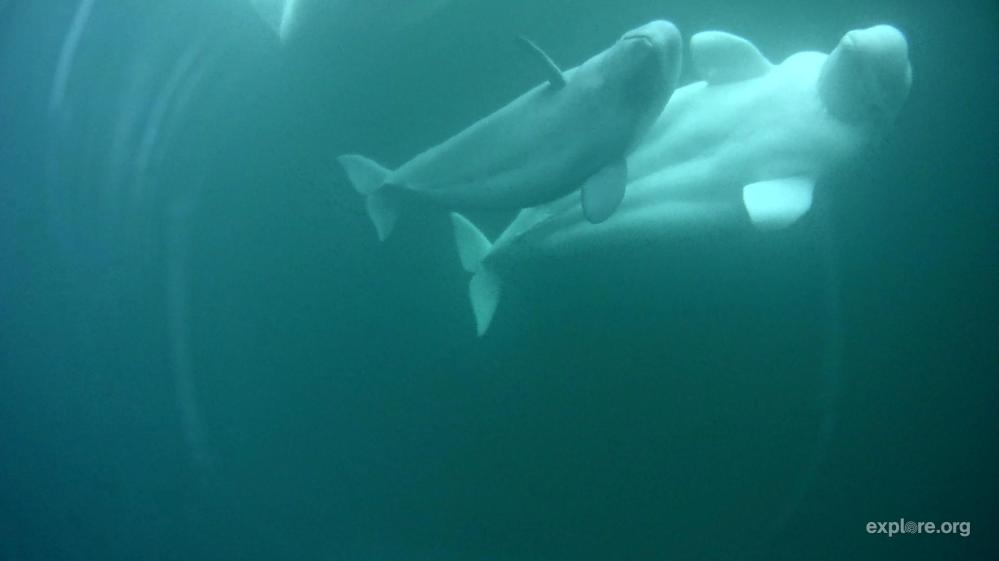
As it can be challenging to determine whether a younger beluga would be considered a calf or sub adult, we ask that volunteers simply classify beluga as “Young” if they belong to either of these categories. Newborn calves or calves of the year are uniformly grey and are rarely (if ever) seen alone. They swim very close to the mother and will be about 1/3 the size of her. You may also see a dark circle around the eye or fetal folds, which look like rolls on the calves’ body. Yearling calves are dark grey but have a marbled or mottled colouration. They still will swim close to the accompanying adult but will be 1/3 to 1/2 the size of the adult.


Sub adults can be close to the size of an adult but tend to look mottled whereas calves and adults are uniform in colour. Here is an example of a grey subadult:

Pectoral fin shape can be used as a secondary means to determine age, especially if lighting conditions make judging colour difficult. Adult beluga in this population develop upward-curving tips on their pectoral fins. We are not sure yet if this occurs only in mature males or in both sexes, but it can be a helpful indicator of age when colour is uncertain. In some pictures this upward curl can be very pronounced in adults, as in the examples shown here.
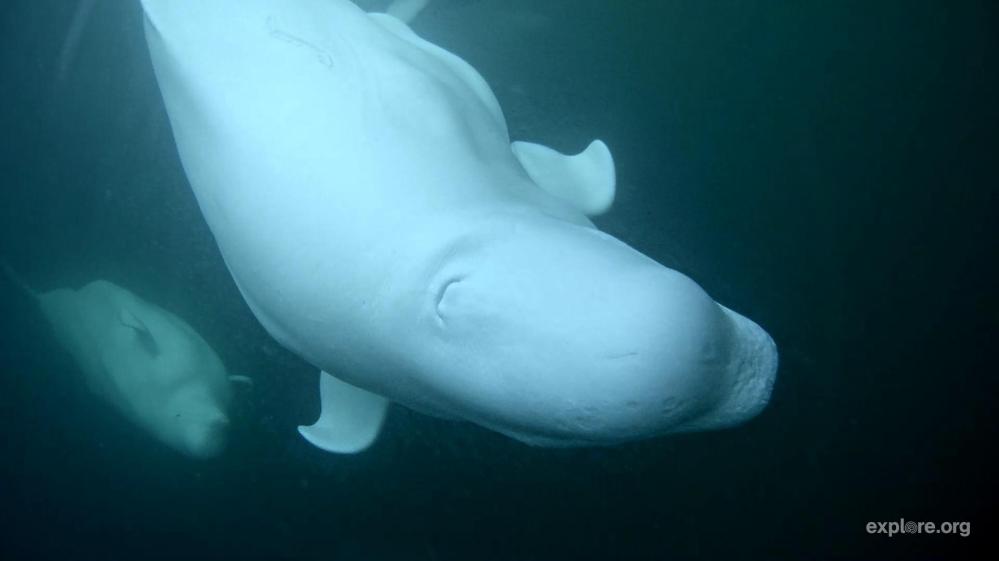

In this image, sunlight shining through the water makes it especially challenging to judge the colour of the beluga in the upper left corner. However, the generally lighter overall colour and curled fins give a good indication that this is likely an adult beluga.

I have put a mark on several whales but can't go on to the next step
This is applicable to the Counting and Ageing workflow.
We ask you to put a mark on each whale in the photo, this counts the whales for us. For each mark, you also will need to choose the age class. However, if you don't choose an age class you will still be able to mark the next beluga but until you choose an age class for each beluga the program will not let you proceed.
I am unsure of colour - are there other ways to determine age class?
This is applicable to the Counting and Ageing workflow.
The water conditions can make it difficult to determine the colour of each beluga (and thus age class) - please choose "I am unsure" if you don't know. As you classify more beluga you will get better and be able to classify most photos.
While colour is one of the best indicators of beluga age, other traits such as size, proximity to other beluga, and fin shape can be helpful as well. Beluga are born a dark and uniform grey colour, as they grow older whales get lighter until they reach maturity when they can be a brilliant white colour. Newborn calves or calves of the year are rarely (if ever) seen alone, they swim very close to the mother and will be about 1/3 the size of her. Yearling calves are dark grey but have a marbled or mottled colouration. They still will swim close to the accompanying adult but will be 1/3 to 1/2 the size of the adult.
Sub adults can be close to the size of an adult but tend to look mottled whereas calves and adults are uniform in colour. Here is an example of a grey subadult.
Pectoral fin shape can be used as a secondary means to determine age, especially if lighting conditions make judging colour difficult. We are not sure yet if this occurs only in mature males or in both sexes, but it can be a helpful indicator of age when colour is uncertain. In some pictures this upward curl can be very pronounced in adults, as in the example shown here.
Why do I need to point out the underside/genital region of the belugas?
This is applicable to the Bits workflow.
Identifying photos of the underside/genital region of belugas allows us to determine whether both males and females use the estuary. Please see the next section on how to tell the sexes apart for more information.
How can I tell males and females apart?
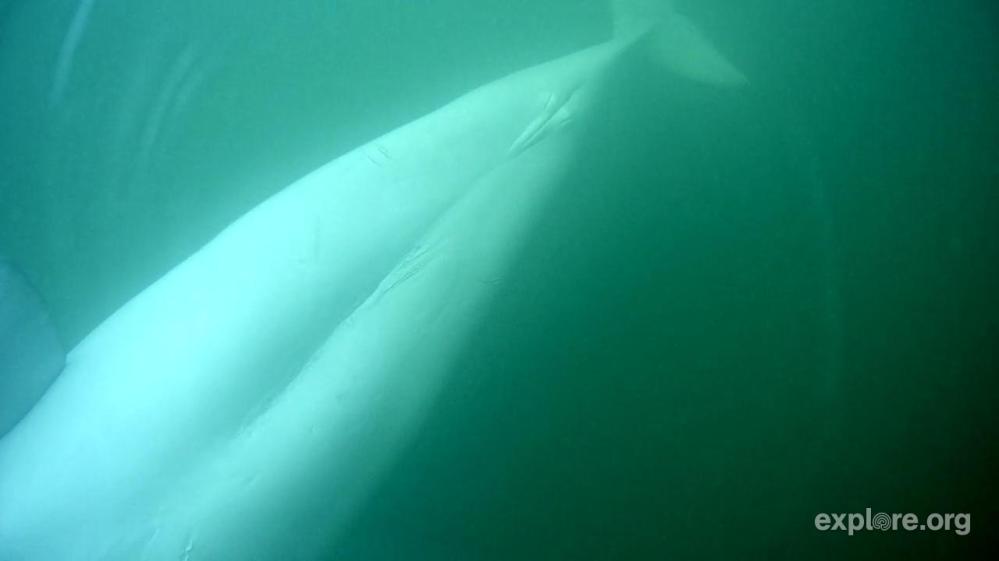
The easiest way to tell male and female beluga apart are by looking for mammillary grooves. Female beluga have two mammillary groves that run from the center line at a 45-degree angle. You can refer to the Field Guide for more diagrams and pictures if you are unsure.
FEMALE
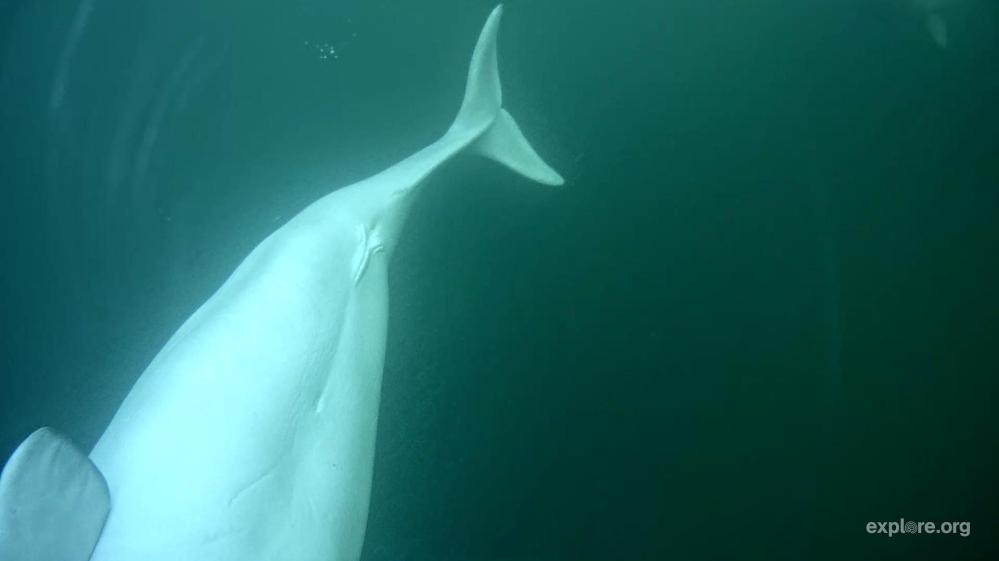
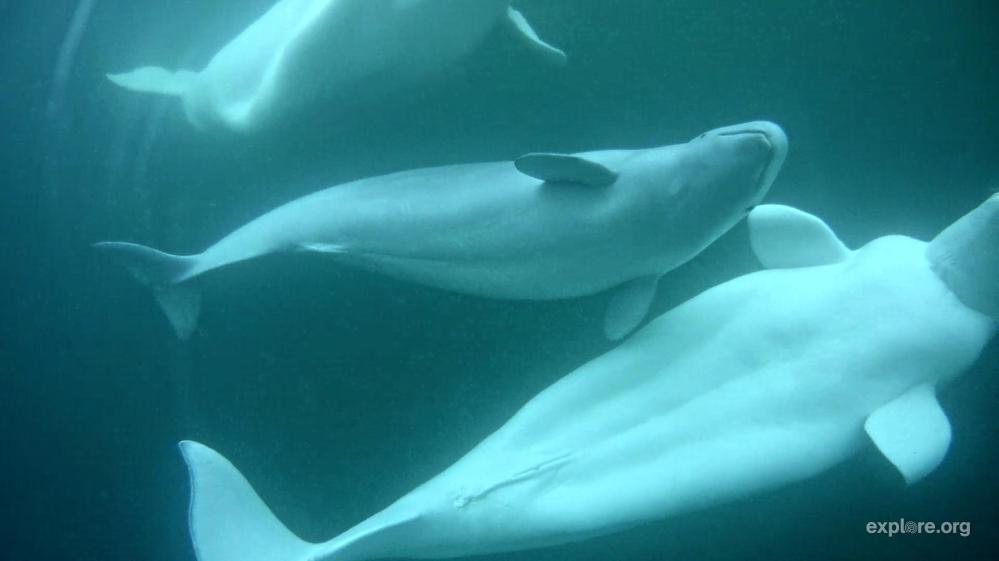
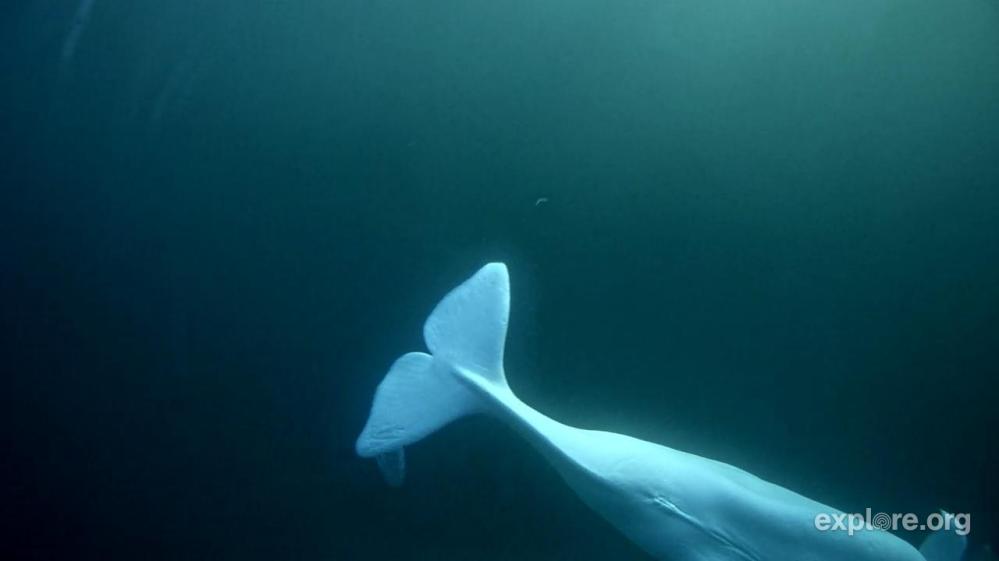
Male beluga have a centre line, but lack distinct mammillary grooves.
MALE
Jellyfish
How can I tell what species of jellyfish this is?
The Field Guide and Tutorial provide some example photos and descriptions of the five species of jellyfish that we know inhabit the estuary: moon, Arctic comb, Lion's mane, melon comb, and common northern comb. They each have relatively distinct body shapes, features, and colours; here are some example photos:
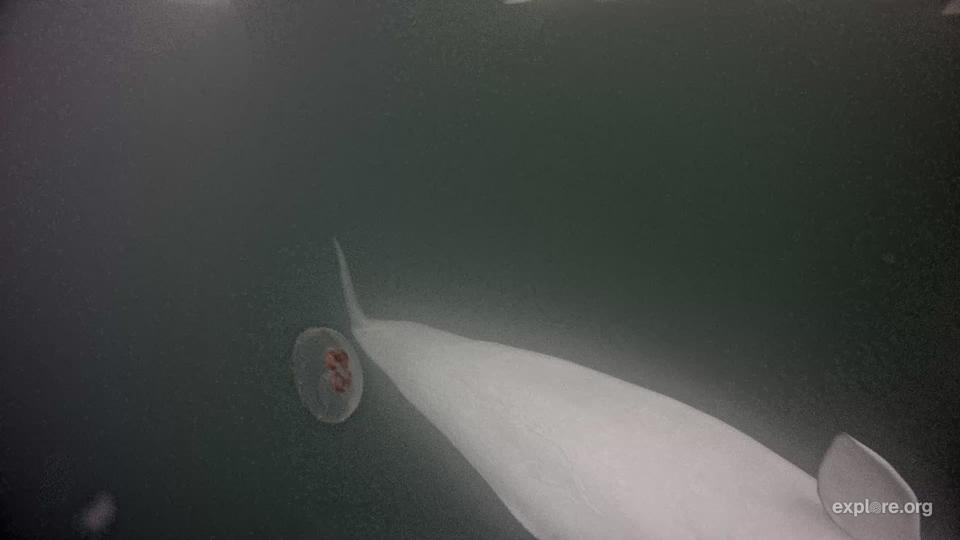
Moon jellyfish
Moon jellyfish are very common and have a translucent, circular bell (body). The rim of the bell is smooth, unlike the Lion's mane jellyfish, and often you can see reddish clumps or "C"s (gonads) grouped in the centre of the bell.
Arctic comb jellyfish
Arctic comb jellyfish are sometimes called "sea-nuts" because of their cylindrical bodies. They often have just a couple long tentacles flowing behind them. You can sometimes make out long "strings" extending from their bodies and down their tentacles. This species produces small amounts of light (bioluminescence) from the structures that help it move through the water.
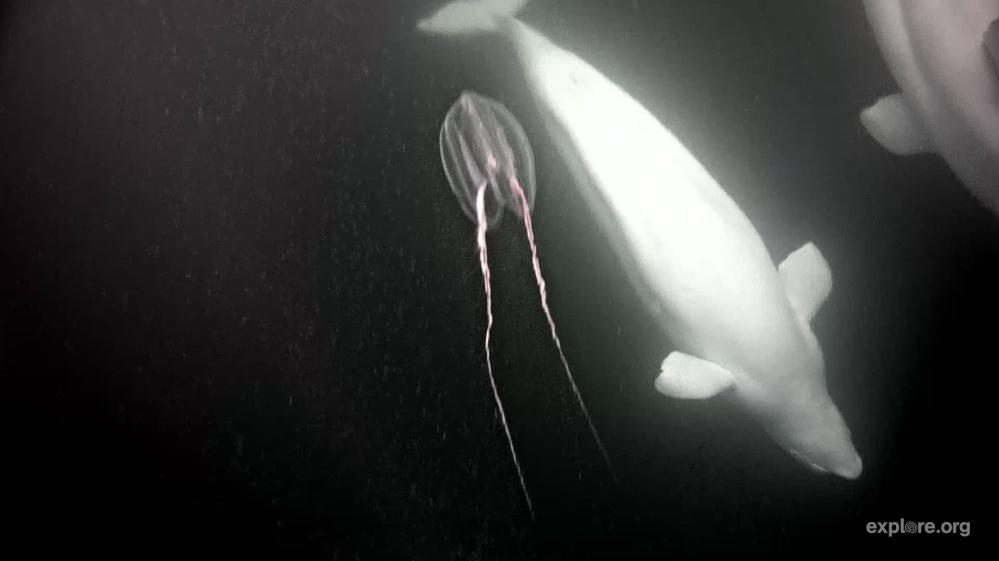
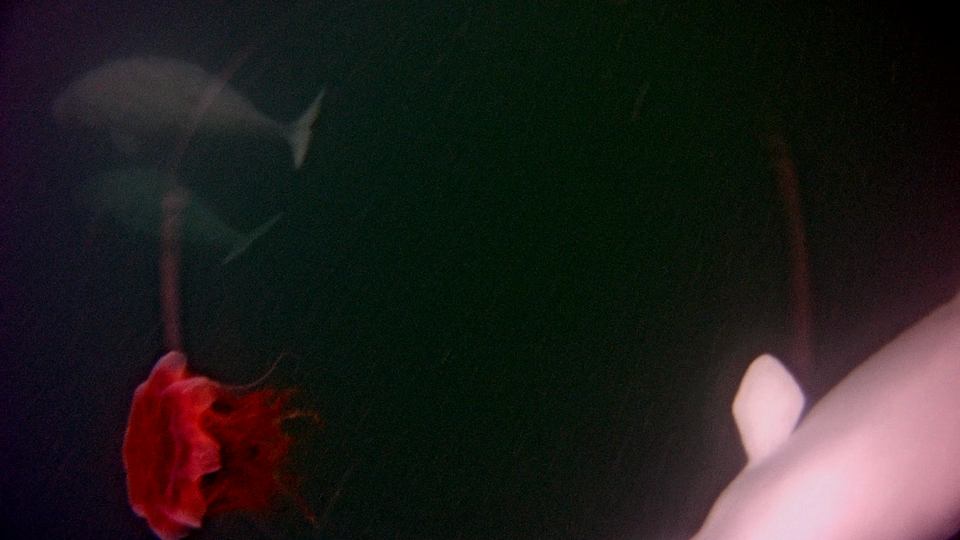
Lion's mane jellyfish
Lion's mane jellyfish are large and reddish in colour, with many showy tentacles flowing from a large bell. The rim of the bell is often wavy in appearance, unlike the moon jelly.
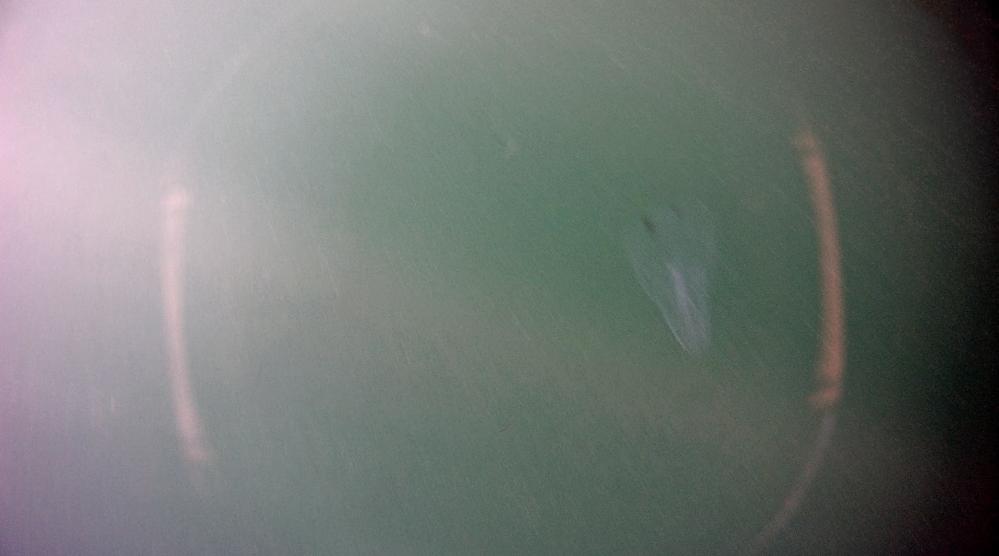
Common northern comb jellyfish
Common northern comb jellyfish have similar-looking comb rows to arctic comb jellyfish, but they also have pronounced pad-shaped lobes surrounding the mouth. Each of these lobes often have a dark patch near the end, but not always.
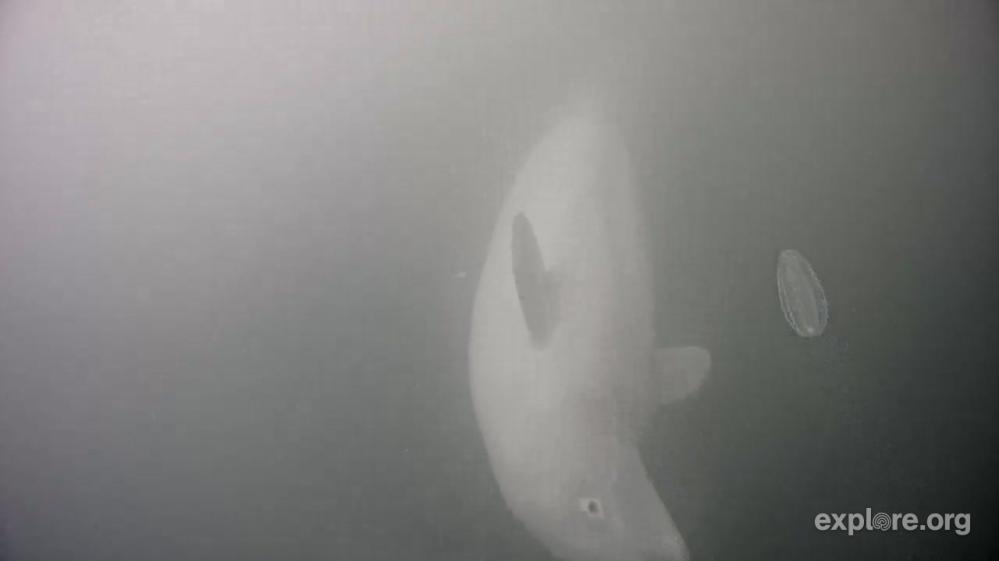
Melon comb jellyfish
Melon comb jellyfish are a species of comb jellyfish, they have eight rows of "combs" which they use propel their bodies through the water. This species can look very similar to arctic comb jellyfish, however melon comb jellyfish do not have tentacles.
This jellyfish doesn't look like any of those species, what is it?
This is applicable to the Is that a jellyfish? workflow.
Maybe this is a species we haven't encountered yet! There's potential that we might discover new or invasive species, but please be sure to carefully check our example photos just to be sure. If you are certain that it isn't one of these five species, please select "Other" as the species id. If you are uncertain about which species it is or aren't sure that it is a new species, please select "Unsure" as the species id. You can bring the photo to our attention as you finish classifying by using the "Done & Talk" button and leaving a comment.
General Information and Cool Stuff
Why does this beluga have uneven pigmentation, splotchiness, speckling, or strange colouration on its head/body?
There could be a few reasons why the colour of a beluga looks a bit strange.
As beluga mature their colouration transitions naturally from the fairly uniform dark grey of a calf to the white of an adult. If the beluga is smaller than an adult and has mottled or marbled colouration all over its body, it is likely yearling or sub-adult.
Belugas also moult annually, either gradually or all at once. If a beluga is mid-moult their colouration may look a bit uneven or patchy. Other reasons could be skin infections, viruses, scars, or other markings that give the skin an uneven appearance, or differences in lighting and picture quality.
Here is an example of a sub adult transitioning from grey to white with some discolouration on the head that might be due to a skin infection of some kind.
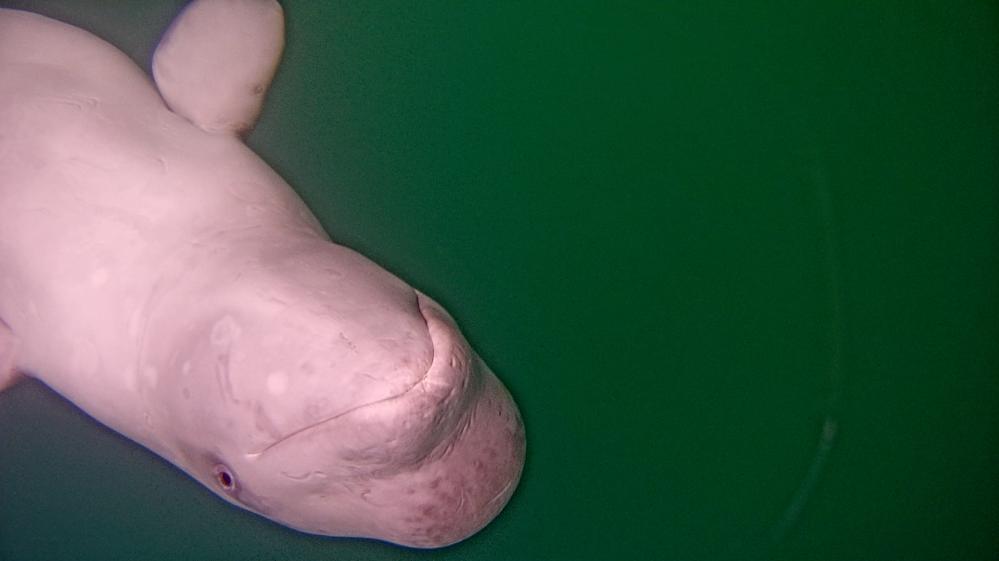
We also sometimes see areas of hypo or hyper pigmentation that is not related to moulting and may be more permanent. We are still unsure as to the cause of these marks but hope they will help us identify individual whales over time.
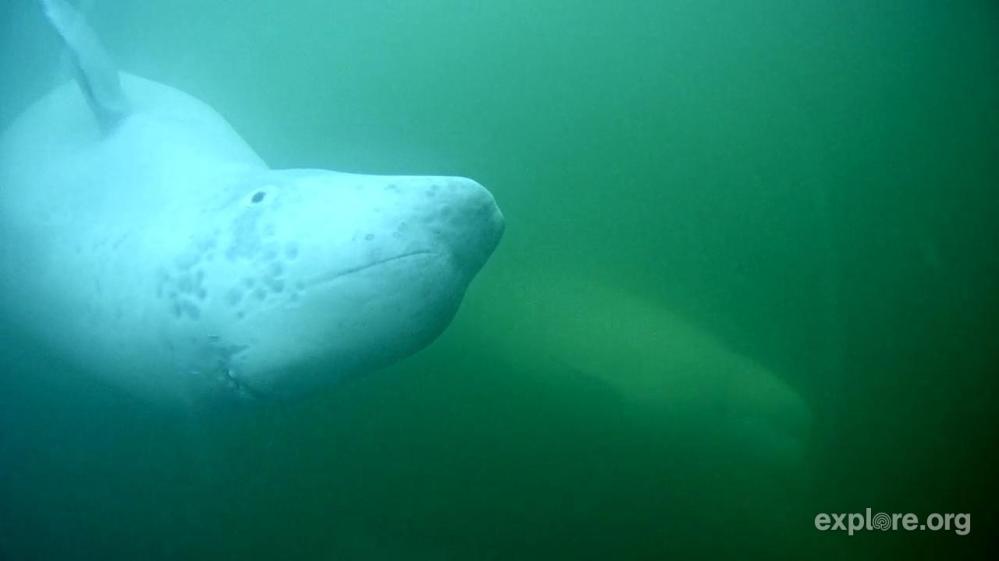
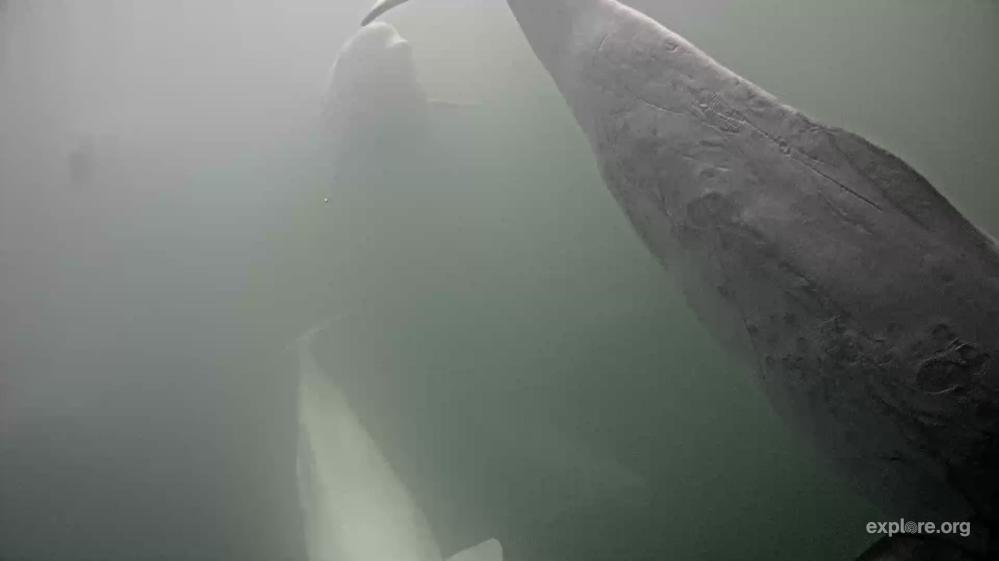
Check out hashtags like #mottled, #sub-adult, #pigmentation, and others in the Talk section to see more examples!
Is something trying to eat the camera?!
Sometimes beluga get a little too curious about the camera! If you come across photos like the ones below while classifying photos, please answer “Yes” to whether there is a beluga in the photo! While we cannot see the underside or identifying marks, we still want to know that there is a beluga in that photo.
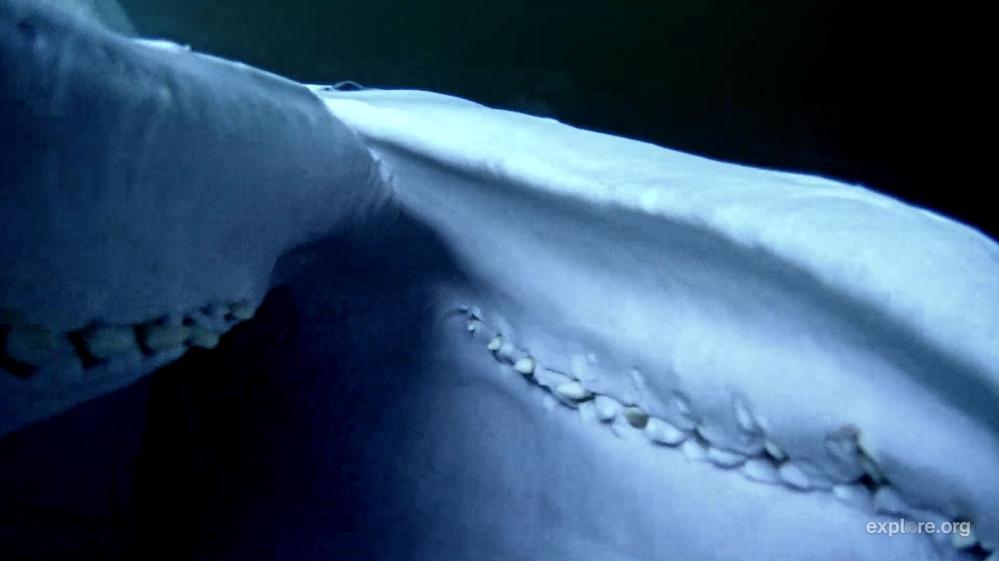

If you’re lucky you might stumble across photos of beluga getting up close and personal, check out those peg-like teeth! Have a look in the Talk section under #teeth, #mouth, and #belugamouth to see more photos of beluga giving the camera a taste!
What is that weird thing in the photo that isn’t a beluga?
Another fun part of this project is spotting other cool things in the photos! What you are seeing could be a variety of things, but here are a couple of common sights:
- Jellyfish are common in photos – lion’ s mane, moon, and arctic comb jellyfish all live within the estuary. Feel free to use the #jellyfish tag if you spot one!
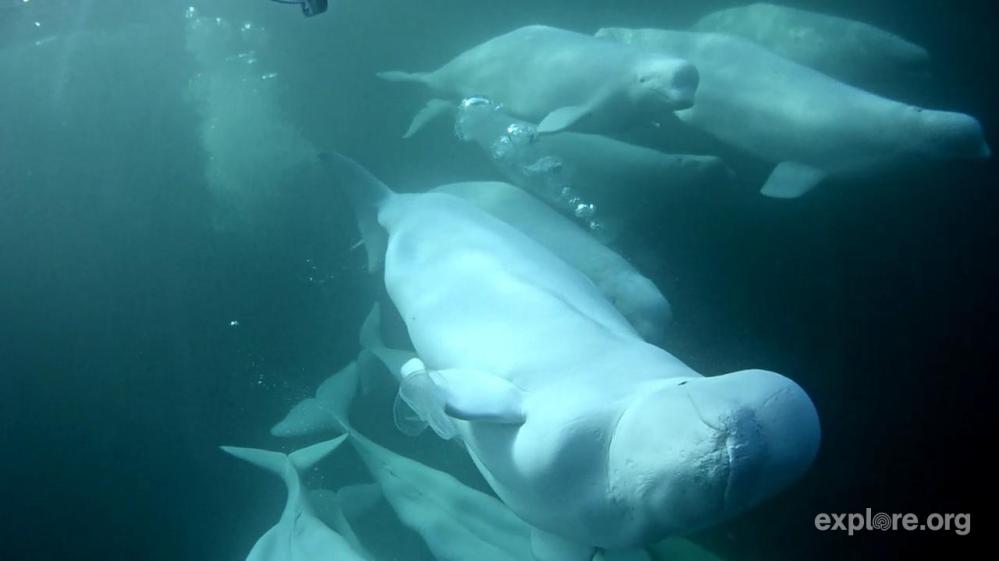
- Lines of bubbles; these might be produced by calves who do not yet have good muscle control for closing their blowholes or by adults that can produce them as a display, when they are vocalizing, or when they are startled
- The zodiac/boat and propellers - the boat which takes our photos
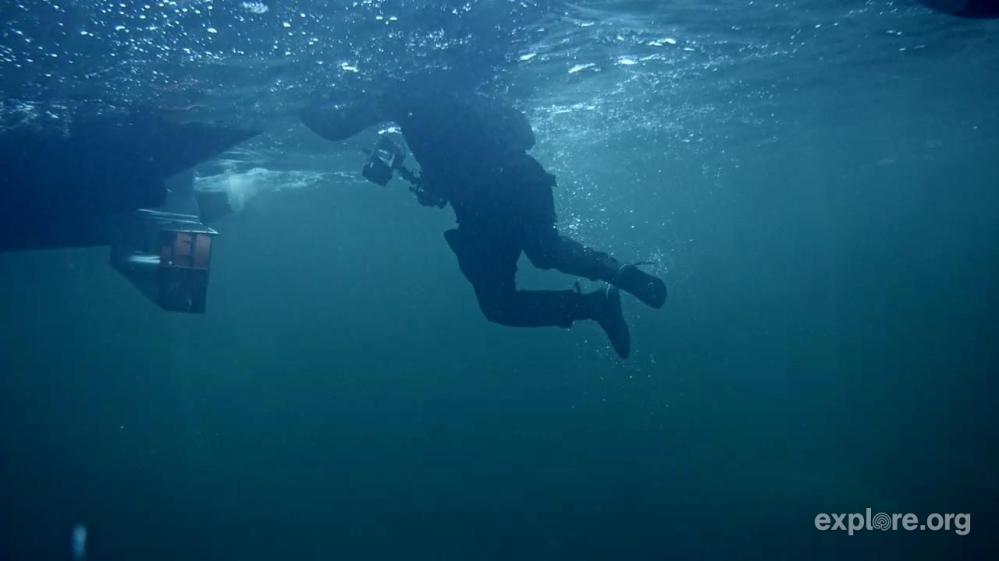
- Humans - sometimes the camera requires maintenance in the water, or you might spot the Beluga Boat captain who drives the boat
- Seaweed / kelp
- Rocks along the river bottom
- Our 360 camera
If there aren’t any beluga in the photo, we still ask that you select “No” when answering whether there are any beluga in the photo. But if you see other cool things we do encourage you to use hashtags and share them with the Beluga Bits community!
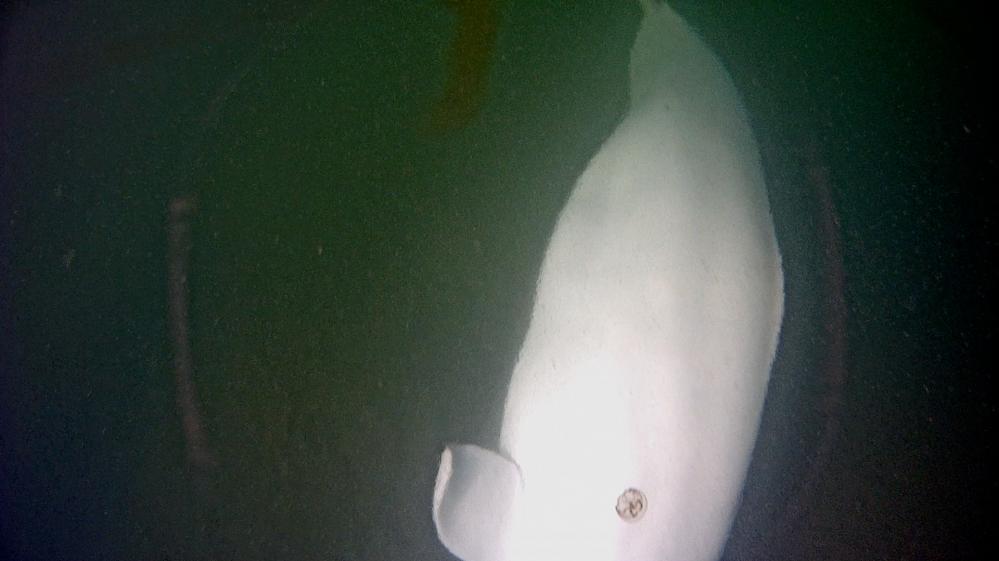
Here is a small jellyfish in front of a beluga:
Here is an example of a jellyfish alongside a beluga group with bubbles:
And a researcher in their natural habitat 😉