


Finished! Looks like this project is out of data at the moment!
Thank you for your efforts! This project's classification effort is complete! To browse other active projects that still need your classifications, check out zooniverse.org/projects
Research
What are we trying to do?
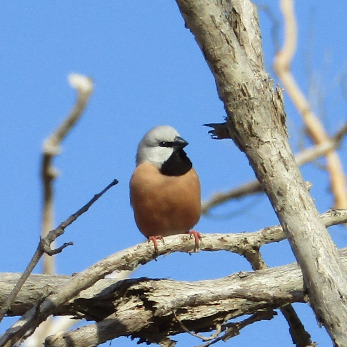
The ultimate goal of our research is to develop call recognisers for a range of bird species, including rare and endangered species. Rather than manually listening through audio data, we will be able to use these recognisers to identify species-specific vocalisations. This will allow us to increase our capacity to monitor environments using audio, meaning that we are able to sample more field sites and for longer periods of time than would otherwise be practical. By using a recogniser to gather large amounts of occurrence data, we will have a better understanding of where certain species occur and where we should focus conservation and research efforts.

Why do you need our help?
To train a recogniser to detect sounds, we need large amounts of labelled audio, much more than a few researchers are capable of labelling on their own. By contributing to this dataset you will be helping to improve our ability to monitor the environment using audio recordings.
Where do the audio recordings come from?
All the audio recordings have come from passive acoustic recorders deployed as part of the Australian Acoustic Observatory, a continental-scale acoustic sensor network, recording for a five-year period across multiple Australian ecosystems. Recorders at each of these locations use a solar panel for charging and large capacity SD cards so that audio can be collected 24/7 all year long. This allow us to capture sounds from a large variety of animals.

We are currently conducting biodiversity surveys at six of these sites along the east coast of Australia to validate the effectiveness of using passive acoustic recorders for monitoring biodiversity. The audio you will be helping us label as part of this project all come from these six sites.

These sites are being surveyed twice a year using a range of standard vertebrate biodiversity trapping and survey techniques. By comparing the species we detect using manual methods with those we can detect using audio recordings we will gain a better understanding of the usefulness of passive acoustic monitoring as a long-term monitoring tool.

Photos: Sebastian Hoefer