


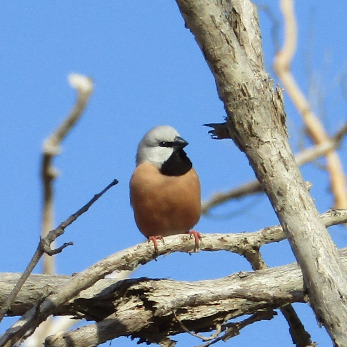
Finished! Looks like this project is out of data at the moment!
Thank you for your efforts! This project's classification effort is complete! To browse other active projects that still need your classifications, check out zooniverse.org/projects
FAQ
Why is it important to develop automated recognisers?
Acoustic recorders and data storage capabilities are constantly improving. We are now at the point where we can collect much more data than it is possible to listen to. One way to get around this problem is to develop call recognition models for species of interest. However, this requires a lot of labelled data to train the models with, much more than researchers can do own their own. Your help will be invaluable in providing researchers with the data required to develop these recognisers.
What are you hoping to learn from analysing these recordings?
If we are able to accurately detect species vocalisations in long-duration recordings the potential value to research is huge. With this data, we could improve our understanding of where and when certain species occur across Australia, how environmental conditions interact with occurrence, as well as general monitoring of how species and communities change over time.
Where did all these recordings come from?
The recordings in this project are from all around Australia collected as part of the Australian Acoustic Observatory (https://acousticobservatory.org/).
What if I am unsure of the correct classification?
Please do your best to identify whether the vocalisation of interest is present in the clip. Use the field guide which includes reference calls for the species and other birds with similar calls that you may hear . Feel free to play the audio clip as many times as you need to. Your classifications will be collected together with the classifications made by other volunteers on the same audio clip. By taking an average of the classifications from multiple volunteers we should be able to obtain a reliable measure of which species are vocalising within each clip.
Other questions?
Feel free to reach out to us on the Talk channel and we will do our best to answer your questions.