


@ï @ï @ï
Research
Invertebrate Zoology at the Field Museum
Who are we and what's 'snail scribing'?
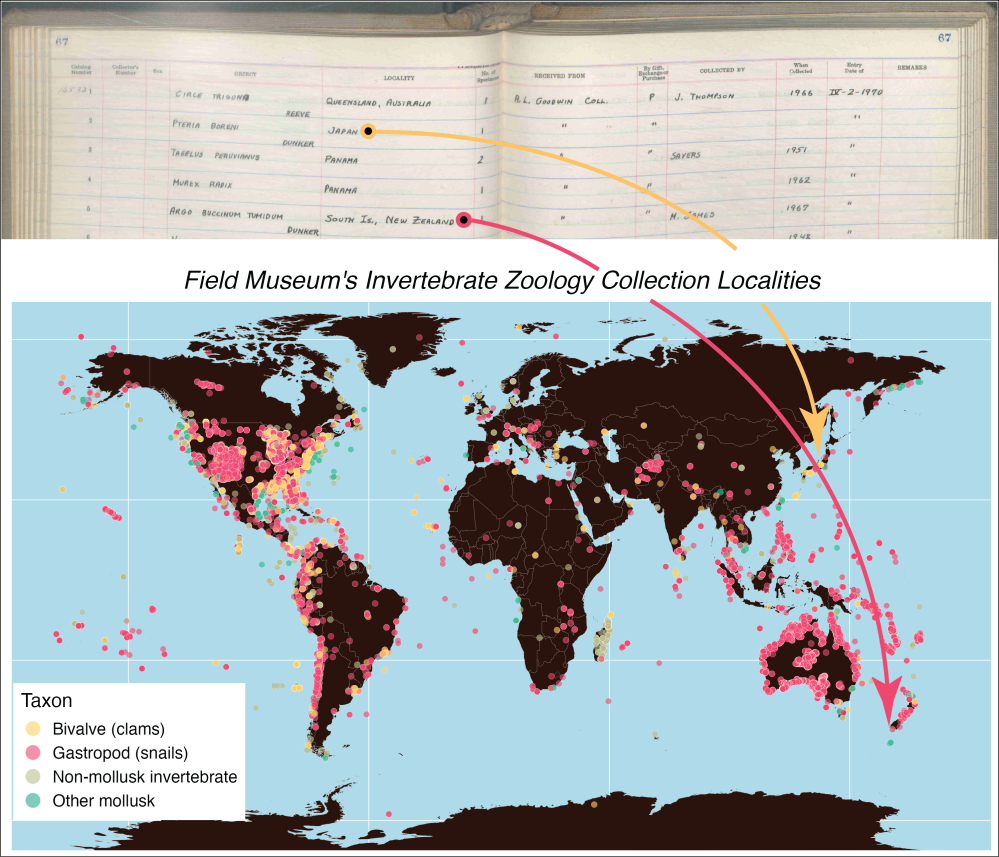
The Invertebrate Zoology Collection at the Field Museum (Chicago, IL) contains around 5 million specimens, each with a unique ecological story to tell. Unfortunately, roughly one million specimens and the metadata they represent (the specimen's who, what, when, and where) remain inaccessible to the public and scientists around the world. Making the collection digitally available to everyone is a primary goal of the Invertebrate Zoology Collection Team. With the help of citizen scientists (like you) we can advance the knowledge of understudied mollusks by making these biodiversity records available through our online database. With Snail Scribe Archive, our goal is to transcribe the remaining ~75,000 lots in the collection from our original, handwritten ledgers. These data will then be hosted on the Field Museum's website and shared with the general public through biodiversity aggregators (GBIF, InvertEBase, etc.).
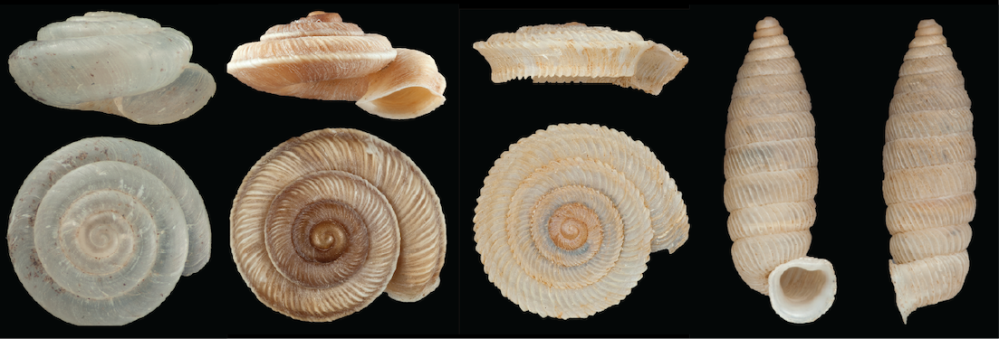
Snail specimens housed at the Field Museum. From left to right: Lacteoluna selinina, Bradybaenidae sp., Discus clappi, Holospira goldfussi.
Why is this work important?
Mollusks, a diverse group of invertebrates, have a profound ecological impact in various habitats, including marine, freshwater, and terrestrial environments. They occupy a wide breadth of ecological niches and perform essential ecosystem functions, thereby enhancing ecosystem resilience and stability. With their high species diversity and unique adaptations, mollusks play crucial roles in ecosystems through trophic interactions, decomposition & nutrient cycling, water filtration, and habitat creation.
By investigating specific species, researchers can gain further insights into the complex interactions and dynamics within ecosystems over time. Continued research and conservation efforts are necessary to protect and preserve mollusk populations and their habitats, ensuring the ecological integrity and functioning of our planet’s diverse ecosystems.
The historical data represented in our collection can help inform important scientific studies on biodiversity, ecosystems, climate patterns, and environmental threats. Researchers can compare these historical data with newly collected samples to understand changes in biodiversity and investigate the causes and impacts of these changes.
With support from:
