


Research
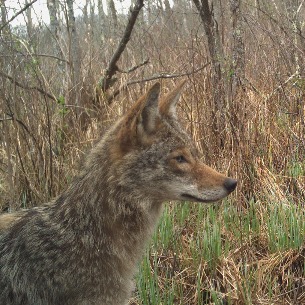
The Snapshot USA project, launched in 2019 by Smithsonian’s National Zoo & Conservation Biology Institute, is a nationwide effort to document and understand America’s wildlife. Through a network of universities, community colleges, high schools, government agencies, Tribal entities, nonprofit organizations, and other partners, motion-activated cameras ("camera traps") are deployed across the country to record animals in their natural habitats without disturbing them.
Using a standardized survey protocol, Snapshot USA has built the most comprehensive record of mammal biodiversity ever assembled in the United States. Data are collected annually during September and October, and the project has documented more than 1.7 million observations of 131 mammal species and over 93,000 observations of 255 bird species to date. These records support ecological research, conservation planning, and long-term studies of wildlife populations and distributions. We are so appreciative of the researchers who collect and share the data for this collaborative project. You can view the full list of contributors/authors in the Snapshot USA five-year data publication posted under the Results tab.
As the project continues to grow, the Smithsonian is also developing a permanent digital collection to preserve the photographs generated through Snapshot USA and related initiatives. This emerging archive will ensure that the image "specimens" and the biodiversity data they contain remain accessible for future research, education, and public engagement.
In 2026, the Smithsonian and its collaborators are extending this effort along the historic route of the Corps of Discovery Expedition led by Meriwether Lewis and William Clark between 1803 and 1806. More than two centuries ago, the expedition crossed North America documenting the landscapes, plants, and animals they encountered. Their journals provide a remarkable snapshot of wildlife distributions at the beginning of the nineteenth century.
Figure 1. Images from Lewis' and Clark’s journals, including a sketch and description of a sage grouse. The journals were entrusted by Thomas Jefferson to the American Philosophical Society in Philadelphia and have since been transcribed and published online by the University of Nebraska Press.


Throughout their journey, Lewis and Clark recorded detailed observations of species ranging from prairie mammals to birds of the western frontier, creating one of the earliest systematic records of North American biodiversity. Today, we are revisiting those same landscapes with motion-triggered cameras, creating an opportunity to compare wildlife communities across more than 200 years of environmental change.
We have geotagged and mapped historical wildlife observations from the expedition journals so they can be compared with wildlife documented by our modern resurvey. Cameras will collect sequences of 3-10 images throughout the growing season (April–October) at locations extending roughly 80 km on each side of the trail, approximating the landscapes the expedition encountered.
Figure 2. Locations of camera traps deployed along the trail in 2026. The National Park Service maintains the Lewis & Clark National Historic Trail website, which includes maps, historical background, and information about sites along the expedition route.

Our task is to identify the species captured in these images, count the animals present, and record visible behaviors and characteristics. We will also assess image quality, creating information that will help future users of the digital collection identify records that are best suited for different types of ecological analyses and research questions. Together, these observations will allow us to compare where species were recorded by Lewis and Clark with where they occur today and where they may be found decades into the future. By connecting historical records with modern wildlife observations, you will help scientists understand how species distributions have changed over two centuries while building a lasting resource for future research on America's ecological history.
In many ways, this project continues a tradition of discovery that began with the Corps of Discovery itself. While the tools have changed—from field journals to camera traps—the goal remains the same: documenting the living world and deepening our understanding of the wildlife that shares it with us.