


Finished! Looks like this project is out of data at the moment!
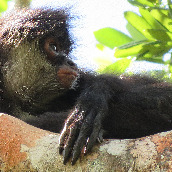
Protect the forest by finding the spider monkeys for British Science Week 2020
Research
Astro-ecology
Saving endangered animals with science from the stars
Animals are going extinct at a rate not seen since the disappearance of the dinosaurs. To help save endangered animals we need to monitor and understand ecosystems very well, and catch poachers before they do any harm. Drones allow us to survey large and difficult to reach areas quickly with minimal disturbance to wildlife.
Do you want to help save endangered animals using drones? Of course you do!
We’ve teamed up with the British Science Association to bring you a brand new set of imagery taken by drones that need classifying. During British Science Week, which is taking place between 6-15 March 2020, we want to tag and classify as many images as possible.
Now tell us, how many spider monkeys are there in this tree?

Sadly even with a drone its not always easy to find the animals we're looking for.
Have another go with this thermal infrared image instead!

(There are 9 monkeys - they are the bright yellow blobs.)
In thermal images animals glow brightly because of their body heat - and because they are warmer than their surroundings they really stand out. This glow is the same type of glow that stars and galaxies have out in the Universe. This means that we can use methods from astronomy to find the animals and poachers and tell them apart automatically. We want to build a system using astronomical techniques which detects and identifies different animals as the drone is flying, so we can get the most accurate knowledge of ecosystem health to build the best conservation strategies. But to do this we need to tell the computer algorithm what it is looking at, this is where you can help.
Astro-Ecology is a new research group at Liverpool John Moores University which has brought together ecologists, conservationists, astrophysicists, engineers and computer scientists to build this system. We are working with conservation groups around the world to help monitor and protect Earth's vital biodiversity.
Here we're flying above the rhinos and lechwe (antelope) at Knowsley Safari. The numbers show the confidence of the algorithm, for example 0.88 = 88% confident that this animal is a rhino.

We've had success with our drones and animal identification systems at Knowsley Safari and Chester Zoo. Now we want to train our algorithm with animals in the wild.
About British Science Week
British Science Week will take place between 6 - 15 March 2020, and is the UK’s largest celebration of science, technology, engineering and maths. Every year, the UK public are asked to help tackle a problem set by the research community by getting involved in the British Science Week citizen science project – and this year is no different!
