


THANK YOU! PROJECT IS NOW PAUSED: PLEASE READ UPDATE FROM MOLA: 👉follow this link 👈
FAQ
Why has the project been set up with a 'column by column' approach to the transcription?
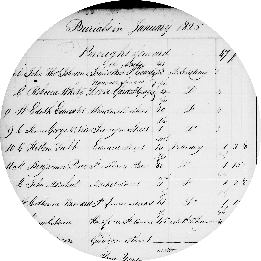
The records at the heart of this project present several different challenges for transcription.
The officials who completed the registers by hand each did so slightly differently, so no two pages will look alike. Some records have the column headings clearly labelled, others don’t. Some records contain detailed information about the individual, the location of the burial and the associated costs. Others record only very limited biographical information.
Most transcription projects would ask their participants to record the entries line by line, gathering all the detail about one individual from the record. However, due to the variation we are dealing with our recording has been built around a column-by-column approach, so you’ll transcribe, for example, all the addresses or names you can see on a page. These groups of information have been gathered together into ‘workflows’.
Workflows are a series of questions designed to retrieve specific information from the records. It is up to you which of these you complete. Each workflow is accompanied by a tutorial which provides a step-by-step guide.
As well as changes between what kind of information was recorded the handwriting of each clerk may pose their own unique difficulties when trying to decipher an entry. For reference we have provided links to handwriting guides and a list of commonly used burial record abbreviations in the Field Guide.
Also included in the Field Guide is a list of the kind of information that has been recorded in the burial records. Not all of these will appear on every record, if you get stuck remember you can ask questions in ‘Talk’ or click on the help section where it is available.
Will you be able to name the individuals found? Will people be able to trace their ancestors?
Burial records provide the names of people buried at the site but we won’t be able to link all of these names to specific skeletons excavated. Where identifiers, such as name plates or personal items are found associated with burials and do identify individuals there is huge potential to combine historical research with the osteological analysis of the skeletons to discover more about the lives of these people.
This has the potential to be the largest collection of archaeologically excavated named burials so the osteological evidence can be linked with historical and biographic documents such as wills and coroners’ records that can provide information such as date of burial, cause of death and in some cases, occupation and address. This allows archaeologists to build individual biographic and life histories.
How will you use this data?
The data collected will be used in several ways. Crucially, it will be used alongside excavations MOLA Headland has undertaken at other sites in Birmingham and Stoke Mandeville. It will enable us to examine the changes in burial practices over time and how urban communities adapted to population growth through how they buried their dead. We will also be able to compare the prevalence of certain causes of death in certain periods and how causes of death may have differed between urban and rural communities. This will help us to tie historical events to information within the records. The data will also be compared with existing records of other cemeteries to place St James’ within its wider historical context. At the end of this project, the information generated will held at ADS (Archaeology Data Service) and as such will be made freely accessible to the public. You can use them to start your search for information related to your own family. You can also access these records, and many others from the parish, in the City of Westminster Archives.
Are there potential ethical questions associated with people reading others’ burial records? What if there is sensitive, revealing, personal or otherwise emotional information in them?
The records we are transcribing are part of the City of Westminster Archive, as such any information contained in them is already publicly available through both the original copies and the microfilm. There will be an increase in profile and accessibility of the documents, but we aren’t revealing anything that can’t already be searched through.
Where can you find Mental Health Support?
The St James’s Piccadilly burial records contain personal information relating to the people who lived and died in the 18th and 19th centuries. In many cases, this information includes the circumstances around an individual’s death. We recognise that transcription volunteers will reflect on personal information within the burial records in different ways. If you find yourself experiencing distressing feelings or are in any way negatively affected by the information within the burial records, please:
- Give yourself a break from the activity and do something else you enjoy;
- Ask questions on the Talk threads or seek support from other volunteers or friends who may have experienced similar feelings;
- Seek support from the following organisations who are well placed to assist and support:
o Mind - Infoline: 0300 123 3393, 9am to 6pm, Monday to Friday or email: info@mind.org.uk
o CALM – call 0800 585 858 5pm–midnight, 365 days a year
o Shout - Text SHOUT to 85258 for a text support service
o Samaritans - call 116 123 or email jo@samaritans.org
o NHS – call 111 to be directed to your local helpline
o Tommy’s- for support and advice following a pregnancy loss or stillbirth, you can contact the team at midwife@tommys.org or you can call them for free on 0800 014 7800 (Monday to Friday, 9am to 5pm).
o The Miscarriage Association- for support and advice following miscarriage, ectopic pregnancy or molar pregnancy call 01924 200799 (Monday to Friday, 9am-4pm).