


Please give us feedback using this short Google form https://goo.gl/forms/iCNj0cluFryPTxVP2.
Research
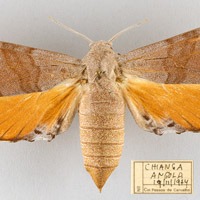
We are currently working with the objective of making data from the insect collection of the Museu nacional de História Natural e da Ciência (UL), at Lisbon, Portugal, available to the general public, especially the biodiversity researcher community. This collection includes currently over 35 thousand records, but there is still a large part of the collection that needs to be registered, digitized and made accessable.
The data obtained from Zooniverse will promote the digitization of the collection, promoting its public accessibility increasing the collection's scientific value. data will be published in the museum's digital repository (www.digital.museus.ul.pt) and in the GBIF, where we already have over 30 thousand records published (https://www.gbif.org/dataset/79673413-746f-48f2-bd8a-7cf27807317e) and soon expect to publish a new larger and improved dataset.
Natural history collections are important biodiversity repositories and the most complete and reliable form of recording biodiversity occurrences, allowing the detailed observation and multiple checks and veryfications from differente speciallists. It allows the applications of several research methods, such as detailed morphometric analysis, the use of molecular genetics, chemical analysis, etc. Collections are also fundamental infrastructures for biodiversity systematics.
The digitization of collections and the arise of digital platforms, such as that maintained by the GBIF, have led in the last years to a dramatic increase of biodiversity data availability and one of the main goals of natural history museums is to facilitate access to the collections' data and foster new scientific studies based on these data.