


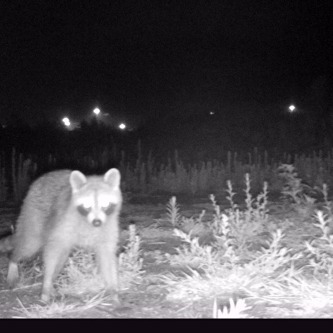
Results are posted! Go to the "About" tab and select the "Results" section!
FAQ
FAQ
Q - The stats page says this project is out of data?!
A - We will let volunteers know when this project is nearing completion, which will be a while because there are ~1.5 million photos for volunteers to evaluate. However, the stats page is based off "subject sets". These are sets of photos (usually batches of 4000 or so) that are active for volunteers to sort through. Once one of these are nearing completion, then another set is activated. This ensures every photo is viewed. Please do not be discouraged, keep evaluating photos!
Q - I am new to this site, where do I start?
A - Read about the interior least tern and piping plover predators project by clicking on the About tab at the top of the screen, and then the Research tab. When you understand a bit more of what we are doing and trying to accomplish, it is time to move on to looking at photos: select the Classify tab, then at the bottom of the screen you will see a button Show the Project Tutorial. Review that and then commence with looking at photos and selecting the species you see.
Q - Why do some photos seem repetitive?
A - Because these are time-lapse AND motion triggered photos. The purpose of the time-lapse is to capture possible predator activity that may not be in range of triggering the camera. Seven times out of ten there is usually a predatory bird in the background and that information is very important to this research.
Q - Will every photo contain an animal?
A – No. Given cameras are programmed to collect an image every 5 minutes, some photos will not contain an animal; however, every picture has the potential to!
Q - Why are there buildings and/or vehicles in the background?
A - There may be vehicles in the background because these off-channel nesting sites are sand and gravel mines. Some of the mines are inactive while others or active (i.e., mining equipment or machinery may be seen in the background). Also, there are roads in the distance, so headlights from vehicles may be seen in night time photos as well. However, the peninsula the birds are nesting on are protected from humans and predators because they are moated by water and access is restricted by electrified predator fencing. If you see any of these things, please ignore and select nothing and continue on with classifying, as the main purpose of this project is to identify animals.
Q - Why is there a human in the photo?
A - This is often times a researcher checking on or switching out camera equipment. You may see a fishermen in a boat since these nesting sites are moated by water. If you see any of these things, please ignore and select nothing and continue on with classifying, as the main purpose of this project is to identify animals.
Please refer to the Field Guide (right hand side of screen) for any additional questions.