Finished! Looks like this project is out of data at the moment!
Our project was recently featured on WBZ New England Weekend! You can listen to the podcast here.
The Team
Our Research Team
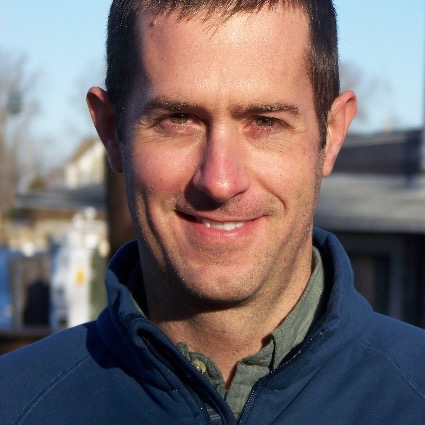
Joel Llopiz, Woods Hole Oceanographic Institution

I am an Associate Scientist at Woods Hole Oceanographic Institution (WHOI) studying fish and zooplankton ecology and fisheries oceanography. My lab is generally interested in understanding how fish populations, especially forage fish (like herring), respond to their environment. This includes how their feeding, growth, and population sizes change in response to changes in their physical and biological environment. This herring project is loosely associated with our NSF-funded Long-Term Ecological Research (LTER) project focused on the Northeast US continental shelf ecosystem (more info here). Thanks for your help counting baby herring!
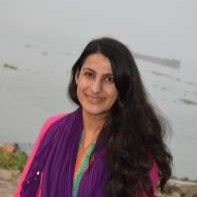
Meghna N. Marjadi, Graduate Program in Organismic and Evolutionary Biology, University of Massachusetts Amherst

I am a PhD Candidate at UMass in Amherst, Massachusetts. I study the reproductive and migration patterns of anadromous fishes (fish that live in the ocean and spawn in freshwater). As part of my dissertation I am trying to better understand the migration patterns of juvenile river herring as they travel from freshwater to the sea. We will also be tracking juvenile river herring at two other sites in Massachusetts and Connecticut. Broadly, I am interested in how anadromous fishes and their freshwater and marine ecosystems fishes will respond to climate change, and ultimately, how these changes will influence local and global food security. You can learn more about my work and other science communication activities here. Feel free to reach out with questions!
John Sheppard, Massachusetts Division of Marine Fisheries

I am a Marine Fisheries Biologist at the Massachusetts Division of Marine Fisheries. I work for the Diadromous Fisheries Biology, Management and Restoration Project and I oversee several programs to monitor diadromous fish populations throughout southeastern Massachusetts. My programs are designed to collect abundance and population demographic information on river herring and American shad, but I also work to a lesser extent with American eel, rainbow smelt and other diadromous fish. My collaboration with the Woods Hole Oceanographic Institution and the University of Massachusetts, Amherst seeks to answer important questions concerning the survival rates of river herring during their early life stages. This information will provide insight as to how juvenile survivorship relates to future population recruitment which in turn may inform future management decisions.
Allison Roy, U.S. Geological Survey

I am the Assistant Unit Leader of Fisheries for the U.S. Geological Survey's Massachusetts Cooperative Fish and Wildlife Research Unit and Research Associate Professor in the Department of Environmental Conservation at the University of Massachusetts Amherst. My research is in primarily in freshwater lakes and streams in Massachusetts, and generally focuses on understanding effects of anthropogenic disturbances on fishes, mussels, and macroinvertebrates; population ecology and conservation of rare and threatened species (including river herring); and management and restoration of freshwater ecosystems. This research project on river herring emigration is part of a larger collaborative project with other students, faculty, and state and federal managers investigating limits to river herring productivity in freshwater ecosystems. Your efforts counting river herring will help us to better understand when fish are leaving, which is important for making decisions to recover the species.
Meghan-Grace Slocombe, University of Massachusetts Amherst

Meghan-Grace Slocombe is an undergraduate student in the honors college at UMass, Amherst. She is working towards a degree in Environmental Science and is fascinated by the world around her. She helped to do preliminary processing on the fish video and is looking forward to sharing the website with students and getting them as excited about fish as she is!
Other Collaborators: Ryan Govostes (WHOI)