Finished! Looks like this project is out of data at the moment!
Thank you for your efforts! This project's classification effort is complete! To browse other active projects that still need your classifications, check out zooniverse.org/projects
The Team
Team members
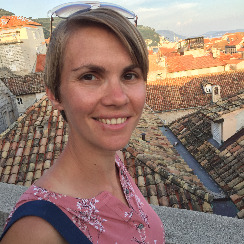
 | Courtney Larson is a conservation scientist at The Nature Conservancy in Wyoming. Her research interests are centered around understanding and minimizing human impacts on wildlife, including those from recreation, land use and land cover change, and climate change. Courtney completed a PhD and MS in Ecology at Colorado State University, focusing on the effects of recreation on wildlife. She holds a B.A. in Environmental Studies and International Studies from Colby College. |
 | Kate Gersh is Associate Director of the Jackson Hole Wildlife Foundation in Jackson, Wyoming, where she provides leadership and management towards programs working collaboratively with landowners and public land managers to remove or improve fences that benefit safe wildlife movement, by empowering citizen naturalists to build our local wildlife knowledge base, and by acting to make roads safer for people and animals. Kate’s educational background includes a Graduate Certificate in Nonprofit Management from George Washington University’s School of Public Policy and Public Administration plus, a master’s degree in Sustainable Destination Management from George Washington University’s School of Business. |
 | Trevor Bloom is a community ecologist for The Nature Conservancy, a published author on climate change, and a wildlife guide. While completing a MS in biology, he also produced his first film, Climb-It Change, which premiered in six international film festivals and is now used alongside curriculum to educate middle and high school students on climate change. Through research and outreach in-line with The Nature Conservancy, the world's largest environmental organization, Trevor inspires hope and action for young generations in a changing world. |
Organizations
 | Jackson Hole Wildlife Foundation: JHWF operates the Nature Mapping Jackson Hole program, which includes this camera trapping effort, and serves as the organization responsible for wildlife observation data in the greater Neighbors to Nature: Cache Creek Study. We are a small non-profit organization that works to promote ways for our community to live compatibly with wildlife. Our primary focuses include better understanding the patterns of local wildlife through Nature Mapping, creating better migration corridors by promoting and building wildlife-friendly fencing options on private and public land, and reducing wildlife-vehicle collisions throughout Teton County through our Give Wildlife a Brake program. |
 | The Nature Conservancy in Wyoming: The Nature Conservancy's Wyoming science team is leading the experimental design and data analysis for this project. TNC has expertise in conducting large scale studies on public lands that result in science-driven management recommendations on topics including citizen science, invasive species, habitat restoration, recreation monitoring and mapping, camera trapping, and wildlife/recreation interactions. |
 | Bridger-Teton National Forest: Bridger-Teton National Forest offers more than 3.4 million acres of public land for outdoor recreation enjoyment. With its pristine watersheds, abundant wildlife and immense wildlands, the Bridger-Teton National Forest comprises a large part of the Greater Yellowstone Ecosystem. Recently, Bridger-Teton staff have completed the Jackson Trails Assessment that determined desired future conditions for the area and organized the Jackson Trails Charrette to gather community input and opinion on recreation in the area. |
 | Friends of Pathways: Friends of Pathways has partnered with Bridger-Teton National Forest for the last 20 years on trail maintenance and ambassador outreach on 130 miles of front country trails around Jackson. Over the last five years they have been gathering trail user counts on these trails to help make informed decisions regarding recreation. |