


Finished! Looks like this project is out of data at the moment!
Thank you for your efforts! This project's classification effort is complete! To browse other active projects that still need your classifications, check out zooniverse.org/projects
Research
Study location
Our study is located in Jackson, Wyoming, in a valley nestled between the Gros Ventre and Teton mountain ranges. The area is home to Grand Teton National Park, the National Elk Refuge, and large areas of National Forest land. The area is home to many diverse wildlife species, and is also used heavily for recreation.
More specifically, we placed 27 wildlife cameras throughout an area known as the Greater Cache Creek, Game Creek, and Snow King area. It borders the town of Jackson and is a popular spot for hiking, mountain biking, and skiing.

Our question
The primary question we are trying to answer is: how are wildlife and people interacting in our study area? Understanding how people and wildlife are using the area will help the U.S. Forest Service better manage this public land and its access, and help answer our secondary question: how can the USFS successfully run the Bridger-Teton National Forest in a manner that provides provide both quality wildlife habitat and recreational opportunities?
Project details
Launched in the summer of 2018, Neighbors to Nature: Cache Creek Study is a four-way partnership between the Jackson Hole Wildlife Foundation, The Nature Conservancy in Wyoming, Bridger-Teton National Forest, and Friends of Pathways.
Wildlife cameras and mapping of wildlife observations show how wildlife populations and human recreationists are using the Greater Cache Creek area, which, over time, can be used to evaluate how recreation use may be influencing wildlife behavior and inform management actions such as seasonal restrictions. This project has captured hundreds of thousands of wildlife camera images, and we are using the online Zooniverse platform for community scientists to classify images.
Why we need your help
Each camera takes thousands of images throughout each summer season. We pre-process the images through an artificial intelligence (AI) processor
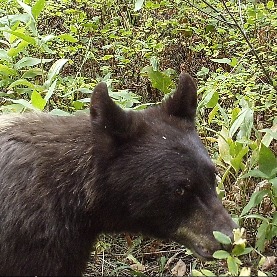
to make the sorting and classifying process faster, but there's still a lot of work to do. The AI tags the photo as wildlife, human, or vehicle. However, it doesn't do a perfect job, and we still need to know what species of wildlife are in our photos. That's why we're asking for volunteer help identifying what's in the photos. From mule deer to skunks, black bears to coyotes, there's lots of critters to spot!

Public data collection and input is driving this study! Thank you for getting involved!