


Finished! Looks like this project is out of data at the moment!
Check out what you have done! A book was published with reference and images from the PELIcams and would not have happened without your help! "Great Salt Lake Biology: A Terminal Lake in a Time of Change" Full text here. Thank you!!
Results
PELI Project Highlights:
2020: Book Publication
The first book ever published on Great Salt Lake biology featured data collected by our Zooniverse volunteers! Entitled "Great Salt Lake Biology: A Terminal Lake in a Time of Change (2020)", the book can be purchased here and the cover is featured below. Thank you so much for your hard work and assistance.

Let the papers begin!
The first scientific paper using data collected by our Zooniverse volunteers is here! The full article can be found here. "The Biogeography of Great Salt Lake Halophilic Archaea: Testing the Hypothesis of Avian Mechanical Carriers (2018)" The image below can be found on page 5 and full text is linked to here. Thank you for your help!

2017-2018
-
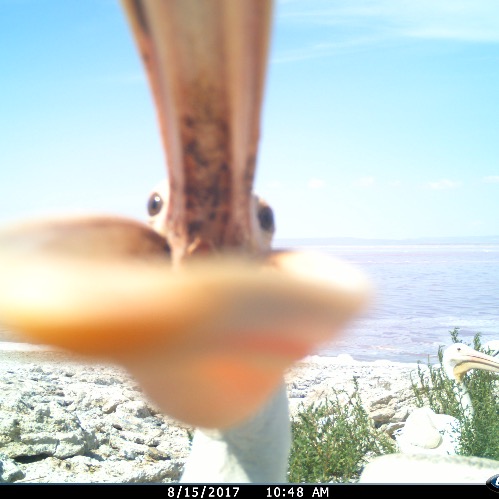
15 wildlife cameras were deployed to Gunnison Island resulting in over 200,000 images that have been archived and collected for the 2017 and 2018 breeding season. Some of the images are from a long distance camera looking over the entire colony. Most of the images are from 14 motion activated wildlife cameras that are capturing pelican life in minute details!
-
Coyote and human trespassers confirmed to be on Gunnison Island in 2017 and 2018 due to low water levels and the resulting land-bridges to their breeding grounds.
-
Westminster undergraduate students have participated in all aspects of the project with professionals at the Utah Division of Wildlife Resources, MesoWest at the University of Utah and Tracy Aviary.