


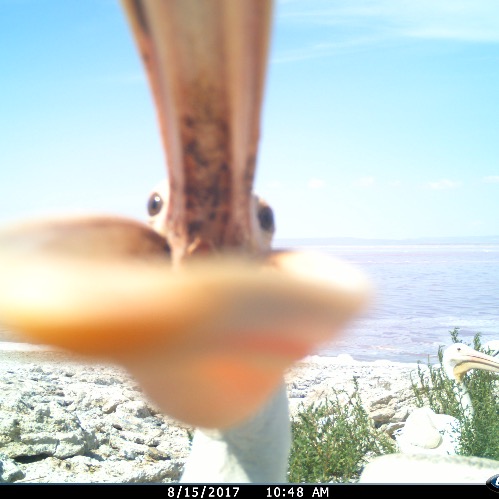
Finished! Looks like this project is out of data at the moment!
Check out what you have done! A book was published with reference and images from the PELIcams and would not have happened without your help! "Great Salt Lake Biology: A Terminal Lake in a Time of Change" Full text here. Thank you!!
FAQ
What do you hope to get out of this research?
- When do pelicans migrate and is the timing changing with the changing environment?
- Are predators impacting the colony?
- Pelicans form sub-colonies on the island. How does this change throughout the year?
- What are the specifics of nest timing?
- Pelicans are the "canary in the coal mine" and can help us assess overall lake health
I can't get enough of pelicans! How else can I connect to these charismatic creatures?
The Utah Division of Wildlife resources studies all aspects of pelican life history to learn more about survival rates, feeding patterns and movements. You can participate too!
Live and in person
If you live near pelican habitat you an help look for pelicans with wing tags! If you see a tagged pelican, contact John Neill (johnneill@utah.gov) to report your encounter. Don’t forget to include important details such as when, where, who, tag color, code color and code. Photos are always appreciated. Also, please report your encounters to the Bird Banding Laboratory at www.reportband.gov.

On the computer from far away locations
Thanks to solar-powered GPS transmitter backpacks, The Utah Division of Wildlife Resources can track the movements and behaviors of American white pelicans — and you can too! The birds' locations update on PeliTrack every two to three days. The data gathered from this study will help biologists conserve Utah's pelican population and better understand their interactions with humans, fish and other wildlife.
