


The Team
Science Team
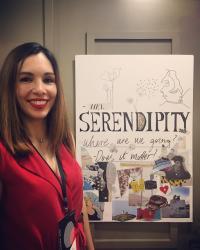
Eleni Vardoulaki (co-lead): I am an Astrophysicist and Science Communicator at the Institute of Astronomy, Astrophysics, Space Applications and Remote Sensing of the National Observatory of Athens (IAASARS/NOA), and TEDx speaker (elenivardoulaki.com). My research focuses on the active centre of galaxies. Imagine active galaxies as a very active kid that will not stand still and always affects the lives of its parents and the neighborhood it lives in. I use data from radio, optical, infrared, and X-ray observations, and compare observations to magnetohydrodynamic simulations, in order to understand the role active galaxies play in the growth and evolution of their host galaxies and the environment they live in. I am a member of the COSMOS, EMU, MeerKAT MIGHTEE, LOFAR KPSs, LOFAR2.0 core team, ngVLA-DE/USA collaborations and I have worked in 7 institutes around the world (University of Oxford, Centro de Astrofísica da Universidade do Porto, University of Crete, Caltech, University of Bonn, Max-Planck-Institut für Radioastronomie Bonn, Thüringer Landessternwarte Tautenburg). I am a passionate science communicator and content creator related to astrophysics research (videos, articles, books, art), and I have founded the channels and public outreach hubs "Rogue Astrophysics", and the Astronomy on Tap satellites "Astronomy on Tap Bonn" and "Astronomy on Tap Jena".
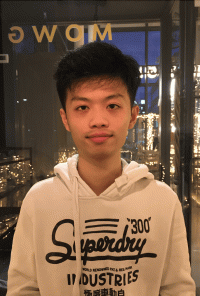
Hongming Tang (co-lead): I am an astrophysics researcher, science communicator and astro-machine learning educator (www.hongmingastro.com). I am now working as a assistant professor at the Department of Physics, Xi'an Jiaotong - Liverpool University. My research focus on applying machine learning on hunting rare radio galaxies, identifying radio galaxies of diverse morphologies and investigating under what circumstances one would believe the astro predictions given by machine learning algorithms. I am member of ASKAP EMU, POSSUM, WALLABY survey collaborations and SKA continuum working group. I am also very keen on astrophysics+machine learning education, aiming to help students know how astronomy/machine learning connects their daily lifes, so as how new technologies faciliate new scientific discoveries.
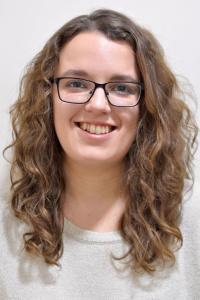
Emma Alexander (co-builder): I am a postdoctoral researcher at the Jodrell Bank Centre for Astrophysics, University of Manchester. My research focuses on the lobes of radio galaxies, as seen by telescopes like ASKAP, for projects including EMU. I also work with EMU's counterpart in polarised radio waves, POSSUM, which aims to increase our understanding of astrophysical magnetic fields.
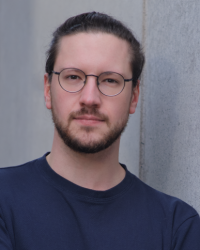
Micah Bowles (co-builder): Hi! I'm a researcher (currently Schmidt AI in Science Fellow) at the University of Oxford I work on how we can use AI (and language) to make our science better!
Thanks for your help in this project pushing the bounds of what we know about our universe!

Wendy Williams (co-builder): I am a radio astronomer and project scientist at the Square Kilometre Array Observatory (SKAO) headquarters in the United Kingdom. My research focuses how the supermassive black holes at the centres of galaxies grow and evolve over time and how they influence the formation of new stars in and therefore the growth of the galaxies in which they reside. To do this I study the populations of radio jets and star formation galaxies that are found in large area maps of the radio sky, for example the state-of-the-art surveys done with some of the current leading radio telescopes in the world, LOFAR, MeerKAT and ASKAP. I work on the technical challenges of generating the radio images as well as cross-matching the often complex radio emission to data at other wavelengths. In the future I look forward to the surveys that will be done with the next generation Square Kilometre Array telescopes currently under construction in South Africa and Australia.
Soheb Mandhai (co-builder): I am an astrophysicist, science communicator, and sci-art advocate. I am currently working at The University of Manchester as a post-doctoral research associate. The aim of my research is to identify regions of the Milky Way where we are likely to encounter interesting binary systems and assist their observations using simulations. I completed my PhD at the University of Leicester, where I worked on producing strategies to isolate the electromagnetic counterparts of gravitational waves from binary mergers. I am a member of several organisations such as the International Astronomical Union, Royal Astronomical Society, European Astronomical Society, Institute of Physics, and ENGRAVE. I also lead several initiatives to push for improving science communication using artistic methods and visualisations.

Yan Luo (co-builder): I am currently an undergraduate student at the School of Physics and Astronomy at SUN YAT-SEN University, China. I am interested in galaxy-related astrophysics and would like to have further study. I worked as the intern project manager in this team, and have acquired some basic concepts of applying CNNs to perform radio galaxy morphological classifications. I hope to do my bit for the team in the future!
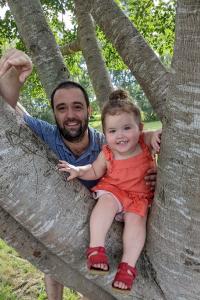
Gary Segal (co-builder): I am a Ph.D. student at the University of Queensland, Australia. Broadly my interests include the development of computational and statistical methods for applications in astronomy. Specifically, I am interested in fast and efficient anomaly measures that can be used to detect the unexpected in very large data without reference to the ensemble.
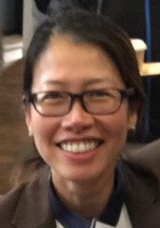
O.Ivy Wong: : Ivy is an Australian radio astronomer (based at CSIRO) who is interested in how galaxies form stars, grow central black holes and evolve. She was part of the original Galaxy Zoo project and co-leads the first-generation RGZ1 project (with Stas). Like RGZ1, Ivy hopes that RGZ2-EMU will help further reveal the huge diversity of extreme radio sources at all stages of their evolution. On the side, Ivy is also working on using machine to help automate the classifications of the simpler and more common sources, in order to greater enable citizen science discoveries of more complex and exotic sources.
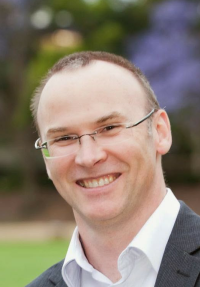
Andrew Hopkins: Andrew is the leader of the EMU survey, a project to provide the most sensitive radio images of the entire southern sky. EMU is providing the radio telescope images for this Radio Galaxy Zoo project, and supports a wide variety of other science, which you can learn more about at http://www.emu-survey.org/. Andrew is Professor of Astronomy at AAO Macquarie University.
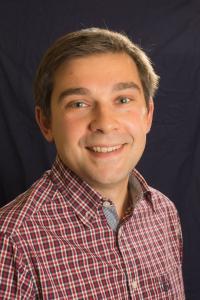
Stas Shabala: I am an Associate Professor in physics at the University of Tasmania. I work primarily in theory, building analytical and numerical models of radio galaxies which can be directly compared to observations. I am particularly interested in the connections between radio galaxies and their environments, puzzling over questions such as: Why do radio jets appear to switch “on” and “off”? What role to jets play in the evolution of cosmic structures? and What can learn about jet and galaxy physics using data from new telescopes such as ASKAP?

Lawrence Rudnick: I am a Professor Emeritus at the University of Minnesota, which means I get to just do fun stuff like RGZ EMU! I have worked with radio galaxies since the mid-70s when Frazer Owen and I introduced the categories of Narrow-Angle and Wide-Angle Tails. Since then I've worked in a wide variety of areas, including diffuse radio emission in clusters of galaxies and its connection to the X-ray emitting plasma, jets, polarization and Faraday rotation studies, supernova remnants and the development of innovative map analysis algorithms. Recently, I introduced the paradigm-switching use of "#tags," non-exclusive and survey dependent descriptions of sources in place of the fixed classification "boxes" into which the community has been straining to place each object. The "#tag" scheme forms the basis for the new generation of radio catalogs, including this Radio Galaxy Zoo platform.

Michelle Boyce: Dr. Michelle Boyce has a PhD in nuclear and high energy particle physics, with a masters in Aerospace Engineering with an Industrial Stage at Rolls-Royce on thermal-acoustics. She is seasoned with years of industrial experience as a system software specialist (e.g., military, aerospace, medical), teaching (e.g., physics, snowboarding, emerging technologies), laboratory research (e.g., TRIUMF, ICECUBE, CIRADA/EMU) with a diverse portfolio of publications along with proprietary documents. Meyers-Briggs-ish, she is INTP curiosity driven, and best described as 3/4 Scotty and 1/4 Spock. Activity wise, she loves astronomy, snowboarding, roller derby, martial arts, parkour, and drawing. Carpe Diem!
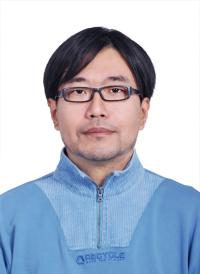
Chen Cao: I’m Dr. Chen CAO from Shandong University, Weihai, Shandong province, China. I’m an associate professor in the School of Space Science and Physics, and also serve as the Secretary-General in the Shandong Astronomical Society (SDAS). My major research areas are multi-wavelength observational studies on galaxy evolution, extrasolar planets detection and characterization, and astronomical education and outreach. Particularly, I’m very interested in citizen sciences, machine learning, and data-driven astronomical education & outreach. My email: caochen@sdu.edu.cn
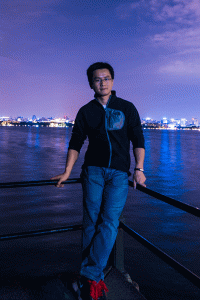
Dongwei Fan: Ph.D. He is mainly researches in astronomical big data fusion, and is passionate about data-based astronomy science popularization. He has developed the Popular Supernova Project (in Chinese), which attracts more than 20k participants.
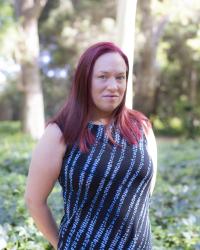
Tessa Vernstrom: I’m a Senior Research Fellow at the International Centre for Radio Astronomy Research (ICRAR) at the University of Western Australia. I am the Project Scientist for the EMU survey with the ASKAP telescope. I enjoy studying both galaxies and diffuse radio emission from large-scale structures like clusters, and trying to understand the interplay between the types of galaxies we see and their environments.
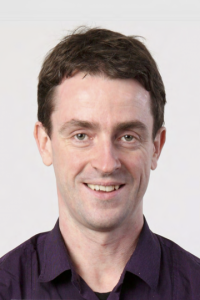
David Parkinson: David Parkinson is a senior researcher working at the Korea Astronomy and Space Science Institute in Daejeon, Republic of Korea, working in the area of cosmology. His research focuses on using surveys of galaxies to learn more about the distribution of matter (both luminous and dark) in the Universe, and the physics that gives rise to these structures.
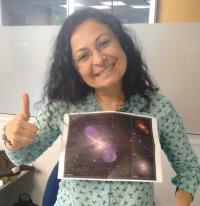
Gulay Gurkan Uygun: My primary research goals are directed towards to understanding the formation and evolution of galaxies. For this I investigate large samples of massive galaxies that host supermassive black holes in their centre using data from the key SKA pathfinders/precursors around the globe in conjunction with the multi-wavelength data sets
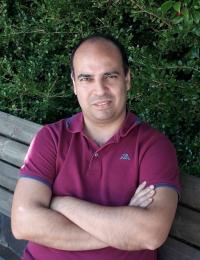
Simone Riggi: I am a Research Technologist at INAF - Osservatorio Astrofisico di Catania in Italy, working in the scientific fields of Galactic Radio Astronomy and High-Energy Cosmic Rays. I was involved and contributed to several research and technological projects: the Square Kilometer Array (SKA) and its precursors (ASKAP, MeerKAT), the H2020 NEANIAS and AENEAS projects, the Pierre Auger Observatory, the Muon Portal and CIRASA projects. Present activities include the design and development of data analysis software for astronomy and astroparticle physics, machine learning, distributed computing and scientific visualization, development of monitoring and control systems for medium/large scientific facilities, simulation and modeling. I also validated the Italian version of Radio Galaxy Zoo: EMU.

Syed Faisal ur Rahman: "I am Syed Faisal ur Rahman. I have completed my PhD from the University of Karachi, Pakistan. I mainly do research work in Cosmology and Statistical Studies. I also regularly work with the industry on software development and data science-related projects. "
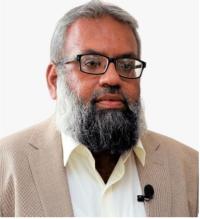
Muhammad Ali Ismail: PhD, SMIET & SMIEEE is a Professor and Chair at Department of Computer and Information Systems Engineering, NED University of Engineering and Technology. He is also serving as Director at National Center in Big Data and Cloud Computing at same University. He has more than 18 years’ experience of research, teaching and administration in both national and international universities. He did his PhD in High Performance Computing in 2011. Afterwards he pursued his post doctorate in Automatic Design space exploration from ULBS Romania and become a HiPEAC member. He has published over 85 scientific papers in international journals and conferences along with U.S. patent. He has won many of the national and international grants of worth above Rs. 250 million. He is also the recipient of Research Productivity Award by Pakistan Council for Science and Technology- Ministry of Science and Technology, Government of Pakistan. He has been a part of many federal and Sindh government projects as IT expert and consultant. His current research interests include computational HPC, Big data mining, Cluster and Cloud Computing, Multicore processor architecture and programming, Machine learning, Heuristics and automatic design space exploration. He is also serving IET Karachi Network as its Vice Chairman.
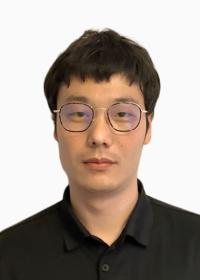
Rui Li: I am an astrophysics researcher at Zhengzhou University. My current research focuses on the dark matter and galaxy evolution. I use machine learning methods to search for different kind of strong gravitational lenses in the Kilo Degree Survey, of which I am a member. I apply spectroscopic observations to confirm the candidates and measure their properties, and then use them to study the galaxy evolution or the dark matter inside the lens galaxies. I am also interested in ultra-diffuse galaxies. I try to determine their mass with weak gravitational lensing methods, to understand why they failed to form stars and what role they play in the galaxy formation process. I develop tools based on machine learning to determine the photometric redshift, Sersic profile, stellar population parameters, and dark matter fraction of a large number of galaxies in sky surveys. I then study the evolution of these parameters and the basic relations among them with redshift. I am working in the Chinese Space Station Telescope collaboration and developing the data pipelines for the telescope. I am also involved in the 4MOST Strong Lensing Spectroscopic Legacy Survey, which aims to obtain high-quality spectra of strong lens systems.

Sohini Dutta: I am a PhD student at the university of Manchester currently working on modelling HERA systematics with the help of Bayesian inference. I am also working on another project that uses artificial neural networks to emulate power spectra so that they can be used as a replacement for simulators in computationally expensive tasks (such as Bayesian inference using MCMC). Since this project introduced me to data science and ML, I have actively sought out opportunities to learn more about the field, which led me to work at American Express as a data scientist for a while. I am generally interested in implementations of ML and ML assisted statistics in astrophysics, supercomputing/high performance computing, and handling and processing of astrophysical data. Hence, I would love to contribute to the data handling/analysis side of things for the RGZ project.
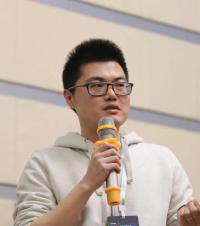
Nan Li is a faculty researcher working at the National Astronomical Observatories, Chinese Academy of Sciences. His primary research interests lie in studying galaxy evolution through morphology analysis and using gravitational lensing to understand the properties of dark matter. (Email: nan.li@nao.cas.cn)
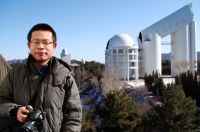
Peng Jia: I'm Professor Peng Jia, leader of the SMARTOPTICS group at Taiyuan University of Science and Technology. My expertise lies at the intersection of data processing and optical astronomical instruments. I'm currently involved in data processing projects for major astronomical facilities like the CSST, EP, and SKA. I'm particularly passionate about bridging the gap between artificial intelligence and public science to explore unknown astronomical phenomena. I've developed at least three successful public science projects: Galaxy Circus, Huoliuxing (Meteor in Chinese), and Galaxy Maze.
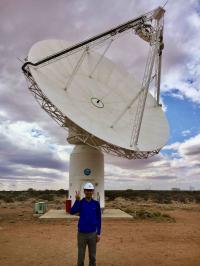
Takuya AKAHORI: I am an astronomer working at the National Astronomical Observatory of Japan and a member of the EMU project. This time, I supervised the Japanese translation done by @InoSenpai in my capacity as a professional researcher. See also my X

Le yao Wei: I am a PhD student at Tsinghua University, China. My research interests focuses on low-surface-brightness structures in the Universe, including the stellar halos of massive galaxies and ultra-diffuse galaxies. I am currently working on measuring the stellar halos of massive galaxies using HSC imaging data, with the aim of investigating the connection between stellar halos and their underlying dark matter halos. I am also interested in applying machine learning techniques to data-driven astronomical research.
Citizen Scientist

Yingyi Cao: I'm currently a Ph.D. student at the Department of Earth Sciences, the University of Hong Kong. I obtained my bachelor's and master's degrees from Hebei Normal University and Macau University of Science and Technology separately. Additionally, I was the leader of the astronomical association when I was in college, and I was also quite experienced in astronomy popularization for the public. As a big fan of astronomy, I will make it my lifelong passion and pursuit.
Victor Linares Sisifolibre: I'm a citizen scientist for about 10 years and I have participated with different degrees of involvement in projects of all scientific disciplines on different platforms. I have also done astronomy outreach and participated in working groups on the development of citizen science in Spain. A dilettante that would be a polymath, I have more enthusiasm and fascination for the world than time and willpower. I live amazed at the perseverance and honesty of most professional investigators.
Translators
We gratefully thank our voluntary translator team for introducing RGZ-EMU to countries and regions with different first languages. Please see our translator member lists for each language (A-Z) and the self-introduction of some of our translators.
- Chinese: Xichang Ouyang, Hongming Tang, Leyao Wei, Bin Yu
- French: Shomeer Gill
- German: Thomas Just
- Greek: Panagiotis Diamantoulis, Nikolaos Dimitrios Poulos, Eleni Vardoulaki
- Italian: Antonio Pasqua, Simone Riga
- Japanese: @Inosenpai, Takuya Akahori
- Korean: Yonguk Cho, David Parkinson
- Urdu: Hira Fatima, Faisal Rahman
Panagiotis Diamantoulis: I have been involved in many different professions and ventures. I studied graphic design
and began my career in logo design, sales, and later moved into IT, freelance translation,
and continued as a self-taught cameraman, video editor, and production assistant, among
other things. I am still searching for the next exciting field that will captivate me. However, my
love for popular science has remained constant throughout my life. I continuously strive to
learn and understand as much as possible about quantum physics, astrophysics, and
astronomy. I am particularly interested in science communication and popularization, as I
think that access to knowledge is essential for our future and I would love to contribute to
this field in any way I can.
Nikolaos Dimitrios Poulos: I am a first-year physics student at the University of Athens in Greece. I have been a citizen scientist for quite some time and I have participated in a variety of astronomy related projects on Zooniverse, as well as volunteered distributed computing projects on BOINC. I also edit Wikipedia. I have always been fascinated by the universe and I want to learn more about it every day.
@InoSenpai: I am a citizen scientist in Japan (more specifically, the term ”°citizen astronomer”± is increasingly used in Japan). While I have been involved in citizen science for some time, including participating in SETI@Home, I began actively engaging in crowdsourced projects through a Japanese citizen science initiative called COIAS, which enables the discovery of asteroids. COIAS led me to discover The Daily Minor Planet, a Zooniverse project also focused on asteroid detection. Since many Zooniverse projects are not available in Japanese, I have been working on translations”Ŗmainly in the field of space science. By the time I began translating this project, I had already completed translations for more than 20 other projects. You can find an introduction to the projects I have translated in Japanese
Yonguk Cho: My name is Yonguk Cho. I'm a Phd student at Korean Astronomy and Space Science Institute(KASI) in Daejeon, South Korea. I'm interested in investigating cosmology and fundamental physics behind it using galaxy distribution data. I've always been interested in sharing the beauty of our universe and I'm happy to have the opportunity to do so by contributing to this project!
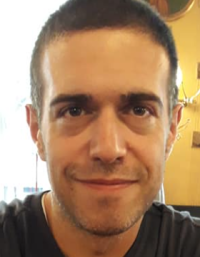
Antonio Pasqua: I hold a Bachelor’s degree in Physics from UNICAL and a Master’s degree in Astrophysics from the University of Trieste, as well as an MSc in Astrophysics from the University of Manchester. My main research field is Modified Gravity. My research output includes 66 publications, with 1,423 citations, an h-index of 21, and an i10-index of 40. In addition to academic work, I am an active contributor to citizen science: I have completed over 1,707,000 classifications on Zooniverse, where I have also contributed to the discovery of several supernovae, asteroids, and exoplanets. Moreover, I have supported the community by translating various Zooniverse astrophysics project websites into Italian.
Thomas Just: Thomas is a project management professional with a passion for technology, innovation, and continuous learning. With extensive experience in industrial product development, process optimization, and cross-functional collaboration, he enjoys solving complex technical challenges and working at the intersection of engineering and management. Outside of work, he is enthusiastic about learning and discussing astrophysics and computing, always eager to explore new ideas and emerging technologies.

Shomeer Gill: translator of the Radio Galaxy Zoo: EMU citizen science website from English to French. This translation from English enhances accessibility for French-speaking audiences and supports public engagement with citizen science in astronomy.

Xichang Ouyang: Hello, my name is Xichang Ouyang. I am a PhD student at the School of Physics and Astronomy, Sun Yat-sen University. My research interests focus on the dynamics of large-scale structure and its influence on galaxy formation and evolution. Outside of research, I am also an enthusiastic Go player.
Retired Team Members
Jean Tate (honorary co-founder): Jean is a senior Zooniverse citizen scientist, who contributed to multiple Radio Galaxy Zoo 1 peer-reviewed papers. He also co-founded Radio Galaxy Zoo - Post, one of the predecessors of Radio Galaxy Zoo: EMU (this project).



- Hamad-Yousof@Hamad-Yousof



- Hamad-Yousof@Hamad-Yousof