Finished! Looks like this project is out of data at the moment!
The Team
Interns
Mei Lin (Harvard) is a sophomore at Harvard College studying astrophysics and physics. She joined Backyard Worlds: Binaries during the summer of 2025 and has worked on the initial development and project infrastructure of Backyard Worlds: Binaries. At Harvard University, Mei is is an undergraduate research assistant constructing a radio telescope to monitor half the visible sky for fast radio bursts. She has also previously collaborated with NASA's NEO Surveyor Team to refine a short-arc classifier software in an effort to construct an orbit determination pipeline, and is currently studying the mid-infrared spectral characteristics of the X7 source near the Milky Way's galactic center.

Core Science Team
Aaron Meisner (NOIRLab/Harvard) is a staff astronomer at NSF NOIRLab in Tucson, Arizona. He went to college at Stanford and earned a doctorate degree from Harvard in 2015. He specializes in processing large data sets of astronomical images, and previously co-founded the Backyard Worlds: Planet 9 citizen science project.

Zachary Hartman (NASA/Ames) is a NASA Postdoctoral Fellow. He specializes in studying low-mass binary systems, including the application of speckle imaging techniques.

Austin Rothermich (AMNH/CUNY) is a physics PhD student within the Brown Dwarfs in New York City (BDNYC) research group. He specializes in discovering wide binary systems containing ultracool dwarfs, as well as spectroscopic follow-up with the James Webb Space Telescope (JWST) and ground-based observatories like NASA's Infrared Telescope Facility (IRTF).

Adam Schneider (USNO) received his doctorate from the University of Georgia and is currently a staff astronomer at the US Naval Observatory. He is an observational astronomer whose research focuses on identifying and characterizing late-type stars and brown dwarfs in the solar neighborhood. He is particularly interested in the nearest systems, as well as young, nearby systems and how such objects can aid in our understanding of the diversity of extrasolar planets as well as the star formation history of the local neighborhood.
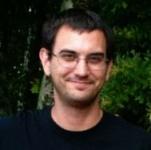
Jacqueline Faherty (American Museum of Natural History) is an associate professor and associate curator in the department of Astrophysics at the American Museum of Natural History. She received her doctorate from Stony Brook University in 2010 with a dissertation entitled "The Brown Dwarf Kinematics Project". Dr. Faherty co-leads the Brown Dwarfs in New York City (BDNYC) research group which works at the intersection of the observable properties of brown dwarfs and giant exoplanets. She has a keen interest in the atmospheres of the coldest brown dwarfs and how they resemble those of Jupiter.
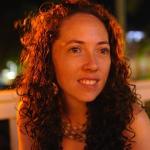
J. Davy Kirkpatrick (Caltech/IPAC) is an astronomer at IPAC at the California Institute of Technology in Pasadena, California. His research helped define the L, T, and Y classes of brown dwarfs. Davy is also credited with first using the name "Tyche" to refer to a heretofore unseen, low-mass Solar companion in the Oort Cloud.

Dan Caselden (American Museum of Natural History) is a security researcher and prolific discoverer of brown dwarfs. Dan invented the WiseView image blinking tool and has pioneered the application of machine learning in the realm of brown dwarf discovery.
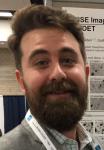
Arjun Dey (NOIRLab) is an Astronomer at NSF NOIRLab in Arizona. He has led several large astronomical surveys including the NOAO Deep Wide Field Survey (NDWFS), the Mayall z-Band Legacy Survey (MzLS), and the Dark Energy Camera Legacy Survey (DECaLS). Arjun has diverse interests ranging from cosmology to local group galaxies to Milky Way proper motions. He is a founding member of the NOIRLab Source Catalog (NSC) team.
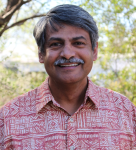
John Gizis is an observational astronomer primarily interested in very-low-mass stars and brown dwarfs. He led the discovery of the well-known exoplanet host star TRAPPIST-1 using data from the 2MASS all-sky infrared survey.