


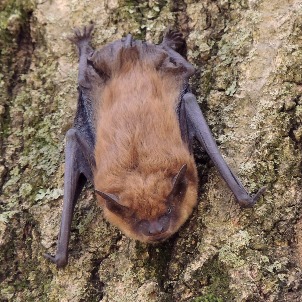
Thank you all for your help on this long term ID project. I will continue to add more recordings to this project, so stay tuned!
Education
The Best Way to Know What's Going On...
Is to Get to Know Your Neighbours

Heavy metal contamination in cities has long been an issue - one that disproportionately hurts marginalised groups. And as a result, it is an issue that is so often ignored.
This is especially prevalent in Baltimore, with so many sources of contamination throughout the city that it becomes difficult to keep track. The Crane and Wagner coal-burning plants pollute the air with "concentrations of sulfur dioxide pollution [...] that exceed the level that the Environmental Protection Agency (EPA) says is safe", resulting in over 1 million local cases of asthma - with "communities of color in Maryland suffer from even higher rates of asthma and asthma-related hospitalizations and death". Nationwide, The Union of Concerned Scientists cites coal plants in the United States as being responsible for producing 42% of mercury emissions, more than 3.1 million tons of SO2, greater than 1.5 million tons of nitrogen oxides, roughly 77,108 pounds of arsenic, 41.2 tons of lead, and around 576,185 tons of carbon monoxide, in addition to many other compounds and particulates.
Additionally, a water quality report published by Hydroviv Research Analyst, Keznia Snipes, states that "10% of samples analyzed for lead in Baltimore are over 5 parts per billion". Although Baltimore City's "water quality is currently in compliance with federal regulations", local infrastructure in poorer neighbourhoods is not always sufficiently up to date to adhere to the area's corrosion control measures. The same report explains that "[l]ead enters Baltimore's tap water through older lead service pipes and lead-containing plumbing," with "[the] EPA estimat[ing] that drinking water can make up 20 percent or more of a person’s total exposure to lead".
Batty Biomonitors

In many areas, the handling of bats has been heavily restricted due to the spread of White Nose Syndrome.
Bat populations are struggling due to rapidly increased stressors like urbanization pressures and disease. Typically, rabies is the first thought when diseases in bats are brought up; however, the real threat to our fuzzy neighbours is White Nose Syndrome.
A USGS report describes White-Nose Syndrome as "a disease that affects hibernating bats [...] caused by an invasive, cold-loving fungus."

White Nose Syndrome has killed over 90% of northern long-eared, little brown, and tri-colored bat populations in fewer than 10 years!
Winifred Frick, chief scientist of Bat Conservation International, has stated that "nine out of 10 bats of the most vulnerable species are now gone" as a result of this fungal spread, which kills by growing on the skin of hibernating bats, waking them in a season with little food or water to be found. There is currently no cure for WNS, but groups like the White Nose Syndrome Response Team are working to study it and combat its spread.
Our batty neighbours have a bad reputation as pests, on top of all the danger that they face from White Nose Syndrome (as well as the avian flu). There's a lot going against the little guys - and it has led to severe population declines in nearly all North American bat species. Several of the bats native to Baltimore have even been fluctuating on and off the list of endangered species.
Now, how does this all tie into heavy metal contamination? Well, the SpringerLink Encyclopedia of Estuaries defines biomonitors as "organisms that accumulate contaminants in their tissues and can be used to yield a relative measure of the total amount of contaminants in the environment integrated over a period of time. They respond simultaneously to different stressors, providing quantitative information on the quality of the environment." Bats, especially given their insect-based diet, qualify as biomonitors. They also happen to be especially useful biomonitors when it comes to mapping - during the warm months, bats native to Baltimore will only travel as far as 2 miles (and often much less) to forage every night.
The Six Bats of Baltimore

Research into urban wildlife is still relatively scarce, and study of the bats of Baltimore specifically even more so. In fact, as of the start of this project, only one other person has conducted research in this area: Dr. Ela-Sita Carpenter.
[talk about Dr. Carpenter's work, link to her website(s): Medium article; Weebly blog; Baltimore Ecosystem Study ]
[introduce the 6 bat species - briefly mention Seminole bat & northern long-eared bat)]
[talk about the 4 cave bats]
[talk about the 2 tree bats]