


Research

Native Skywatchers - Turtle Island Skywatchers - Research grant
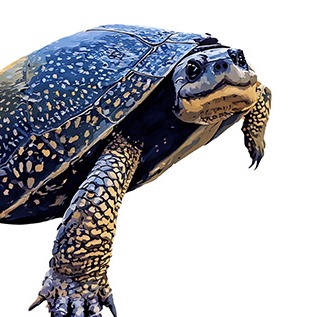
Turtles are the sentinels for this research project, designed to connect people with nature, in this case, through the life of a turtle. Since all life is interconnected, we are enabling learning about turtles and their ecosystem. The project characterizes the soundscapes turtles live within, and uses this as a bridge to explore the co-existing birds, frogs, bats, and anthropogenic sounds. This teaches students how to better appreciate nature, better use their hearing as a window to the world and use high-tech science to explore it in a meaningful way.
Importance of Sound
The study of sound in nature is inherently interdisciplinary, encompassing ecology, physics, climate, and human activity. Our approach merges these ideas to support the exploration of terrestrial and underwater habitats. We deployed paired autonomous acoustic recorders and motion-activated camera traps in both urban and undisturbed turtle habitats, which recorded continuously over longer durations (e.g., 1 week - 1 month).
The soundscape is the sound of an environment. Soundscape ecology investigates the causes and consequences of biological (biophony), geophysical (geophony), and human-produced (anthrophony) sounds (Pijanowski et al. 2011; Villanueva-Rivera et al. 2011). There are quiet and loud places, places with few sound and places with many sounds. A lumber yard may be loud but with few sounds, while a June morning in a remote forest may have many sounds such as birds and insects, or leaves trembling in the breeze. Noise pollution is a serious environmental and health problem, with hearing loss and elevated stress levels common in loud soundscapes (Gannouni et al. 2024). Many animals communicate by sound, and animal behavior and stress levels are often affected by loud and/or consistent noise from human activities (Francis et al. 2011; Keyel et al. 2018). Frogs and birds are known to alter the time of day that they call to take advantage of quieter periods where they can actually be heard above the noise (i.e., of traffic). With advances in technology making sound recording and analysis easier and cheaper there is currently a push to document soundscapes, especially in natural areas, to better understand how they are changing (Buřivalová et al. 2026).