


Finished! Looks like this project is out of data at the moment!
Welcome! This project recently migrated onto Zooniverse’s new architecture. For details, see here.
Research
Snapshot Enonkishu: Background and Model
Conservancy Background
Enonkishu Conservancy was first created in 2009 by Tarquin and Lippa Wood who had been running a maize and bean farm on the property. Originally, representatives from 282 families were willing to become members. It took 2.5 years to secure funding to pay for land rent resulting in 250 families owning 18,000 acres backing out and renting their land to large scale farmers. The conservancy currently has 32 members and encompasses 4224 acres of land. A mark of Enonkishu’s success will be the expansion of the conservancy northwards, re-claiming land that has been lost to agriculture and expanding the Mara-Serengeti Ecosystem.
More information can be found at: www.enonkishu.org or for current events, follow https://www.facebook.com/Enonkishu/
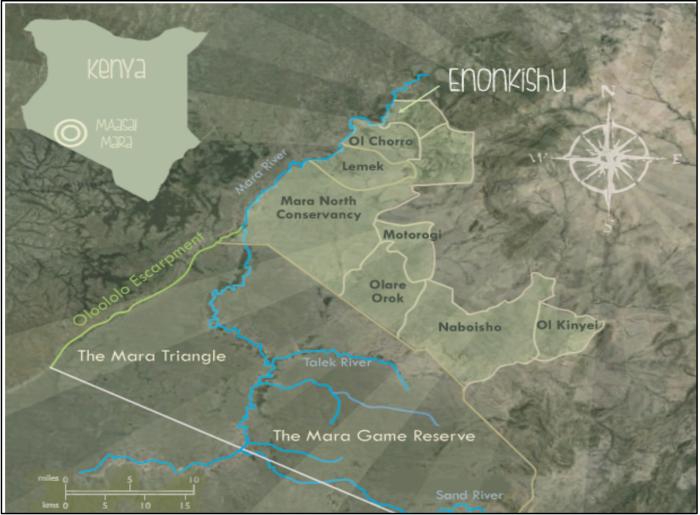
The Maasai Mara-Serengeti Ecosystem
Enonkishu is in a unique position, placed on the northern boundary of the Mara-Serengeti ecosystem of Kenya and Tanzania.
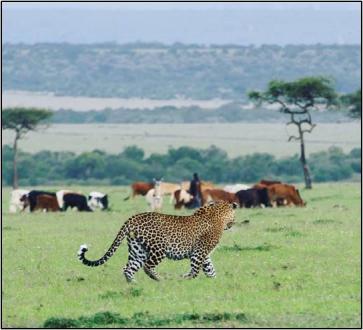
In addition, Enonkishu means “Cattle” in the Maa language. The preface of promoting the coexistence between wildlife and livestock is essential to building models of multiple revenue streams which will build stability in the Mara conservancies. Most conservancies in the Mara have cattle, many of which are grazed in a haphazard manner, and few of which are managed to maximize revenue generated by livestock. Enonkishu and Mara Training Centre therefore target conservancies in the Mara to campaign for regenerative grazing and diversifying conservancy incomes.
Land Rent from the Maasai community
Many Kenyan conservancies exist by leasing land by Maasai families. Land rental rates are high for Enonkishu because of the vulnerability of landowners converting their land to arable farming. Rental rates up until 2017 were determined by the amount of livestock owned by each landowner. In 2018 no funding was available; landowners agreed to being paid 3 x per year, coinciding with the due dates of school fees. In 2018, landowners were all paid at the same rate, with deductions to payments made for each cow being managed by ESCo.
Sustainable Rangeland Management by Mara Training Centre
MTC manages the grazing plan within Enonkishu by strategically deciding how many days the cows will spend grazing in each block according to wet/dry season. Enonkishu is divided into 9 blocks demarcated with natural landmarks. Transects within each block are monitored at the end of each quarter to track progress within ecological processes: mineral cycle, water cycle, community dynamics and energy flow. Herders are trained on the benefits of large herds bunched together, churning up the soil and fertilizing for future grass growth. Weekly briefings are conducted to keep the herders motivated and get feedback on the state of the grassland
CowCare
Prior to ESCo, landowners managed their own livestock husbandry and herders. Land rent rates were determined by the number of livestock each landowner kept at the conservancy. Herders employed by landowners often strayed from the grazing plan and not all livestock were cared for to the same degree, sparking the spread of disease. In 2018, all landowners were paid the same rate for their land, but livestock owners were deducted a fee per cow per month for livestock management. CowCare began in January 2018 with herders hired and trained by ESCo and MTC
Herds for Growth
(https://makinglifepeachy.com/peach-foundation-causes/herds-for-change/)
H4G was formed in September 2017 with a large donation from Peach Pubs (UK) for Enonkishu to purchase and manage a breeding herd that would belong to ESCo and benefit all landowners rather than solely the livestock owners. By 2020, the revenue from the Herds for Growth should make a serious contribution to land rent payments. Currently 178 heifers, 80 of which have been bred by a Boran bull, with introduced genes of quality beef. Herds for Growth serves as an example of management practices improving cattle investment and demonstrates a viable business model.
Last Line of Defence Trust (LLDT)
(https://www.facebook.com/LastLineofDefence/)
A trust was developed to support the communities and conservancies on the edge of the Mara, extending beyond Enonkishu. Projects supported by LLDT include an annual vaccination campaign, supporting trainings for communities curious about the coexistence of people, livestock, and seeks to participate in specific projects developed to bring communities together.
Research Objectives of Camera trap data
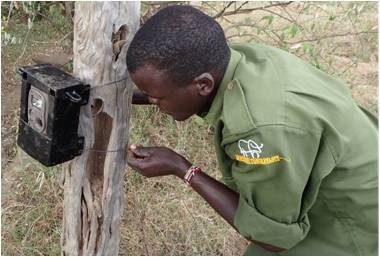
As Enonkishu was only protected in 2009, establishing an inventory of wildlife species seen within the conservancy is a primary objective of the placement of camera traps. Aside from a general inventory, as the SnapshotSafari program grows, it will be very interesting to compare species diversity in Enonkishu as compared to elsewhere, deeper into the Mara Serengeti Ecosystem. It will also be useful to investigate how species diversity is affected by distance from the boundary of the protected areas.
Supporting Enterprises
-
Enonkishu Stakeholders’ Company Limited (ESCo)
o Formed in January 2018
o Stakeholders include: Mara Beef (and MTC therein), Naretoi, House in the Wild, and the Enonkishu Cooperative Society.
o Objective is for all stakeholders to be informed and offer advice for the management of the conservancy -
**Mara Training Centre (MTC) **(www.maratrainingcentre.com)
o Built in 2014 with funding from the Africa Enterprise Challenge Fund under the umbrella company of Mara Beef Ltd.
o Trains communities on Sustainable Rangeland Management (SRM) with modules on social cohesion, improving livestock quality, and preserving biodiversity
o Enonkishu Conservancy serves as a demonstration site for the SRM taught and implemented by MTC.
o 2017 was MTC’s first full year of operation with nearly 700 conservancy members trained from across Kenya
o MTC offering volunteers, gap year experiences, student groups, and basic guide training through WILD Impact Adventures. -
Naretoi Holdings (www.naretoi.com)
o 1000 fenced acres comprised of 32 x 5-acre plots opened in 2014 (22 have sold)
o Homeowners have access to Enonkishu, Ol Chorro, and Lemek conservancies
o Homeowners contribute fees to the conservancy every six months
o Additional visitors to Naretoi homes contribute fees per bednight -
House in the Wild (www.houseinthewild.com)
o Small boutique safari lodge of 16 beds opened in 2011
o Contributes conservancy fees per guest bednight -
Enonkishu Cooperative Society
o Formed In 2017 to organize and govern relationships between and among the landowners
o Comprised of the 32 landowning members of Enonkishu
o Executive board active in day to day operations and decision making