Finished! Looks like this project is out of data at the moment!
Thank you for your efforts! This project's classification effort is complete! To browse other active projects that still need your classifications, check out zooniverse.org/projects
The Team
The Zwicky Transient Facility (ZTF) is a survey conducted by a team including dozens of researchers across the globe. The survey is named after the astronomer Fritz Zwicky (shown below), who, among other things, played a pivotal role in the initial discovery and understanding of supernovae. Funding support for ZTF is provided by the National Science Foundation and a collaboration including Caltech, IPAC, the Weizmann Institute for Science, the Oskar Klein Center at Stockholm University, the University of Maryland, the University of Washington, Deutsches Elektronen-Synchrotron and Humboldt University, Los Alamos National Laboratories, the TANGO Consortium of Taiwan, the University of Wisconsin at Milwaukee, and Lawrence Berkeley National Laboratories.
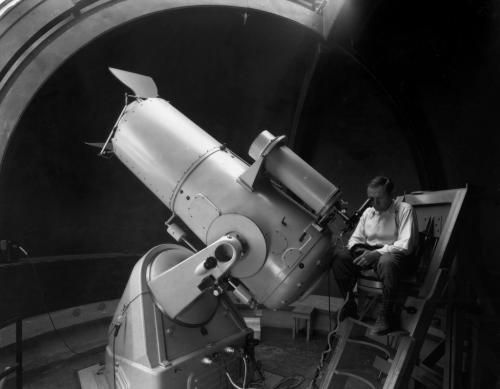
Image credit: Caltech Optical Observatories
The Zwicky Chemical Factory
The Zwicky Chemical Factory team features a subset of ZTF researchers that are working at the Center for Interdisciplinary Exploration and Research in Astronomy (CIERA) at Northwestern University and Caltech. The goal of the Zwicky Chemical Factory is to classify every bright supernova found by ZTF.
Adam Miller (Zwicky Chemical Factory PI)
Thank you for your help in classifying the supernovae spectra obtained by ZTF. Every classification you provide brings us a little closer to understanding the nature of explosive phenomena throughout the Universe. While we have long understood that Type Ia supernovae come from white dwarf stars, we still don't know precisely how they explode. I'm a postdoctoral researcher at CIERA working on the large sample, and rapid discoveries, of SNe Ia by ZTF to try and better understand their origins. I am also the Program Director of the LSSTC Data Science Fellowship Program.

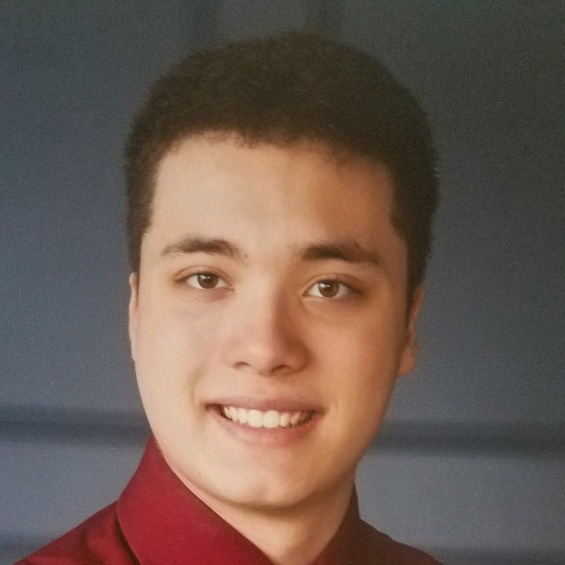
Xander Hall
With every click you make in the Zwicky Chemical Factory, we learn a new supernova classification. These identifications can then be used in machine learning models to classify supernovae for which we do not have spectra. I started working on the Zwicky Chemical Factory while in high school, and I am now a freshman undergraduate at Caltech where I plan to major in Astronomy. I am particularly interested in the Vera C. Rubin Observatory, which will find millions of new supernovae every year! There aren't enough telescopes in the world to take spectra of that many supernovae. Using classifications from the Zwicky Chemical Factory, I will build machine learning models to classify Rubin Observatory supernovae.

Christoffer Fremling (Bright Transient Survey PI)
The Zwicky Chemical Factory helps us to better understand the processes that govern the end of the life cycle of massive stars. By understanding the relative rates of different supernova types we can determine which stars explode and which do not. I am a postdoctoral research at Caltech and I am the PI of the Bright Transient Survey within ZTF. My primary research interest is understanding massive stars that have shed their outer layer of hydrogen before they explode.