


Research
Statement of Purpose
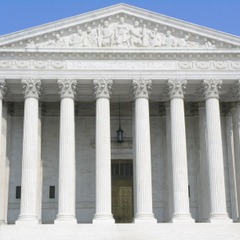
Unlike members of Congress, U.S. Supreme Court justices cast their votes in complete privacy during weekly conference meetings. Indeed, only justices are allowed in the Chief's conference room when they gather to discuss, deliberate, and make initial decisions on cases. The only record of what has been said, and by whom, is provided by the written notes the justices themselves take during conference. These crucial hand-written documents (left at publicly available archives including the Library of Congress) will reveal the inner workings of the most secretive aspect of the federal government's most secretive institution -- the U.S. Supreme Court.
The transcription will contribute to key research about law and politics as each participant will become a citizen archivist and transcriber, creating materials that will be of use and openly available to scholars interested in law, policy, and decision making in the nation's highest court. Perhaps the most meaningful outcome is that the collaborative will provide public access to documents that will open up the Court in ways not possible to those who cannot access the Library of Congress or travel to law schools around the country. In so doing, they will also provide these insights in a format that will lead to a better understanding of the justices' decision making process on a wide variety of important cases over the past half century.
The purpose of the project is three-fold:
-
Provide on-line access to a large collection of almost 50,000 pages of Supreme Court conference notes that reside at the Library of Congress, Washington and Lee Law School, and Yale Law School, by digitizing all the notes;
-
Engage citizen archivists and transcribers to crowdsource transcriptions of the justices' notes with greater efficiency and accuracy than could be done by researchers at participating institutions; and
-
Facilitate large-scale quantitative analysis based on these notes to demonstrate how justices interact with one another as they make decisions on law and policy in the United States.
We gratefully acknowledge the on-going financial support of our universities as well as the Law and Social Sciences Program of the National Science Foundation for providing the funding needed to collect, organize, and prepare the digital images used for this project (SES-1556270 and SES-1556227).