


New: Training Feedback! As you classify subjects in the Yes/No workflow, you may occasionally see a pop-up telling you whether your answer was correct. These are special training images mixed into the regular subjects. Mistakes are part of learning to identify what you're seeing, so don't worry if you don't get every one right. Keep going, and thanks for helping us protect kelp forests!
Check out our project update to learn more about the images you are seeing.
Important note: Subjects from Workflow 1 (Yes/No) are routed into Workflow 2 (multiple choice). This means Workflow 2 may not always have images available. Please check back regularly to continue contributing to the multiple-choice workflow. Thank you!
Explore the kelp forests of coastal Washington and directly impact the conservation and restoration of these critical habitats!
Learn moreWorkflow 1: Yes / No (compatible with mobile app!)
Confirm (click “Yes”) or Deny (click “No / Not sure”) what our ML model has predicted to be contained within each subject
Workflow 2: Multiple Choice (desktop only)
In instances where our ML model has been stumped, we ask you to identify the category the red target is directly atop.
Zooniverse Talk
Chat with the research team and other volunteers!
Kelp Quest (Seattle Aquarium) Statistics
View more statsAll Time Stats
Active Stats
Active stats provide information about currently active workflows and subjects.
Message from the researcher
"I can only compare these great aquatic forests … with terrestrial ones... Yet, if in any other country a forest was destroyed, I do not believe so many species of animals would perish as would here, from the destruction of kelp.”
— Charles Darwin, "Voyage of the Beagle" (1845)
Kelp Quest (Seattle Aquarium)About Kelp Quest (Seattle Aquarium)
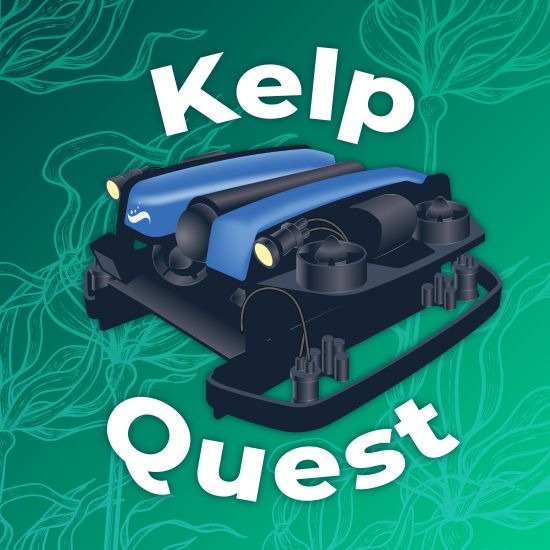
Come join the Seattle Aquarium’s Coastal Climate Resilience (CCR) research team on the seafloor! Our team uses remotely operated vehicles (ROVs) to conduct benthic surveys and gather high-resolution images—hundreds of thousands of images! To process this high volume of visual data, we have trained machine learning (ML) models to automatically classify different categories of red, brown and green algae; sessile and mobile invertebrates; and distinct types of seafloor. These types of models have been around since the 1950s and can run on a single computer, allowing us to analyze a vast array of images and respond more quickly to changes in coastal ecosystems.
But ML models make mistakes. That’s why we need your help to review the predictions! Thanks to your contributions, we will (1) improve the precision of our ML models, (2) facilitate data analyses regarding species-habitat associations and (3) directly contribute to research that helps inform local kelp forest conservation and restoration. In turn, we hope to provide you with a unique look into the fascinating landscape of kelp forests. We are active in the Talk forum and are ready to engage. Ask us questions and share your findings! If you find an interesting subject, share it in the forum and we can pull the full-size image and post it for you.
And be sure to check out the Results section to access examples of ROV survey imagery, formal reports and links to our open-source active research on GitHub. We believe marine research and conservation benefits from transparency and collaboration, so we invite you to check out our ROV hardware, software, telemetry log management and more here.
Are you ready? Dive in and explore the kelp forests of coastal Washington with us!
