


Finished! Looks like this project is out of data at the moment!
Research
Discovering Rare Whales
Opening new doors to our understanding of whales:
Today, whales and dolphins are legally protected from exploitation in most countries. But they were hunted for centuries, hunted with rapacious intensity from the early 1900's to the 1970’s. This left a world of oceans nearly empty of their largest inhabitants. How are they recovering? What has changed as a result? With climate change and ever increasing competition for ocean resources, will they be able to return to their former abundance?
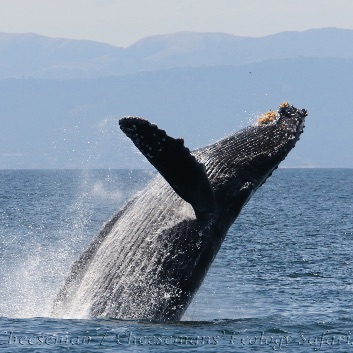
Snapshots at Sea opens a novel approach to answering these and many more questions; with your help we can find and identify whales and other marine mammals in mass volumes of images from scientists, naturalists and public contributors. The images here come to us via Happywhale.com, where we ask photographers worldwide to put forward images to extract their scientific value. ‘Opportunistic’ data like this accounts for the majority of whale sightings worldwide. What have we found? In it’s pilot season, our work in Antarctica has already found a kind of killer whale (so called ‘Type D’) that had only previously been seen 14 times in history. We have found re-sightings of humpback whales that we can identify to individuals by comparing against a catalog of known whales. As Snapshots at Sea continues we are documenting little known populations, such as the whales of the southern hemisphere where an incomprehensible 3,000,000 whales were killed last century. And we are providing unprecedented resolution into the activities of whales in heavily populated areas like coastal California.
The Collaborative Filtering Process
Each question in Snapshots at Sea is one step in a filtering process where we turn large volumes of images into usable scientific data. These images contain identifiable individuals, often show their behavior, and can tell us what other animals they associate with. Since we know where and when these photos were taken, once we know who is in the photos we can reconstruct population trends, migration patterns and social structures. We have developed a decision process of yes/no questions to cut through the challenge of interpreting these volumes of information, and to find the gems within the mass of images we receive. Each image will follow a path dependent on it’s content. For example, to identify an individual whale, we use distinctive shapes and markings on the dorsal fin or underside of the tail (the fluke). The path of a single humpback whale photo to be identified by the fluke would be:
- Is there at least one animal in this photo? YES
- Are there whales or dolphins in this photo? YES
- Is there more than one whale or dolphin in this photo? NO
- Is there a dorsal fin in this photo? NO
- Is there a fluke (tail) in this photo? YES
- Is this fluke a Humpback Whale? YES
We will then send this photo to our Whales as Individuals Zooniverse project to prep it for automated identification, with hopes of finding out who the whale is 😃.
The Team
Snapshots at Sea is a collaboration between Animal.us (creators of Happywhale.com, Cascadia Research Collective, and Allied Whale at the College of the Atlantic.
Animal.us is a Public Benefits Corporation developing Happywhale.com with the mission of enabling people to recognize, connect with and follow individual animals to further science and create a rich understanding of wild species.
Cascadia Research Collective is a tax-exempt non-profit research organization founded in 1979 that has coordinated the long term photo-ID efforts on blue, humpback, and gray whales on the US West Coast since the mid 1980s. More recently, photo-ID efforts have expanded to include fin whales, Risso’s dolphins and Cuvier’s beaked whales. See www.cascadiaresearch.org for more information.
Allied Whale, the whale science group at College of the Atlantic, was founded in 1972 and houses the largest collection of information on photo-identified humpback and finback whales in the world. Photo-ID is a technique that enables scientists to follow an individual whale anywhere it may travel throughout its life by comparing natural color patterns, fin shapes, and other distinguishing marks that appear in its photographs. Allied Whale researchers were among the first to successfully use this technique to study whales. See www.coa.edu/allied-whale for more information.