


Research
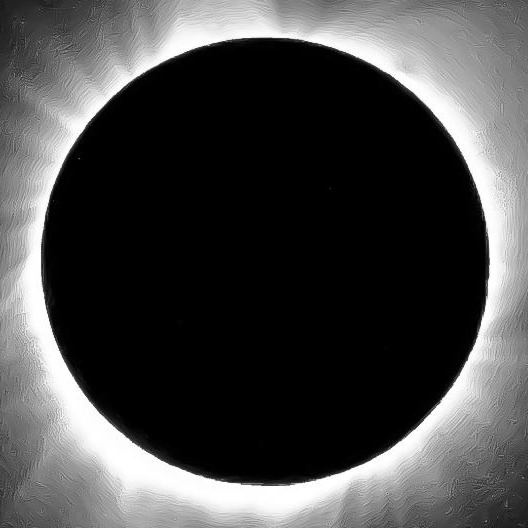
Megamovie Maestros I is part of the Eclipse Megamovie Project, a first-of-its-kind citizen science project that enlisted thousands of volunteers from locations across the United States to capture images of the August 21, 2017 total solar eclipse. We have collected over 50,000 images, and now we need your help analyzing them! In this first project, you will help us determine what our volunteers actually captured by identifying eclipse phases and other phenomenon of interest.
This vast database contains several interesting treasures that we plan to reveal in future programs, some of which are ongoing via the public-domain access to the entire archive via Google Cloud.
In this first Zooniverse effort, we are generating metadata that supplement the raw archive material, which will help us focus in on more specific future projects. As many volunteers are finding, the initial archive has quite a bit of misfiled material, as well as lots of wonderful eclipse images. The result of this project will thus be partly to streamline this archive for the next steps, and to do some preparatory work in the images themselves. Megamovie Maestro I tasks include locating Regulus, an essential element necessary for further analyses, and to identify special images that show solar prominences and other eclipse phenomenon of interest.
The immediate output of Maestros I will be the creation of a smooth movie, taking advantage of Regulus as well as the Moon for image registration. The latest Google version of the Megamovie, visible now on the Project homepage, does not have this registration. The final movie product will uniquely characterize the full 90-minute life history of the corona during the 2017 eclipse.
What will Maestros II focus on? We outline here some ideas for exploration that should lead to scientific discoveries.
1. Streamer motions. Many of the deep exposure images reveal atmospheric streamers extending to great distances from the Sun. The motions of these streamers reflect coronal dynamics and also, at a basic level, solar rotation. Over the 90-minute time span of the eclipse, we expect to see this rotation in terms of systematic displacements. To measure these displacements well, we have the fixed point of Regulus in these images as a reference. What do we learn from this activity? Nothing less important than the third dimension, we can hope. This is because the line-of-sight depth of the streamer features determine their apparent motion as a result of rotation. To exploit this stereoscopic effect with our relatively short time base will be difficult, but this archive can make it possible. And to learn something about the true 3D structure of a coronal streamer would be a scientific first!
In addition to rotational motion, of course the natural dynamics of the corona as it evolves and responds to events occurring during the 90 minutes may also be detectable. This too would be wonderful, because there is no other way available to study these flows directly. We note that there is great EUV imagery from space-borne instruments such as those on the Solar Dynamics Observatory, but these observe closer in to the solar surface, and also have strong dependencies on the temperature of the coronal material, which eclipse photography does not.
2. Wave motions. We expect that some image sequences, at the highest resolution, will show flows associated with compression waves in the corona. These are a part of the major problem of coronal heating; the waves are known to exist but have never been recorded in detail by white-light eclipse photometry. Within the Megamovie archive, we expect that most of the images will not be suitable for these studies because of unavoidable inconsistencies or observing conditions. But some sequences will be excellent, and so a Zooniverse study can be considered as a means of identifying these sequences and thus leading to more detailed study of the physics of such waves.
3. The Diamond Ring. Some of the most beautiful images our initial volunteer photographers captured show the Diamond Ring effect. We hope to detect visual differences in the effect from images taken at different times and different positions along the path of totality, as well as perpendicular to it. These could constitute a special-purpose movie, the first of its kind, but we hope for more than just a spectacular show. In fact, over the 90 minutes the eclipse traveled from coast-to-coast, the Moon exhibited substantial libration. This gives us an ever-changing perspective at the edge of the Moon, where different peaks and valleys appear and disappear. The Diamond Ring effect can reveal the pinpoint location of the deepest valley visible at a particular observer’s reference point. And thanks to the great distance to the Moon, this point has very little diffractive blurring, and thus (in a sense), the Megamovie's archive of Diamond Ring images far exceeds the resolving power of even huge telescopes.