


Finished! Looks like this project is out of data at the moment!
Thank you for your efforts! This project's classification effort is complete! To browse other active projects that still need your classifications, check out zooniverse.org/projects. Also see news from Deep Sea Explorers here
Help us to study bio-activity in the deep sea! With your help, we will better understand marine sources of noise in the KM3NeT detector, making our search for neutrinos much easier.
Learn moreYou can classify light (BIOLUMINESCENCE) or acoustic (BIOACOUSTICS) signals. Of course, you can also do both!
Zooniverse Talk
Chat with the research team and other volunteers!
Deep Sea Explorers Statistics
View more statsAll Time Stats
Active Stats
Active stats provide information about currently active workflows and subjects.
Message from the researcher
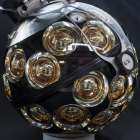
When I joined KM3NeT, I was aware of its huge potential for neutrino science, but I had no idea we could use it for sea science! Citizen Scientists can help us a lot in these matters because they can perform tasks neither us nor machines can do.
Deep Sea ExplorersAbout Deep Sea Explorers
Wait... What? We can do sea science with a neutrino telescope?!
Neutrinos are very peculiar elementary particles. Even if we have come to know a lot more about them since their first prediction in 1930 and their first experimental detection in 1956, we still don't fully understand them. Why? Mainly because they are very (very!) difficult to detect.
To increase our chances of seeing them, we need huge detectors. And by huge we mean at the km3 scale. Neutrino detection relies on the observation of Cherenkov light, which can easily be seen in transparent media like water or ice. That is why KM3NeT, the Kilometer Cube Neutrino Telescope, is currently deployed in the Mediterranean sea.
Unfortunately, sea water has some drawbacks, which we call noises. We want to get rid of them, in order to improve our detection of neutrinos. This is where we need you! One of our main sources of noise comes from bio-activity in the deep sea, in the form of light and acoustic signals that have never been systematically studied.
Your mission as a Deep Sea Explorer (should you choose to accept it!) is to help computers to better classify these light and acoustic signals. While computers might outshine us in analysing very large datasets, human eyes and ears are still better than a computer at noticing subtleties.
If you want to know more about who we are, don't hesitate to have a look here!

This project is part of REINFORCE (Research Infrastructures FOR Citizens in Europe).
REINFORCE aims to:
engage citizens in the contribution to online frontier science, create an active community of citizen participants in scientific endeavours, introduce responsible research and innovation into the citizen science landscape, assess the impact of citizen science in science and society, create a citizen science project policy roadmap for other large-scale research infrastructures, and explore the potential of frontier citizen science for inclusion and diversity.
4 REINFORCE projects are available in Zooniverse:
GWitchHunters
Deep Sea Explorers
New Particle Search at CERN
Cosmic Muon Images
Get more info and join us in the REINFORCE community

REINFORCE has received funding from the European Union’s Horizon 2020 project call H2020-SwafS-2018-2020 under Grant Agreement no. 872859. The content of this website does not represent the opinion of the European Commission, and the European Commission is not responsible for any use that might be made of such.
