


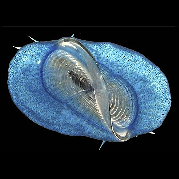
Finished! Looks like this project is out of data at the moment!
Ahoy The Living Sailors Volunteers! Our Case Study of The Living Sailor Project is now online, read the paper here 🪼⛵🐦🥤 Thank-you all for studying the strange and beautiful jellies on the sea surface with us!! See the results
Results
Case Study of The Living Sailor Project in Citizen Science Theory and Practice
Read the paper here
Data analysis = 100% complete

Fig. Summary of The Living Sailor data for subjects receiving 4 or more volunteers in agreement and including manually corrected subjects for handedness. Upper left: subjects originated for locations spanning the globe with concentrated efforts in Western North America, Europe, and Australia and New Zealand. Upper right: the vast majority of subjects were comprised of a single sailor. Bottom left: most subjects were left-handed sailors with comparatively few co-occurrences. Bottom right: most subjects were of live sailors.
Global distribution patterns of an ocean-surface dwelling animal are associated with organismal asymmetry
This pre-print is undergoing peer-review and is not the final product, but we are excited to share the work-in-progress with you all! Read the pre-print here
This work combines your Zooniverse data with at-sea observations inside the North Pacific Subtropical Gyre. Our data demonstrate that the sail direction influences by-the-wind sailors global distribution! We also looked at their genetics and used oceanographic modeling which combined tell a compelling story that sail direction guides Living Sailor distribution.

Fig. A: Map of iNaturalist observations of Velella velella with the sail direction determined by volunteers on the community science platform Zooniverse (Iwanicki & Helm 2025). B: pie-charts showing the proportion of left (blue) and right (red) Velella velella observations plotted to the location from two sea-going community science expeditions (SEA and The Vortex Swim) to the eastern North Pacific Subtropical Gyre (marked as NPSG).