The Team
Team Introduction
The work of our research team focuses on two areas. One is the spatial ecology of pyric herbivory in prairie and savannah landscapes in the Edwards Plateau of Texas - how the integrated prescribed fire and grazing may promote plant and animal diversity and support livestock production across the landscape and the region. Another is focused on education and outreach to promote public understanding of the critical importance of the ecosystem services provided by prairie and savannah ecosystems to society and how these ecosystems and associated ecosystem services can be sustained for us and future generations.
Our work is part of a larger project, “The Prairie Project,” a collaborative effort between Texas A&M University, Oklahoma State University, and the University of Nebraska, supported by a US Department of Agriculture grant’s National Institute of Food and Agriculture. Through the collaboration between university researchers, extension professionals, private ranchers, and educators, the Prairie Project seeks to promote the understanding and applications of effective strategies such as pyric herbivory and multispecies grazing, restoring and sustaining the prairie ecosystems and their ecosystem services across the Great Plains. It is also a major goal of the Prairie Project to promote public understanding of the critical importance of ecosystem services provided by prairie ecosystems to society and public engagement through citizen science research and outreach activities.

Photo credits: [The Prairie Project]
Team members
Weiqian Gao

Weiqian Gao is a Ph.D. candidate and a graduate research assistant in the Department of Ecology & Conservation Biology. She received her B.S. in Natural Resources Management with a minor in Agricultural & Resource Economics from Colorado State University and M.S. in Ecosystem Science and Management from Texas A&M University. She is currently pursuing a Ph.D. in Ecology & Conservation Biology at Texas A&M University. Weiqian has research experiences examining the influence of grazing pressure and severe winter disasters on livestock population dynamics at the national level on rangeland in Mongolia. Her current research focuses on spatially and temporally evaluating multi-species grazing distribution, forage quality, livestock diet quality, and integrated analysis of fire-grazing interaction under patch burn conditions grazing in the Mesquite-Oak Savanna ecosystem.
Xavier A. Jaime

Xavier A. Jaime is a Ph.D. candidate and a graduate research assistant for the Department of Ecology and Conservation Biology (ECCB) at Texas A&M University, where he performs within the Prairie Project research umbrella to make this project possible. His research interest focuses on the spatial evaluation of spatiotemporal change in the plant community response to prescribed patch-burning within heterogeneous landscapes in the Edwards Plateau of Texas. He is also interested in how citizen science contributes to the progression of understanding pyric-herbivory, ecosystem structures, and animal movement through the Zooniverse platform. Xavier has an M.S. in Forestry from North Carolina State University and is currently pursuing a Ph.D. in Ecosystem Science and Management from Texas A&M University.
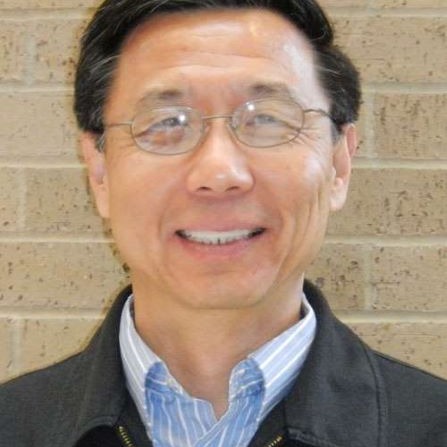
Dr. X. Ben Wu

Dr. X. Ben Wu is a professor of ecology, associate dean for faculty affairs, and Presidential Professor for Teaching Excellence at Texas A&M University. He teaches a large-enrollment introductory ecology course and a graduate course on landscape analysis. His research interests include landscape ecology as well as ecology education. His lab group studies spatial ecology and pyric-herbivory in savanna landscapes and authentic scientific inquiries in introductory ecology courses and their effects on student learning. He received his Ph.D. in ecology from the University of Tennessee and did his postdoctoral training at the Ohio State University.
Dr. Maria L. Macik

Dr. Maria Macik is a Postdoctoral Researcher and Project Manager in the Department of Ecology & Conservation Biology. She earned her Ph.D. in educational psychology at Texas A&M University and served as an associate instructional consultant at the Center for Teaching Excellence for 5 years. She facilitated curriculum redesign processes in several colleges and served as the curriculum redesign consultant in the College of Veterinary Medicine & Biomedical Sciences since 2016. Maria has extensive experience in curriculum redesign and supports institutions across the U.S. with curricular review and revision efforts. Her research focuses on assessing various instructional practices on student learning, creative thinking in higher education, supporting underrepresented minority students in STEM, and the impact of inclusive pedagogy on student learning.

- Grace_vielleux@Grace_vielleux
- Grace_vielleux@Grace_vielleux