


Research
About Photoroute
This participatory project is part of the EFACILT program which aims to study wildlife confronted with linear transport infrastructures. We placed camera traps along a highway located in northern France (Ardennes region). The obtained photos must be analysed in order to identify which species used which passage at which time and in which direction. By participating in this program you help us in our research while discovering uncommon behaviour of wild animals around a highway.
Studied Fauna
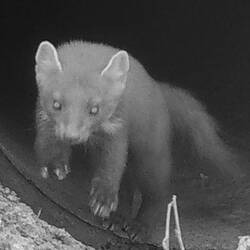
Our project was designed to study a variety of mammals species. The most commonly observed on our photos are Red Foxes, European Badgers and Racoons, while the most rarely observed are Red Deer and the Wild Boars. Depending on the camera location, we also observe Nutrias, Roe Deer and Pine martens quite often. Many smalls mammals (or micro-mammals) can be seen on our photos, unfortunately, their size impedes their identification and, thus, they are not included in our data.
Our scientific questions
The goal of our study is to understand how the highway impact mammals’ movement at the landscape scale. With our camera traps, we want to estimate how often the passages that cross the highway are used by the different species we observe. Thanks to these data we want to identify which passages are the most used and what characteristics make them interesting for the mammals. Based on this information, we will also study if there are areas where creating new passages could be useful for the mammals by crossing camera traps and population density data. This could benefit the wild mammals population by increasing connectivity between each side of the highway while reducing risks of traffic collision.