

FAQ
FAQ
What should I do if I am not sure which species I see?
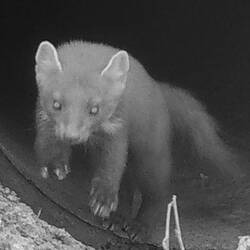
If you cannot recognize a species, for example if the animal is partially visible or blurry, you can select "I don't know". Each series of photos is seen by several participants before being validated, if others specify the series as "I don't know" we will check if the species is identifiable. If enough participants can identify the species, the photos will be validated even if some participants were not able to identify it.
How to count the number of individuals?
It can be difficult to visualize how many individuals there are in the photo sets. Sometimes you will see 2 or more individuals on the same photo but most of the time they will be in successive photos. If you have doubts, use the time displayed in the lower right corner to determine if what you see is the same individual that have moved or a different one.
Why is there empty photos series?
Our camera traps are triggered by motion. Sometimes it is activated by the wind blowing on the vegetation or water, while there is no animal.
Why not identifying birds?
Since birds can fly, they don't need to use bridges and pipelines to cross the highway. Despite that, birds are occasionally observed in some of the monitored passages, but this cannot be used to analyse their movement around the highway.
What about micro-mammals?
Micro-mammals such as rats or voles are not included in our analyses because they are often too small to be detected or identified with our camera traps. In addition, it is likely that micro-mammals can use smaller passages that we do not monitor or cross the highway through fences. As a result, the analyses that we could do on micro-mammals would hardly represent the reality of their movement.
Are the studied passages built for the animals to use ?
The passages we study were initially built for the highway to cross roads, railways, watercourses and flood zones. The wild fauna has adapted to these passages and use the ones that coincidently fit their needs. One of the goals of our study is to determine if the current passages are enough for the wild populations to spread. These data could be use to create new passages specificaly designed for animals where it is needed.