
Finished! Looks like this project is out of data at the moment!
Welcome to Rubin Comet Catchers! Update 3 September 2026: Thanks for your super-FAST comet classifications of Rubin data! Wow! And great news: we unearthed MORE special datasets from Rubin’s Early Data Preview 2 data! By popular demand, we are releasing a limited edition workflow for identifying near-Earth objects (NEOs) in Rubin data! These trailed sources — lovingly called sausages — are important to understand for planetary defense, and they can have comet tails too! And don’t worry, comet fans — we also have new images of Centaurs and other populations coming up or already online! All of these are actual Rubin images that the science team figured out a clever way to get at more science! Just how much and what is in there is up to you to discover… we’re super-excited!
Thanks, everyone, for all your hard work! You can always check out this YouTube video featuring Colin on a show he hosts about the upcoming Rubin Observatory and the Legacy Survey of Space and Time! It features Citizen Science, and Clare Higgs of Rubin Education and Public Outreach presents, too! Thanks again, everyone! We cannot do this without you!
The Team
Core Research Team
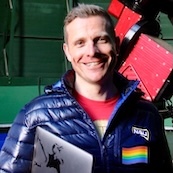
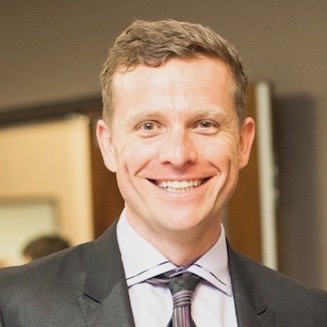
Colin Orion Chandler
Dr. Colin Orion Chandler, the founder of this project, serves as its Principal Investigator. He is currently a Project Scientist with the LSST Interdisciplinary Network for Collaboration and Computing (LINCC) Frameworks and a Postdoctoral Scholar at the Data Intensive Research in Astrophysics and Cosmology (DiRAC) Institute, both at the University of Washington. (LSST refers to the Vera C. Rubin Observatory’s Legacy Survey of Space and Time.) Colin first proposed this project while a Presidential Fellow at Northern Arizona University, where it was selected for funding by the prestigious National Science Foundation Graduate Research Fellowship Program (NSF GRFP). He also serves as co-chair of the LSST Solar System Science Collaboration (SSSC).
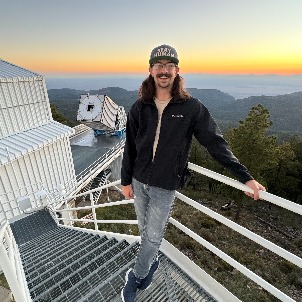
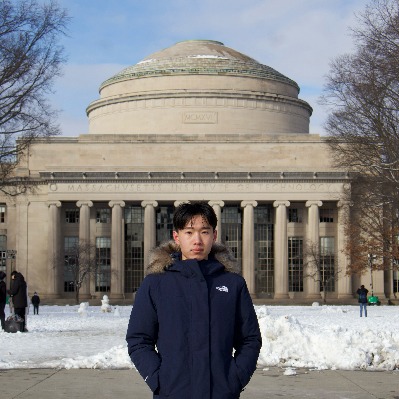
Jinshuo Zhang
Project Scientist Jinshuo Zhang (DiRAC Institute, University of Washington) is an undergraduate student majoring in Physics and Astronomy. He focuses on active-asteroid research and has contributed to the Rubin Comet Catchers program design and begin observing with the Apache Point Observatory 3.5 m telescope for the Active Asteroids program and, soon, Rubin Comet Catchers! He also serves as the translator for the project’s Chinese-language pages.
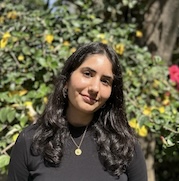
Devanshi Singh
Project scientist Devanshi Singh (DiRAC Institute, University of Washington) is an undergraduate student studying Physics and Astronomy. She specializes in Solar System objects like Asteroids and will be helping with the follow-up telescopic observations with the Apache Point Observatory's ARC 3.5 m telescope for objects of interest from Rubin Comet Catchers!
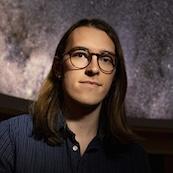
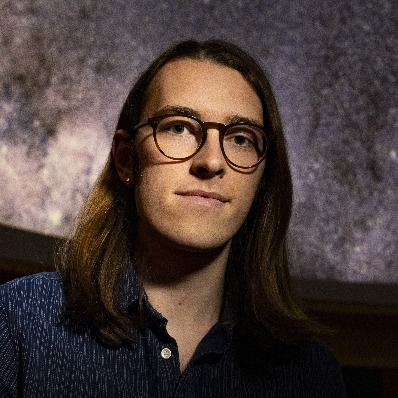
Max Frissell
Project scientist Max Frissell (DiRAC Institute, University of Washington) is an incoming Ph.D. student at Northern Arizona University. Max specializes in observing potentially active objects and faint trans-Neptunian objects (TNOs), with extensive experience as an observer with the Apache Point Observatory’s ARC 3.5-meter telescope.
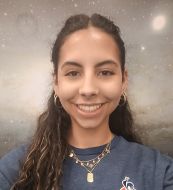
Naomi Morato
Project scientist Naomi Morato, a student at the University of Washington studying Computer Science and Astronomy, specializes in deep learning algorithms for astro-related downstream tasks such as classification and anomaly detection of celestial bodies.

Dr. Dmitrii Vavilov
Dmitrii is an expert in solar system dynamical simulations. He helps us figure out where objects identified as active by volunteers originally came from (for example, the Kuiper Belt), and where they may end up in the future.
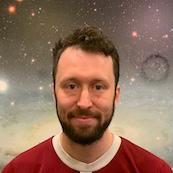
Jake Kurlander
Jake is a Ph.D. student at the University of Washington. Jake was instrumental in the initial creation of the cutout pipeline, providing guidance on the LSST software stack and offering insights into survey simulations with Sorcha.
Jay Kueny
Project Scientist Jay Kueny is an NSF GRFP recipient at the University of Arizona / Steward Observatory, and helped design the Active Asteroids program while at Lowell Observatory and Northern Arizona University.
Nima Sedaghat
Project Scientist Dr. Nima Sedaghat (University of Washington, DiRAC Institute, and founder of the Raw Data Speaks initiative) is an expert in the field of artificial intelligence (AI), especially machine vision.
Project Scientist Jarod A. DeSpain (Northern Arizona University) focuses on forum interaction and follow-up telescope observations.
(Picture Coming Soon!)
Mario Juric (DiRAC, University of Washington) is the lead of the Rubin Solar System Commissioning Team (Colin Chandler, Pedro Bernardinelli are members), and has provided extensive assistance in promoting the project and attaining funding.
(Picture Coming Soon!)
Andrew Connolly (eScience Institute, LINCC FW, DiRAC, University of Washington) has provided regular insights into the project, assisted with and facilitated funding proposals, promoted the program, and more.
(Picture Coming Soon!)
Clare Higgs is the NSF DOE Vera C. Rubin Observatory's Education of Public Outreach Scientist.
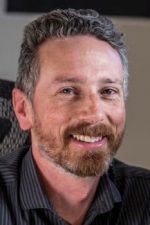
Chad Trujillo
Project Scientist Prof. Chad Trujillo (Northern Arizona University) is the project's Chief Science Advisor.
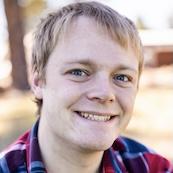
Project Scientist Dr. William Oldroyd (Northern Arizona University) is part of the follow-up observation and analysis team. Will specializes in orbital dynamics and is an experienced observer with the Lowell Discovery Telescope and Large Binocular Telescope.
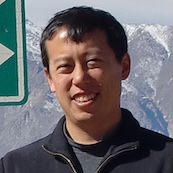
Project Scientist Prof. Henry H. Hsieh (Planetary Science Institute) specializes in active bodies of the solar system and is one of the top leaders in our field. Henry also has experience with Citizen Science projects, and leads a software working group at the Vera C. Rubin Observatory Legacy Survey of Space and Time (LSST) Solar System Science Collaboration.
Will Burris
Project Scientist Will Burris, a graduate student at Northern Arizona University, specializes in the analysis of project classification data. Will also helps out with follow-up telescopic observations of objects of interest that stem from the project.
(Picture Coming Soon!)
Project Scientist Kennedy A. Farrell (Northern Arizona University) specializes in follow-up telescope observations on behalf of the program.
Dr. Mark Jesus Mendoza Magbanua is a geneticist at the University of California, San Francisco, specializing in breast cancer, circulating tumor cell liquid biopsy, and genomic data science applications. As a scientist from an independent field of study, Mark offers a distinct perspective on the project that bridges the gap between Citizen and Scientist. Mark has also accompanied Colin Chandler on multiple telescope observation runs and has conducted his own observations for the project.
NASA Citizen Scientist Co-authors
These amazing individuals have contributed extensively to the project. All have classified an overwhelming majority of project images, and they regularly provide feedback on publications and other critical areas of project development.
Individual profiles coming soon!
Contributors
Scott Sheppard (Carnegie Institute) is a regular contributor of invaluable telescope time at world-class telescopes.
Bryce Kalmach (DiRAC, University of Washington) helps us navigate the Rubin software system.
Colin Slater (DiRAC, University of Washington) regularly helps troubleshoot internal Rubin processes with the team.
David Wang (DiRAC, University of Washington) is a regular donor of telescope time.
Eric Bellm (DiRAC, University of Washington) is a regular donor of telescope time and provides insight into the Rubin Alert Stream process.
Michael Tauraso (LINCC FW, DiRAC, University of Washington) has assisted in our implementation of the LINCC Frameworks Hyrax AI system framework.
Wilson Beebe, Max West, Drew Oldag, and Aritra Ghosh (LINCC FW, DiRAC, University of Washington) have provided regular feedback on various aspects of the program and assisted in our AI endeavors.
Funding Sources
Chandler is funded by the LINCC Frameworks initiative, the NASA CSSFP (grant number pending), and was funded by the NSF GRFP under Grant No. (2018258765).
Bernardinelli, Chandler, Kurlander, Sedaghat, and Wainer acknowledge support from the DIRAC Institute in the Department of Astronomy at the University of Washington. The DiRAC Institute is supported through generous gifts from the Charles and Lisa Simonyi Fund for Arts and Sciences, and the Washington Research Foundation.