


Finished! Looks like this project is out of data at the moment!
A big thank you to all the amazing volunteers that classified images for us! Stay tuned for the results! 😃
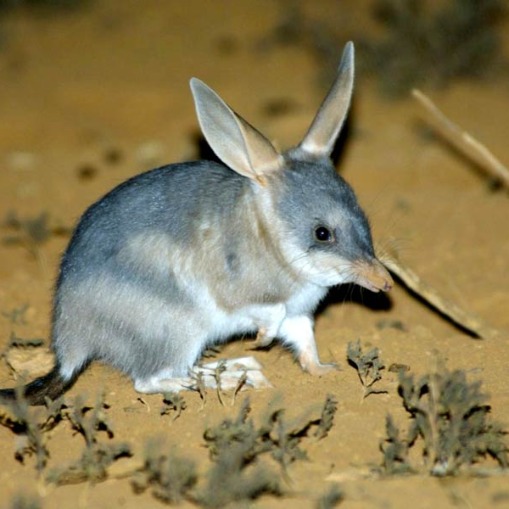
Help us monitor greater bilbies in our sanctuary to test a tool for protecting this threatened species from drought
Learn moreOur workflow for feed sites will take you to our camera trap sites which monitor buried feed use by bilbies and other sanctuary residents. The workflow for no-feed sites will take you to our camera trap sites without buried feed. For each animal you classify, you will also be asked some follow-up questions such as how many animals do you see in the image, and is that bilby wearing a tracking device? The questions are the same for each workflow, but you will also be asked to select whether animals are interacting with our feed sites for the 'workflow for feed sites'.
Zooniverse Talk
Chat with the research team and other volunteers!
The Greater Bilby Sanctuary Statistics
View more statsAll Time Stats
Active Stats
Active stats provide information about currently active workflows and subjects.
Message from the researcher
Bilbies are threatened in Australia due to several contemporary challenges such as human-induced climate change, introduced predators, and changes to traditional fire regimes. Please get involved and help us in our mission to conserve the bilby.
kcornelsenAbout The Greater Bilby Sanctuary
With climate change, drought conditions are becoming more frequent and severe in Australia. Greater bilbies (Macrotis lagotis), like many other species, are sensitive to drought. To combat this conservation challenge, we need to think of creative solutions to support threatened species, such as the bilby, during drought.
In 2019, research collaborators at the University of New South Wales and the Taronga Conservation Society Australia released bilbies into a 110-ha semi-wild sanctuary at Taronga Western Plains Zoo, in Dubbo, NSW, for conservation breeding and release. This was also during a period of below average rainfall and drought conditions. Drought reduces the productivity of landscapes, and is also likely to limit the amount of feed freely available to the bilby. To support the establishing population we provided feed to the bilbies by burying feed in small 'pits' in front of camera traps. A grid of 19 evenly spaced camera traps monitored animal activity, including bilbies, across the fenced sanctuary.
With your help, researchers will use camera trap data to determine if, and how bilbies use feed sites, and, thus, how effective this management strategy is in helping support bilby populations through drought.
Research was funded with generous support from the Taronga Foundation.


PC: Rick Stevens (background image), Steve Parish (avatar).