Thank you for your efforts! This project is now complete. Click here to view the digital collection. To browse other active projects that still need your classifications, check out zooniverse.org/projects.
The Team
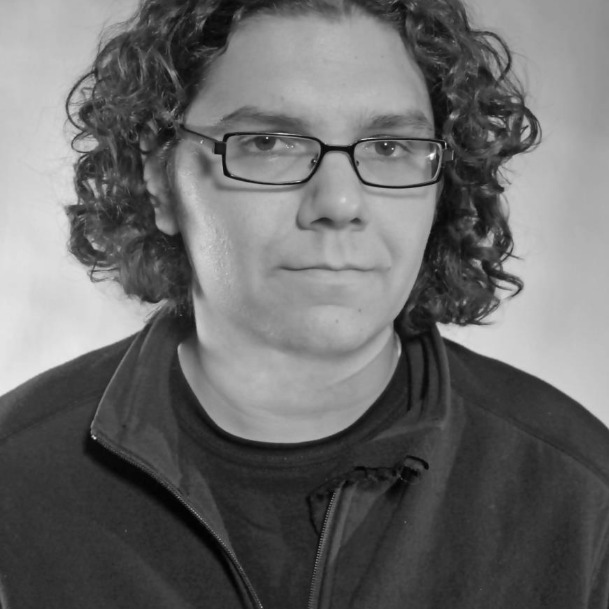
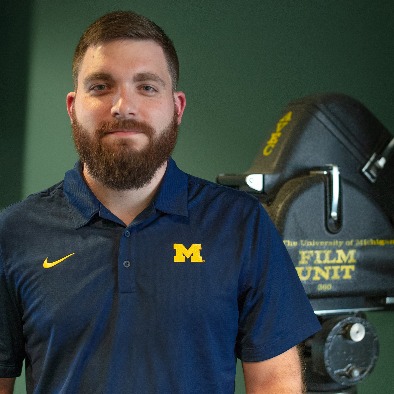
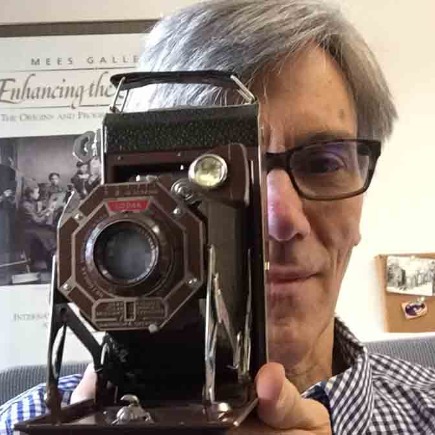
Claire Danna is a masters student at the University of Michigan's School of Information pursuing a degree focused on archival preservation and digital curation. She is the current Joyce Bonk Fellow at the William L. Clements Library, where she is working to help digitize the David V. Tinder postcard collection. Previously, she studied at the University of California, Berkeley and was awarded the Charlene Conrad Liebau Library Prize for Undergraduate Research for her work studying female printers in 17th-century London.
Emiko Hastings is Curator of Books and Digital Projects Librarian at the William L. Clements Library. In the Book Division, she cares for a collection of over 80,000 books, pamphlets, broadsides, and newspapers. She coordinates the digitization program at the library and seeks ways to make the library's materials more widely available to the public.
Christopher Ridgway is a digitization specialist at the William L. Clements Library. His work covers the digitization of books, manuscripts, maps, prints, and photographs related to the subject of early American history. He obtained his M.F.A from the Massachusetts College of Art and Design in 2015 and worked to photograph and digitize other museum and cultural collections at the Toledo Museum of Art. Chris works closely with library curators and a conservator to select and prepare materials for digitization, perform in-house digitization, and create descriptive metadata. With increased demand for these materials to be made available online, Chris is able to digitize various collections in a systematic manner, in addition to digitizing materials upon request from researchers and library staff.
Clayton Lewis is the Curator of Graphics Material at the Clements Library who oversees the Clements’ collection of historical prints, photographs, artwork, illustrated sheet music, ephemera, and other visual materials. Lewis came to the Clements in 2002 from a background in commercial printing and fine art. His B.F.A. is from the Swain School of Design (1982) and M.F.A. from Parson School of Design (1985). Lewis is author of numerous articles and curator of exhibits on vernacular photography, race and identity in American visual culture, popular and patriotic music, wartime art, and American leisure travel.
Vincent Longo is a PhD candidate at the University of Michigan, the Rackham Fellow at the William L. Clements Library, and the Robert De Niro Endowed Dissertation Fellow at the University of Texas’s Harry Ransom Center. His published and forthcoming work focuses on multimedia theater, authorship, archival access, and audiovisual essay pedagogy. He is currently finishing a dissertation on the interrelationships between Hollywood and variety stage entertainment (1920 to 1955), and a book (under contract with the University of Michigan Press) about the anti-fascist and racial politics of Orson Welles’s unmade adaptation of Heart of Darkness.
Justin Schell is the Director of the Shapiro Design Lab, a peer and engaged learning community in the University of Michigan Library. As part of his work in the Design Lab, he facilitates a number of community and citizen science projects, including the use of open source hardware with environmental justice community advocates, online crowdsourcing projects through the Zooniverse platform, and projects that increase the availability and accessibility of environmental data. In addition to his work at the Design Lab, he is a filmmaker, visual artist, and podcast producer.
The William L. Clements Library
Founded in 1923 at the University of Michigan, the Clements Library holds collections of print and manuscript materials on the history of North America and the Caribbean, with particular strengths in 18th and 19th century American history. Our mission is to collect and preserve primary sources, to make them available for research, and to support and encourage scholarly investigation of our nation’s past. Central to this is our belief that these materials should be available to students and the broader public for educational purposes through exhibits and programming.