


This project has been built using the Zooniverse Project Builder but is not yet an official Zooniverse project. Queries and issues relating to this project directed at the Zooniverse Team may not receive any response.
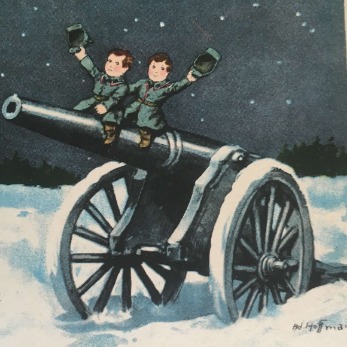
Help us classify and study WWI images of children in postcards, storybooks, and propaganda! Reading knowledge of German not required!
Learn moreYou can do real research by clicking to get started here!
Zooniverse Talk
Chat with the research team and other volunteers!
Images of Children in WWI Propaganda Statistics
View more statsAll Time Stats
Active Stats
Active stats provide information about currently active workflows and subjects.
Message from the researcher
Connect with the research team on Talk to learn more about this project!
About Images of Children in WWI Propaganda
This project seeks to analyze representations of children from Germany during World War One. Using archival posters, postcards, children's books, and films, we hope to establish a baseline precedent for how children were seen and portrayed in media. How are they depicted, and where? To what end? And how do these depictions operate on the viewer? Using these questions, we hope to interrogate how children, both in representation and in real life, were used to blur the boundaries between the Front and the home.
Reading knowledge of German is not required! This project focuses on the images themselves, and how they are perceived by different audiences.
The images used were taken from the Württembergische Landesbibliothek in Stuttgart (predominantly from the Bibliothek für Zeitgeschichte and the alte und wertwolle Drücke collections), the Hauptstaatsarchiv Stuttgart (predominantly the Militärgeschichte collection), the Bundesarchiv in Berlin, and the Library of Congress online archives.
Content Warning: this project includes a small number of images with racist characterizations that are indicative of a colonial Germany at the outset of the 20th century. While we feel that it is important to include these images in a discussion of Germany's past--particularly when discussing an era that was so strongly influenced by the colonial mindset--we understand that these images might be upsetting, and encourage volunteers to be mindful of their own needs.