


Want more Florida Wildlife? Check out our expansion project Florida Wildlife Watch
Results
Check out our new Results Dashboard! Here you can see what species you all have seen and track their activity, as well as learn more about the WMAs in this region!
Everglades Wildlife Watch Dashboard
Also make sure to check out some of the best shots of each species on our Collect page!
RESULTS UPDATE - One Year of Everglades Wildlife Watch! April 2025
It's been a full year of Everglades Wildlife Watch and we are blown away by your efforts! In just 12 months, we had over 5,500 participants join our project and classify over 100,000 photos (that's more than 1 million classifications)! You all have helped us identify 43 wildlife species on 14 Wildlife Management Areas. Heres a quick summary of some of the projects this data has helped:
Tracking Feline Leukomyelopathy
The FWC is currently monitoring the spread of feline leukomyelopathy in Florida panthers and bobcats. This relatively new disease is not well studied, so identifying every potential case in wild felines is extremely important. Every record of a panther or bobcat identified on EWW in which video of the animal was captured (many of our cameras shoot both photos and videos) is shared with our panther biologists and veterinarians to identify potential FLM symptoms. While no FLM cases have been identified on EWW so far, the data we have collected is helping panther and bobcat biologists monitor range expansions, reproduction, and overall health of some of our most treasured Florida species.
Upper Florida Keys Meso-Mammal Inventory Effort
In December 2025, volunteers took on the task of completing a meso-mammal inventory for the Florida Keys Wildlife and Environmental Area (WEA). Dedicated volunteers assisted in placing 6 cameras in different parcels across the upper Keys. These volunteers have been checking cameras monthly to get data uploaded for online EWW participants to classify! This information will help inform managers of the species present across the breadth of the Keys, continue to define range maps for established species, guide wildlife management, and be included in those future management plans.
Dinner Island Ranch Meso-Mammal Inventory Effort
In 2023, Dinner Island Ranch Wildlife Management Area began a large meso-mammal inventory effort to catalog the species occurring on the area. Unfortunately, staff were unable to process the data after beginning the project. Thankfully, EWW online volunteers took on classifying this large batch of data, saving staff over at least 100 hours of processing time. This effort has allowed staff to confirm the presence of 16 mammal species and 27 total species on the area. This data will inform how we will conduct wildlife and habitat management on the area and will be included in future management plans as well. In addition, volunteers highlighted photos of a juvenile Audubon’s crested caracara, a federally-Threatened species, that was captured on camera. This data helped fill in the gap between caracara breeding territory survey years to estimate which territories on the property were potentially active that year.
Everglades Mink Survey Effort
In 2023, Everglades and Francis S. Taylor WMA staff attempted to document the occurrence of the state-Threatened Everglades mink on the area. Staff set 8 cameras placed along the WMA’s southwestern border. Although Everglades mink have not been documented on the area, they are known to occur in neighboring properties such as the directly adjacent Big Cypress National Preserve, and the sightly further Fakahatchee Strand Preserve State Park. Staff selected the area of the WMA that would be most likely to hold mink according to habitat type and proximity to past mink detections. Cameras were baited with an audio caller playing a recording of a small rodent squealing (mink prey) and with frozen-thawed chicken wings as recommended by mink researchers. The 8 cameras were placed in mid-February and ran for 2 months, with weekly servicing to replace SD cards, batteries, and bait. All the photos were then uploaded to EWW for online participants to analyze. The project captured a total of 32 wildlife species, 3 of which were small mammals: the grey squirrel, Big Cypress fox squirrel, and black rat. Over 26,000 photos were taken during this period, and some excellent shots were captured of wildlife behavior from hogs rooting to alligators attempting to eat the bait, to a black-crowned night heron eating an amphiuma (which became a natural history note). Although no mink were detected, this was a productive effort that added species to the wildlife lists for the WMA.
Everglades Complex of WMAs High-Water Event Wildlife Monitoring
During the fall of 2024, the Everglades Complex of WMAs experienced a high-water event that had the potential to impact terrestrial wildlife. FWC staff placed cameras throughout the WMA complex on tree islands and other high-water refugia areas to evaluate these potential impacts, such as body condition, stress levels, and usable space for different wildlife species. Online EWW volunteers processed these photos quickly to help staff keep track of conditions on the ground. This work helped facilitate the decision-making process for the WMA’s closure status and significantly freed up staff time during this event.
RESULTS UPDATE - High Water in the Everglades - DEC 2024
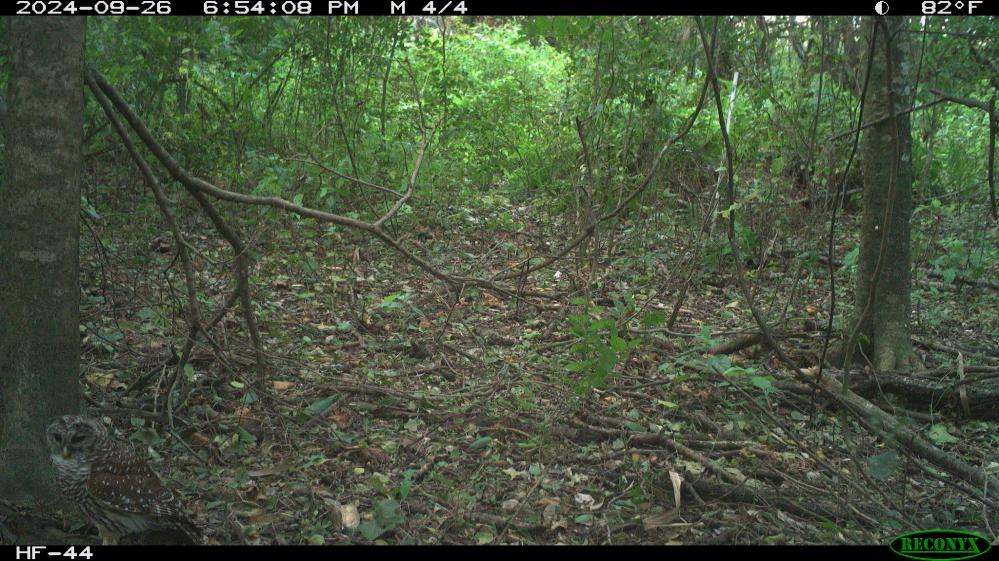
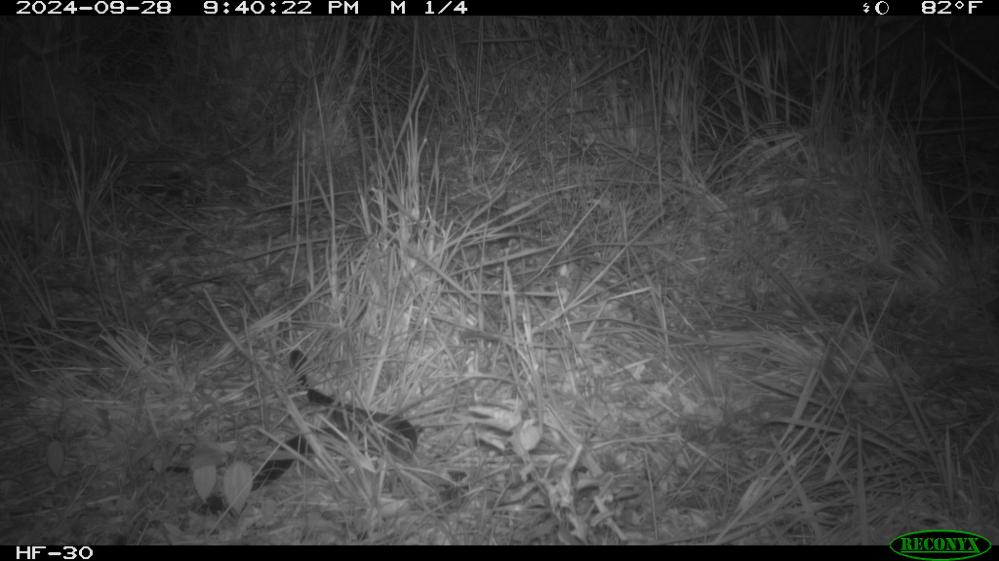
We are coming out of the rainy season and your work has been incredibly helpful. During a high-water event on our WMAs, like Everglades and Francis S. Taylor WMA, deer tend to be pushed towards the levee systems or are restricted to nearby tree islands as they seek dry ground. Through trail camera monitoring, we are able to assess if 1) deer are present on the islands and, if so 2) gauge overall health of the animal(s) as well as stress levels. Naturally, other terrestrial species are captured on our trail cameras too, and we can evaluate similar data of any observed wildlife. Through the images of wildlife we capture, things like body condition, visible disease, wounds, or other potential ailments can be documented and will assist our decision making on the WMA. This year, due to high water, we needed to close some areas and let the deer use levees and tree islands as refuge. Your work in monitoring wildlife on these tree islands week by week during the closure allowed us to determine when it was safe to reopen WMAs back to the public. Along with this, you continued to help us increase our species list on Everglades and Francis S Taylor WMA, recording all of the species below:
WHITE-TAILED DEER
RACCOON
NORWAY RAT
AMERICAN CROW
BARRED OWL
BLUE-GRAY GNATCATCHER
TURKEY VULTURE
GREAT BLUE HERON
GREAT EGRET
RED-SHOULDERED HAWK
NORTHERN CARDINAL
COTTONMOUTH (WATER MOCASSIN)
Thank you so much for your help, and check back in soon for more results and updates!
RESULTS UPDATE - Find the Mink! - JUNE 2024
One of the amazing things about this project is the way we can integrate biologist's individual projects into the long-term monitoring you are all involved in. While most of the data we collect is part of our long-term, region-wide wildlife monitoring program, we are also able to integrate the data from more specific projects into the datasets. This is exactly what happened last month in our South District!
Many of you have been asking about those strange silver boxes seen in most of the photos in our last South District batch. While we couldn't share what we were looking for while analysis was happening (otherwise we might unintentionally skew the analysis), we are excited to share with you now that the project is complete! Check out the project summary below from our Everglades biologist, Jacob:
"This set of photos was from a small mammal inventory conducted in the Everglades and Francis S. Taylor WMA, and specifically from 8 cameras placed along the WMA’s southwestern border in an effort to detect the federally endangered Everglades mink. There are no documentations of Everglades mink on the area, but there have been in neighboring properties such as the directly adjacent Big Cypress National Preserve, and sightly further away on Fakahatchee Strand Preserve State Park. This section along the L-28 tieback levee was deemed most likely to hold minks, due to habitat type and proximity to past mink detections. Cameras were baited with an audio caller playing a recording of a small rodent squealing (mink prey), and with frozen-thawed chicken wings, as recommended by researchers at FWRI. The 8 cameras were placed in mid-February and ran for 2 months, with weekly servicing to replace SD cards, batteries, and bait. They ended up capturing 32 wildlife species total, 3 of which were small mammals; the grey squirrel, Big Cypress fox squirrel, and Norway rat. Over 26,000 photos were taken during this period, and some excellent shots were captured of wildlife behavior from hogs rooting to alligators attempting to eat the bait, to a black-crowned night heron eating an amphiuma (which became a natural history note). Although no minks were detected, this was a productive effort that added species to the inventory of the WMA."
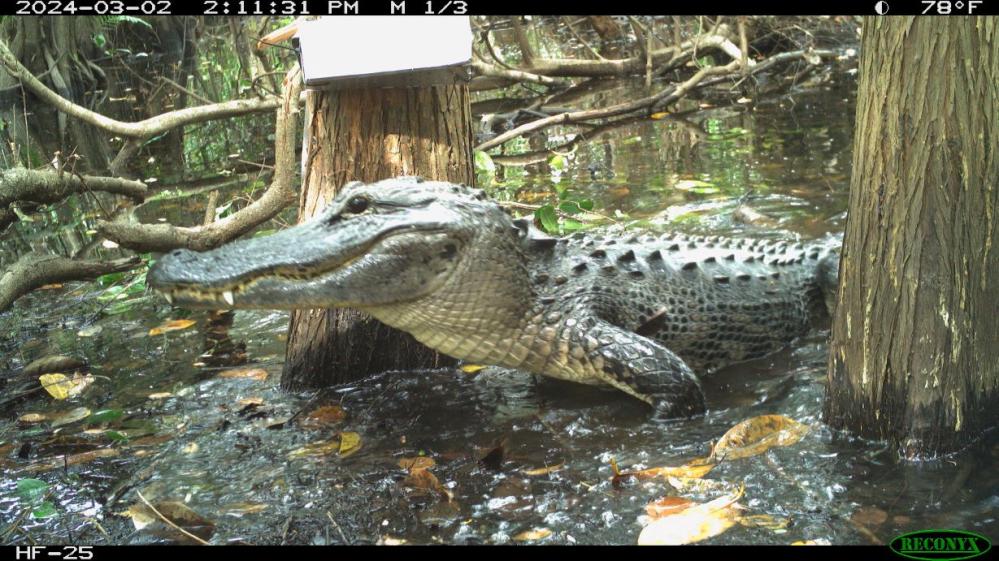
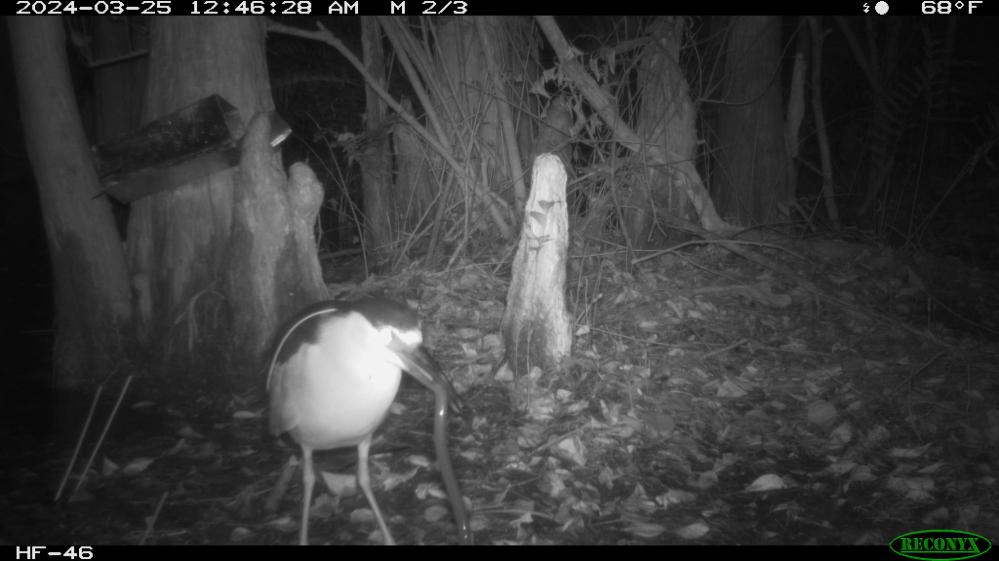
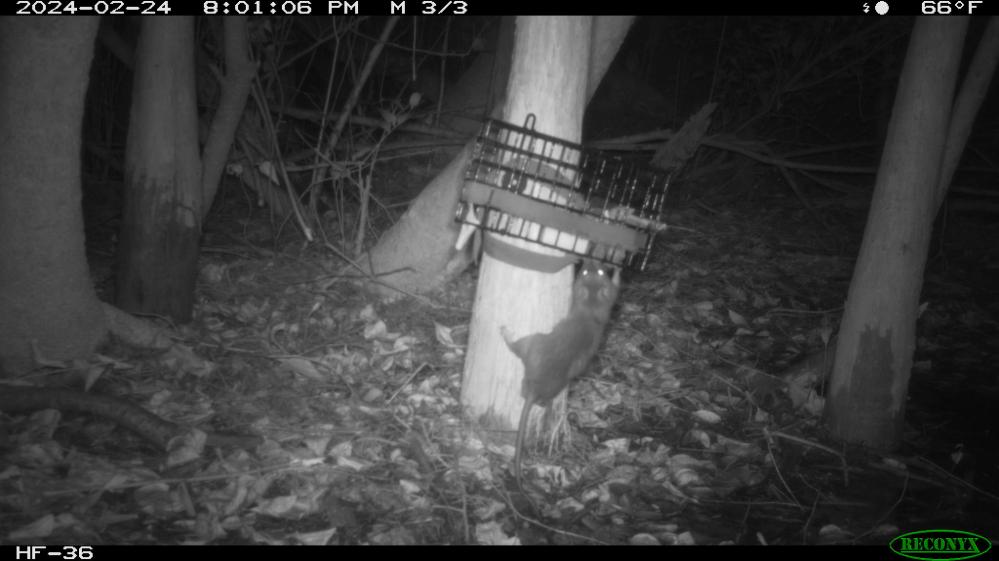
Species detected during this project:
Turkey vulture
American Crow
Great Egret
Little Blue Heron
Black-Crowned Night Heron
White Ibis
Great Blue Heron
Limpkin
Boat-Tailed Grackle
Barred Owl
Black Vulture
Gray Catbird
Oven Bird
Green Heron
Screech Owl
Blue Jay
Red-Shouldered Hawk
Fish Crow
Red-Bellied Woodpecker
Wood Thrush
Tricolored heron
Great Crested Flycatcher
Two-Toed Amphiuma
American Alligator
Striped Mud Turtle
Feral Hog
Virginia Opossum
Grey Squirrel
Big Cypress Fox Squirrel
Norway Rat
Thanks so much for your help on this project, and stay tuned for updates on our long-term monitoring efforts!