


Finished! Looks like this project is out of data at the moment!
Our lab is studying Greater sage-grouse conservation, help us protect this important species!
Learn moreYou can do real research by clicking to get started here!
Zooniverse Talk
Chat with the research team and other volunteers!
Grouse Grooves Statistics
View more statsAll Time Stats
Active Stats
Active stats provide information about currently active workflows and subjects.
Message from the researcher

My name is Eric Tymstra. I am a PhD candidate in Gail Patricelli's lab at UC Davis. I am studying behavioral ecology of the Greater sage-grouse. I use behavioral and ecological data to inform conservation decisions.
etymstraAbout Grouse Grooves
Greater sage-grouse, the largest grouse species in North America, are chicken-like birds that depend on sagebrush steppe ecosystems. The sagebrush steppe is a an important ecosystem for upwards of 350 species including birds, mammals, plants, reptiles, amphibians and insects.
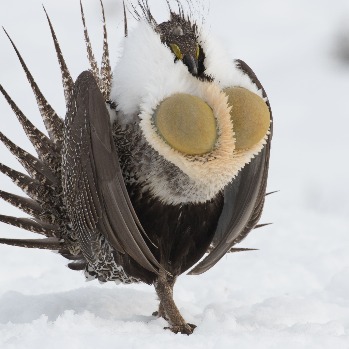
Sage grouse are famous for the elaborate breeding displays of males on leks. Leks, derived from the Swedish word for 'play', are aggregations of males who compete to attract females to mate; males in lekking species provide no resources or parental care to the young, and the most attractive males may mate with many females. In the case of sage-grouse, the males attract females by performing strut displays (https://www.youtube.com/watch?v=s31KEXkDHvo). Here they inflate their esophagus, which protrudes through two yellow vocal sacs on their chest, and swish their feathers to make a "swish-pop" sound. Their funky coloration and shape are also thought to have evolved in order to impress female grouse. Females visit the lek in order to comparison shop for mates and copulate, then they leave the lek and raise the young on their own. Top males on the lek are known to mate over 100 times in the two month long breeding season!
Our project aims to understand when the birds are using leks throughout the day. Sage grouse are found in 11 states and two Canadian provinces. They are a species of conservation concern throughout their range, with populations declining by 90% or more, and they have been considered for listing as an endangered species. In order to improve conservation efforts, we are using trail cameras to monitor leks. Understanding when these birds use the lek, and how this might differ between leks or throughout the season, will help us to determine when these sensitive areas need to be protected.