


Finished! Looks like this project is out of data at the moment!
Embryo Cam is back online - select a project below to get involved!
Research
CAPTURING THE MOST DYNAMIC PROCESS OF AN ORGANISM'S LIFE HISTORY
Embryonic development is the most dynamic period of an organisms' life history and has long been a period of fascination to researchers. Embryos change on a minute by minute, hour by hour and day by day basis and trying to capture this dynamic process presents a formidable challenge to scientists.
Our Research group works at the University of Plymouth where we have developed new automated technologies for recording large numbers of aquatic embryos for the duration of their embryonic development and this enables us to capture and study the fundamental process of biological development in an unprecedented way.
Our microscopes generate huge volumes of video data, the next step is to analyse it. Manual analysis is inefficient and so to analyse video efficiently we are turning to artificial intelligence (AI). We are using AI to train the computer to autonomously spot features in developing embryos. For this, we need you! By drawing around features of interest and identifying when the embryo is performing certain behaviours you will provide the computer with "training data" so it can learn from you!
This is an important mission because we know that early life stages are sensitive to their environments, but not how sensitive or what they are most sensitive to. We need this understanding as the environment is changing at an unprecedented rate. Therefore, we urgently need your help to generate these data!
OUR TECHNOLOGY
What is EmbryoPhenomics?
EmbryoPhenomics is a technological platform for the autonomous video recording of developing aquatic embryos comprised of a video microscope we call OpenVIM and software called EmbryoCV (computer vision).

Here are three OpenVIM systems in our laboratory
What does it do?
This technology enables us to record and monitor embryos developing under a range of experimental conditions, such as different temperatures that reflect climate change scenarios. Analysing how development is effected by changes in environment, such as changes in temperature, will help scientists understand how climate change may effect animals developing in aquatic environments.
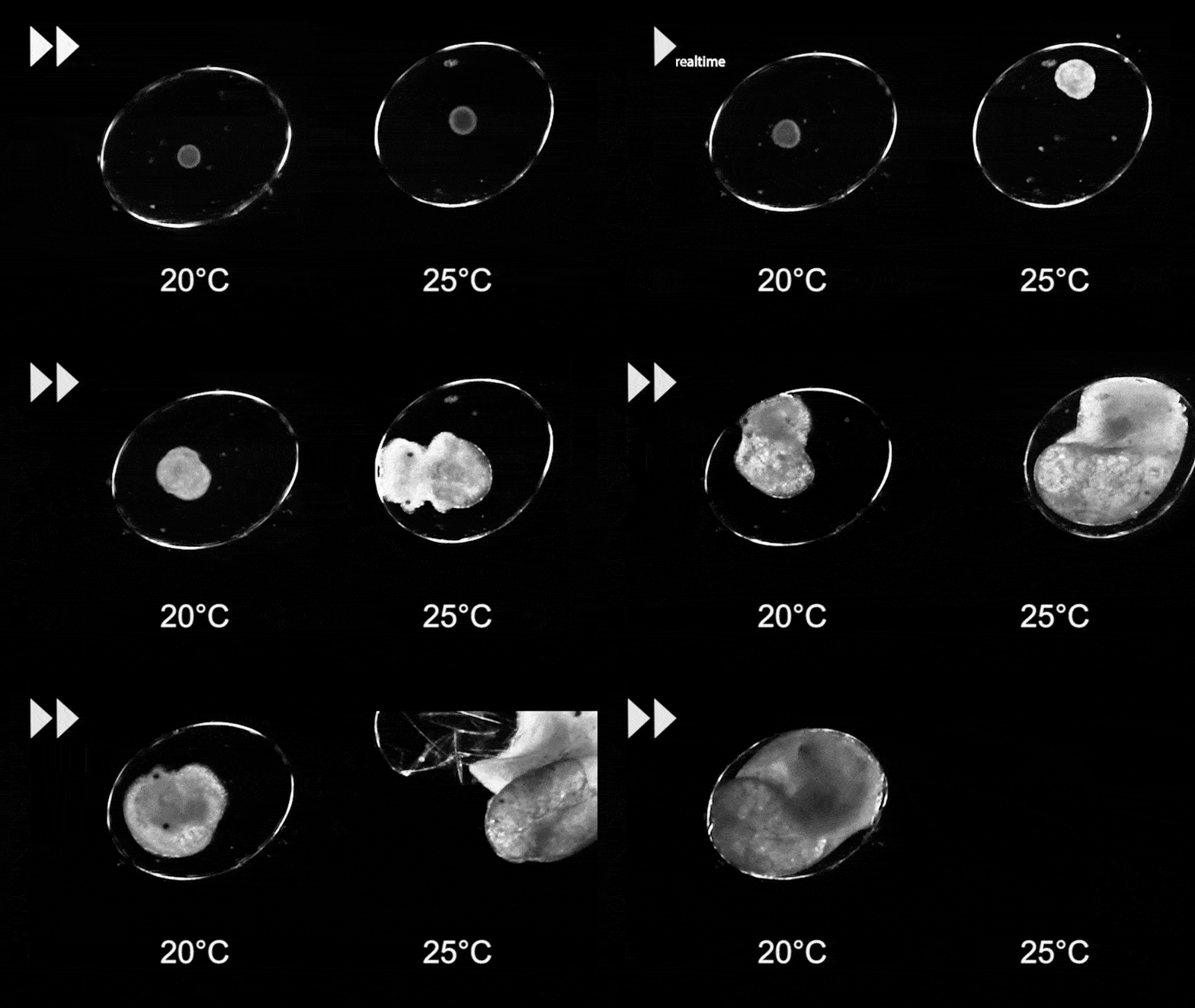
Timelapse video of two snail embryos developing under different environmental temperatures
Why do we need your help?
Your contribution will enable us to extend these technologies to address some of the most pressing challenges of understanding how early life stages are responding to our current environmental crisis. Furthermore, these new technologies are going to be deployed both in the laboratory and out in the environment. Your data will allow us to build intelligent devices that measure what embryos are doing out in their environment! So, please help us train the next generation of technologies for helping to understand our impact on biodiversity!
What are our research goals?
The EmbryoPhenomics research group is establishing new technologies and approaches to research in marine biology and applying these to some of the most pressing research challenges of our time. Our goal is to drive forward the limits of what is currently possible in research on developmental ecophysiology and to use these new approaches to understand how early life stages are responding in a changing world.
Check out our Embryonic development Vimeo Channel to see some of the different types of species we work with.