


Please leave us your feedback using this short Google form https://goo.gl/forms/ER507JakSWHePgXq1
FAQ
Q: Why use drones to study sharks?
A: The oceans are vast and resources are limited. The ability to fly a camera over a section of ocean that one might not be able to get to otherwise is a point of interest.
Q: Why bonnethead sharks versus sharpnose sharks for this study?
A: Bonnetheads and sharpnose have distinct differences that allows them to be differentiated from an image. The cephalofoil (hammer-head) allows for clear identification of the bonnethead when compared to a sharpnose that lacks one.
Q: What type of drone was used?
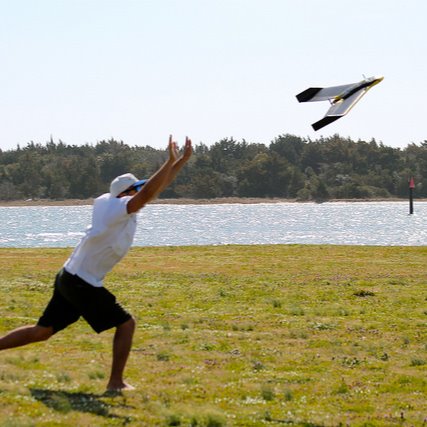
A: A fixed wing drone was used. It flew along set transects at varying times during the day to get a full spectrum of tidal and daylight scenarios.
Q: What type of camera was used?
A: Drones were equipped with either a Cannon IXUS 127 HS or a Cannon Powershot S110 digital camera. These cameras were also flown with different filters: one regular (no filter), one red edge, and one near infrared.
Q: Where were the photos taken?
A: Back Sound in North Carolina. This is due to our limited capacity to travel, but being able to do this project in a temperate estuary ensured we encountered a variety of environmental variables to determine how each influences the detection probability of sharks via drones.