


Please leave us your feedback using this short Google form https://goo.gl/forms/ER507JakSWHePgXq1
This project has been built using the Zooniverse Project Builder but is not yet an official Zooniverse project. Queries and issues relating to this project directed at the Zooniverse Team may not receive any response.
We aim to see if sharks can be detected effectively from drone photos and what environmental variables impact the frequency of these detections.
Learn moreIn the first portion of this workflow, we ask if any sharks present and this is indicated by a "yes" or "no" response. In the second portion of this workflow, we ask that you mark any sharks present with either a green point or cyan circle to denote their location and their species.
Zooniverse Talk
Chat with the research team and other volunteers!
A Drone's Eye View on Sharks Statistics
View more statsAll Time Stats
Active Stats
Active stats provide information about currently active workflows and subjects.
Message from the researcher
Connect with the research team on Talk to learn more about this project!
About A Drone's Eye View on Sharks
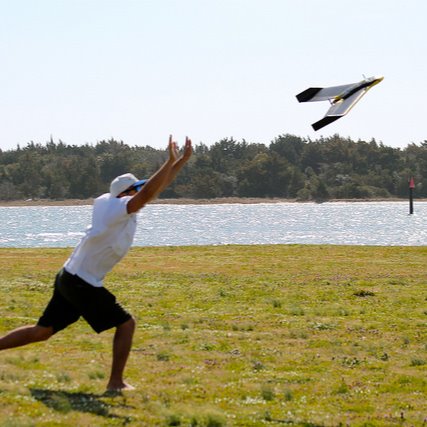
Drones are an up and coming fad for many areas of biology, especially marine related fields. The aim of this study is to see what factors influence the detection of sharks (or in this case our shark decoys). We want to know if drones are really the way of the future for shark spotting, or if they are simply not as useful as we hoped. We need volunteers to look at the following photos and see just how many sharks they can spot in each photo, if any. We also would like our lovely volunteers to go a step further and see if they can identify the sharks as either bonnethead sharks (Sphyrna tiburo) or as atlantic sharpnose sharks (Rhizoprionodon terraenovae). The purpose behind this is to see if we can accurately identify sharks from a drone once detected, even if they have an iconic hammer-head.