


This project is now complete. Please find our new home at Notes from Nature - Capture the Collections / Ce projet est désormais complété. Vous trouverez notre nouveau site web à l'adresse suivante : Notes de la nature - Capturer des collections
Research
Expedition Arctic Botany

Across Canada’s northern territories, hundreds of specially adapted plant species grow low and slow, making the most of brief summers under the midnight sun. The Canadian Museum of Nature leads an international project to document the plant species across our rapidly changing Arctic, drawing much information from present-day field work and from specimens collected over the past 200+ years.
Many of those specimens reside in the National Herbarium of Canada, having accumulated largely before electronic databases were common. This precious, primary evidence is stored very safely for the current public and future generations, but until we fully digitize the specimens, important patterns and valuable information remain hidden. Until we share them on-line, they will only reach a small fraction of the projects they could benefit.

And that’s where we need your help. By transcribing label information from the Arctic specimens in the National Herbarium of Canada, you’ll help us unlock new insights on northern plant biodiversity, as well as helping everyone who uses the National Herbarium to answer questions related to northern botany…all while learning for yourself about the fascinating species that grow across Arctic Canada, Alaska and Greenland..
Through this new expedition focusing on Canada's Arctic Vascular plants, we have revamped our workflow to transcribe more details from our collection labels. Your help is need to find and record collection date, collection location, environment and co-ordinate data. This data allows researchers to better understand vascular plant distribution and collection events in our Arctic regions.
Canada’s National Herbarium
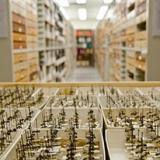
The Canadian Museum of Nature safeguards one of Canada’s largest natural history collections. The botanical collection alone, known as the National Herbarium, numbers over one million specimens, including the world’s best representation of samples from the Canadian Arctic.

Plants, lichens and algae are collected in nature and then preserved, often by drying. This technique permanently preserves their features and DNA. Staff and volunteers mount the dried specimens on paper, and label them with key information including collection date and location. With specimens dating back to 1766, the National Herbarium documents the flora of Canada through time, creating a rich source of information for research and education in Canada and around the world.
How does transcription change the game?
“Transcription” for this project means categorizing the information that is written or typed on the labels of herbarium specimens and converting to machine-readable format for a database. When information from the unique, hard copies of botanical specimens in our cabinets is transcribed, it helps to create a database can be effectively searched for specimens that meet criteria that are important to experts, educators, students in the many sectors that use the herbarium.
For example, let’s say that a person scrutinizes a specimen sheet, locates the date on which a plant was collected (distinguishing it from the other dates that might appear on the specimen sheet), and then makes sure that the date is accurately typed into the database under the category of “collection date”. That simple act transforms the value and accessibility of the specimen: anyone who then searches the database for specimens collected during a period that includes that date will be able to discover the specimen. Previously, the specimen – and the other valuable information it may have held - would have remained hidden.
In this second vascular plant edition, we invite citizen scientist collaborators to transcribe the where: Collection Location, Environment details and Co-ordinate data. This expanded dataset allows us to answer countless questions, for example:
- Location and habitat data describe landscape features and can be used to track changes in habitats over time.
- Co-ordinate and elevation data help plot specimen distribution and discover the collection routes of Arctic researchers.
What happens to the data once they're published?
Our data is your data! Once the dataset is complete, you can access them free online.
Just visit www.gbif.org and search DATASETS for Canadian Museum of Nature Herbarium". From there, you can search for specimens by clicking “Explore” and entering search terms into the Simple or Advanced fields on the left.