

The Team
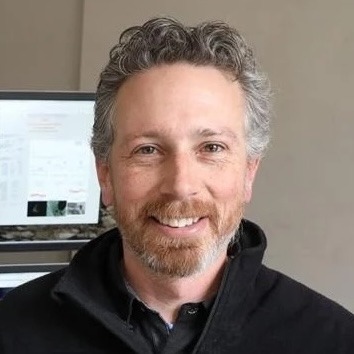
Chad Trujillo - Principal Investigator
Chad Trujillo is a Professor in the Northern Arizona University (NAU) Astronomy and Planetary Science department. He received his B.S. in Physics with a minor in literature from MIT in 1995 and his Ph.D. in Astronomy from the University of Hawaii in 2000, after which he was a Postdoctoral Scholar at Caltech until 2003. He then worked at Gemini Observatory on the Big Island of Hawaii for 13 years where he held several positions including Astronomer with Tenure and Head of Adaptive Optics. He joined the faculty at NAU in 2016. Dr. Trujillo has discovered hundreds of Kuiper Belt Objects including several dwarf planets and some of the most distant objects in our solar system, as well as Centaurs, comets, and active asteroids using ground-based telescopes. He is also very interested in data intensive science especially involving the use of large public datasets, such as the HyperActive Asteroids project.

Kennedy Farrell - Project Scientist
Kennedy is an observational astronomer and machine learning scientist supporting the project at Northern Arizona University where she is a PhD candidate in the Astronomy and Planetary Science department. Previously, she supported the Active Asteroids project, the sister project to HyperActive Asteroids, with follow-up telescope observations. She now focuses on the machine learning applications that support Citizen Science classifications, hoping to ease the workload and amplify the human efforts made by volunteers, the drivers of discovery.

Annabella Dickenson - Project Scientist
Annabella (Annie) is a PhD student studying Astronomy and Planetary Science at Northern Arizona University, where she specializes in orbital dynamics and observational astronomy. Annie contributes to HyperActive Asteroids through dynamical analysis of objects of interest identified by Citizen Scientists. She also conducts follow-up observations with facilities including the Vatican Advanced Technology Telescope, the Lowell Discovery Telescope, and the twin Magellan Telescopes.

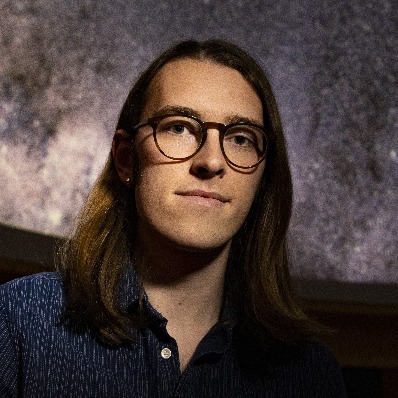
Maxwell Frissell - Project Scientist
Maxwell (Max) is a PhD student at Northern Arizona University studying Astronomy and Planetary Science. Max supports the HyperActive Asteroids project by carrying out follow-up telescope observations of objects volunteers flag as active. Since his undergraduate education at the University of Washington, Max has been a project scientist on Active Asteroids, our sister project, and to the related citizen science project, Rubin Comet Catchers.

Colin Orion Chandler - Project Scientist
Dr. Colin Orion Chandler leads Active Asteroids and Rubin Comet Catchers as founder and Principal Investigator. Dr. Chandler is a Project Scientist of the LSST Interdisciplinary Network for Collaboration and Computing (LINCC) Frameworks and a Postdoctoral Scholar at the Data Intensive Research in Astrophysics and Cosmology (DiRAC) Institute, both at the University of Washington. (LSST is the Vera C. Rubin Observatory Legacy Survey of Space and Time.) Colin was a Presidential Fellow at Northern Arizona University. There, Colin proposed Active Asteroids and was selected for an award by the prestigious National Science Foundation Graduate Research Fellow Program (NSF GRFP). Colin is also co-chair of the LSST Solar System Science Collaboration (SSSC).

William Oldroyd - Project Scientist
Dr. Will Oldroyd (NAU) provides support for target follow-up and analysis for the team. He is an expert in solar system orbital dynamics and observations, small body characterization, and automated point source anomaly detection.

Contact Us
To reach the Science Team with questions or comments about HyperActive Asteroids, contact us through the Talk tab on Zooniverse or through our email at hyperactiveasteroids@gmail.com.