


Finished! Looks like this project is out of data at the moment!
Thank you for your efforts! We've completed the classifications for this project! To browse other active projects that still need your classifications, check out zooniverse.org/projects.
The Team
Current CloudCatcher Team
We are based in Harwell, Oxfordshire in the UK and work for RAL Space which is part of the UK Government's Science and Technology Facilities Council. Here at RAL Space, we do all sorts of activities relating to Earth Observation, from calibrating instruments prior to launch, to monitoring their performance when in space.
Citizen Scientists (You!)
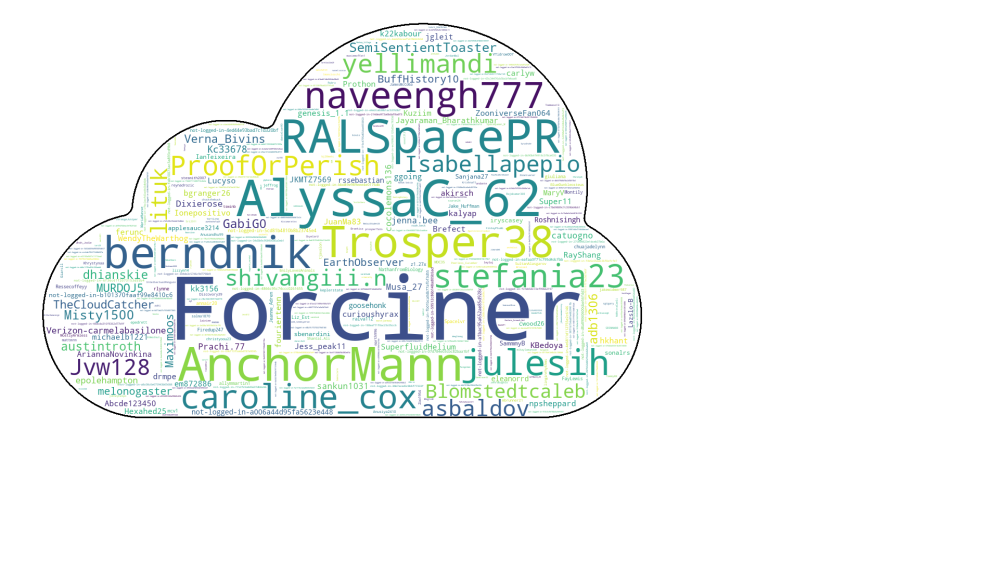
Thank you to all of our citizen scientists who provide the fundamental data needed for the success of the CloudCatcher project. Our Earth Observation research is greatly benefited by the contributions made by our volunteers, who are acknowledged below.
Caroline Cox
I am the main investigator for CloudCatcher and I've worked on clouds for some years, and it has been my job to develop and maintain one of the cloud identification processes for a satellite instrument. We can use what we know about clouds to help write instructions for the computer to be able to identify which pixels are cloudy or not. For example, we know that many clouds appear as very bright pixels in the images, and so we can instruct the computer to mask any pixels brighter than a certain number. We also know that clouds are very cold, so we can instruct the computer to mask any pixels colder than a certain temperature. The tricky thing is making a set of instructions that work well for every image over the globe!
I have looked at a lot of these satellite images, which is something I love to do, but I can only check so many! I thought it would be a great thing if we could get volunteers to to work with us on this.
When I am not in work, I can be found at home with my family.
Ed Polehampton
Part of my job has been to make sure instruments are in good working order when it in space. I do this by checking their temperature (just like a Doctor!) and looking at the data sent down by the satellite. Very occasionally there are problems and the instrument stops working as well as it should and I have to work with the other teams of engineers and scientists from all over Europe to help fix the problem.
As part of CloudCatcher I will be collating the results that we gather and assembling the results we have to make a 'human cloud mask'.
When I am not in work, I can be found growing vegetables on my allotment.
Johannes
Johannes has helped us out with the software, and in particular gitlab, and been on hand to help with supervising students who have worked on CloudCatcher.
Vicky Hall
I am part of the Communications team at RAL Space and I have been helping with the public engagement activities to introduce CloudCatcher to a wide audience.
Past members
Many others have contributed to CloudCatcher. Here are some of our previous team members.
RAl Work Experience Students 2026!
Our most recent set of students worked on improving the main code that produces the images for Catch That Cloud. The group of 4 worked on various gitlab tickets including looking into the use of AI to give an interesting fact out the images, changing the size of the box, making sure the arrow always appeared in a sensible place, speeding up the processing time and adding code that could read the Level 2 Land Surface Temperatures. They all did a great job, and we hope to be able to continue improving the code for when we launch a new workflow in the future.
Nadine
Nadine was an intern who worked on CloudCatcher over the summer of 2025. She analysed the first set of results from the You Cannot Be Cirrus workflow.
RAL Work Experience Students 2025!
Eleanor
Eleanor was an intern who worked on the CloudCatcher project with the team. She focused on analysing the results from the first workflow, Catch that Cloud, and setting up the second workflow, You Cannot Be Cirrus, that will focus on cirrus cloud identification.
Hestia
Hestia was a work experience student who helped write some of our social media posts. She learnt how to search for and download the satellite images, and viewed using the satellite product software called SNAP Toolbox. Hestia made some really nice visuals that will hopefully encourage people to check out the project.
Finlay
Finlay was a work experience student who helped kick off the project. He did great work writing the code that is used to cut up the satellite images into smaller chunks that you will be classifying.
Mireya
Mireya was part of the team from the beginning of the project, and helped design some of the workflows.
We would also like to thank the Science and Technology Facilities Council for previously funding this work through a Spark Award and Innovation Bursary Fund.


- eleanorrd@eleanorrd

- eleanorrd@eleanorrd