Finished! Looks like this project is out of data at the moment!
This is the last of the Grackle cards! We also relaunched Eastern Bluebirds for those looking for other species to transcribe. As always, thank you for your time and help with transcriptions.
Research
The Cornell Lab of Ornithology, nestled in the Finger Lakes region of New York, is a world-renowned ornithological research, education, and conservation facility. Among our collections are more than 300,000 nest records from the North American Nest Record Card Program that ran from the 1960s until the early 2000s. Some cards pre-date the 1960s, likely because some naturalists were collecting this information before the formal program existed. Thousands of nesting birds, were observed by citizen scientists, who then submitted detailed accounts of bird nesting behavior.

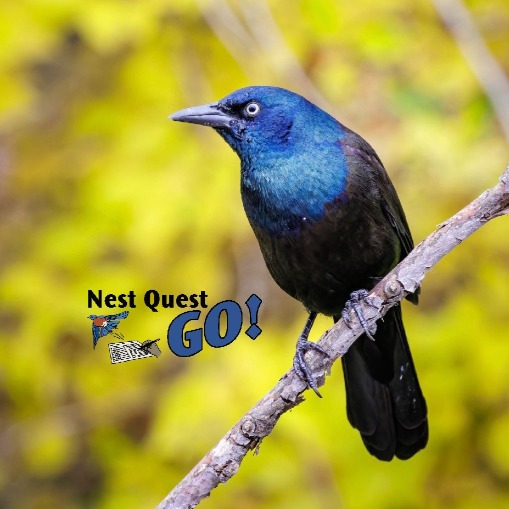
[Top left to bottom right: Common Grackle (Purple), Boat-Tailed Grackle, Great-Tailed Grackle, Common Grackle (Bronzed). Photo credits on FAQ page.]
NestWatch, a citizen-science project of the Lab, is working to transcribe these data in hopes of better understanding the nesting patterns of North American birds. Valuable scientific questions can be asked and answered regarding the nesting behavior of birds over time by examining historical records. We hope to bring new discoveries to light using these previously hidden datasets.
This project exhibits our collection of nest records for the grackle family. This includes species such as the Common Grackle, Great-Tailed Grackle, and the Boat-Tailed Grackle. While part of the same family, these species are found in many different places across North America. The Great-Tailed Grackle can be found year-round in the Midwest United States and Mexico, whereas the Boat-Tailed Grackle resides in sunny Florida. Common Grackles and Boat-Tailed Grackles are also known to be omnivores, while the Great-Tailed Grackles' diet is comprised mainly of insects. These nest record cards will help us to gain valuable insight into the nesting patterns of these intriguing birds.
The research potential of this information is invaluable. Join us in meeting our goal of transcribing all of these nest records to better understand and protect birds. With over 30+ years of data we hope to be able to identify some of the challenges that have been impacting the lives of nesting birds such as; predation, pollution, cowbird parasitism, human disturbance, weather, etc. Along the way we hope to learn more about the citizen scientists behind the cards and preserve the valuable data they spent hours collecting. For the love of birds and people, happy transcription!